


FMCG, E-commerce, Retail, Industrial Goods, Beverages, Courier/Parcel

Ambient transport & dry freight

High-payload design enabled by lightweight sandwich panels

Pick-ups, LCVs, ICVs, HCVs compatibility

Fast build and on-vehicle installation

Reinforced panels engineered for long-term commercial use
These boxes are designed for businesses that move large volumes of non-perishable cargo across cities and states. Whether it's beverages, courier, FMCG products, or large-scale dry freight logistics, the build handles frequent loading cycles, tight warehouse slots, and long highway runs.
Companies in the business of transportation, courier, and any dry cargo operations choose this model because it increases payload without increasing fuel consumption or downtime. The body structure works equally well for dry cargo truck fleets, dry freight trailers, and dry van carrier-based supply chains.
India's transport challenges are always accounted for by heat, dust, humidity, rough roads, and constant door openings. The box keeps goods stable all the way from dispatch to unloading.
The box uses thin sandwich panel technology to combine lightweight construction with high structural strength.
0.7mm PPGI external skin for impact protection. 0.7mm PPGI internal skin for long-term durability against rough loading. Polyurethane insulation (>60 kg/m³) in walls and roof for temperature stability. Optional insulated or non-insulated flooring based on cargo type.
Aluminium extrusion kick plate for leak-proof floor performance. EPDM rubber door seals for dust-proof and weather-proof closure.
You get high weight-to-strength ratio for excellent payload, longer life compared to traditional metal builds, and low maintenance with no corrosion and reduced downtime.
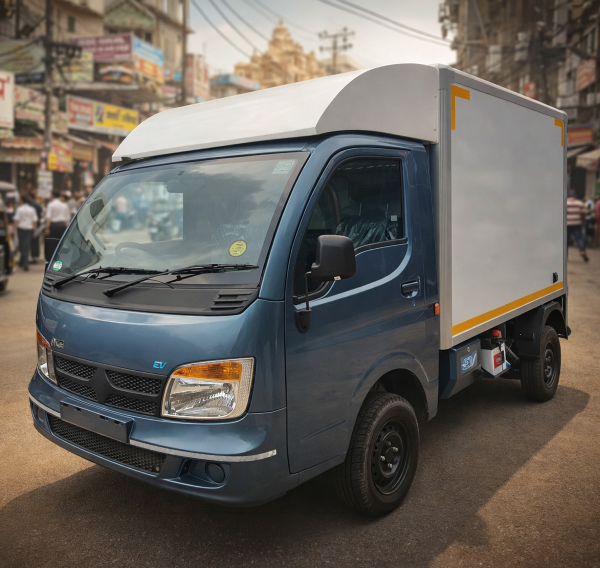
A dry freight box is an enclosed cargo body designed to transport goods that do not require temperature control. It protects products from dust, rain, and damage during transit and is commonly mounted on a dry freight truck.
A dry freight box is used for non-perishable goods and does not include insulation or refrigeration. A reefer box is insulated and fitted with a cooling system to transport temperature-sensitive products in reefer vans and refrigerated truck fleets.
A dry freight truck is ideal for transporting packaged foods, consumer goods, electronics, furniture, textiles, industrial equipment, e-commerce shipments, and other products that do not require refrigeration.
Yes. Sub Zero offers dry freight bodies in custom sizes and configurations to match different vehicle chassis, payload capacities, and business requirements.
Sub Zero's dry freight boxes are manufactured using high-quality materials such as mild steel, galvanized steel, aluminum, or other application-specific panels to ensure strength, durability, and long service life.
Dry freight truck bodies are widely used by the e-commerce, FMCG, retail, logistics, manufacturing, automotive, and courier sectors. Many reefer companies also operate dry freight vehicles alongside their cold chain fleets to transport non-temperature-sensitive cargo efficiently.
The cost of a dry freight box depends on the vehicle chassis, body size, construction material, and the level of customization required. Since dry freight bodies do not require insulation or refrigeration systems, they are generally more economical than reefer bodies. The final price varies based on the vehicle configuration, payload capacity, and operational requirements. For an accurate estimate, it is best to choose a body specification that matches your application.