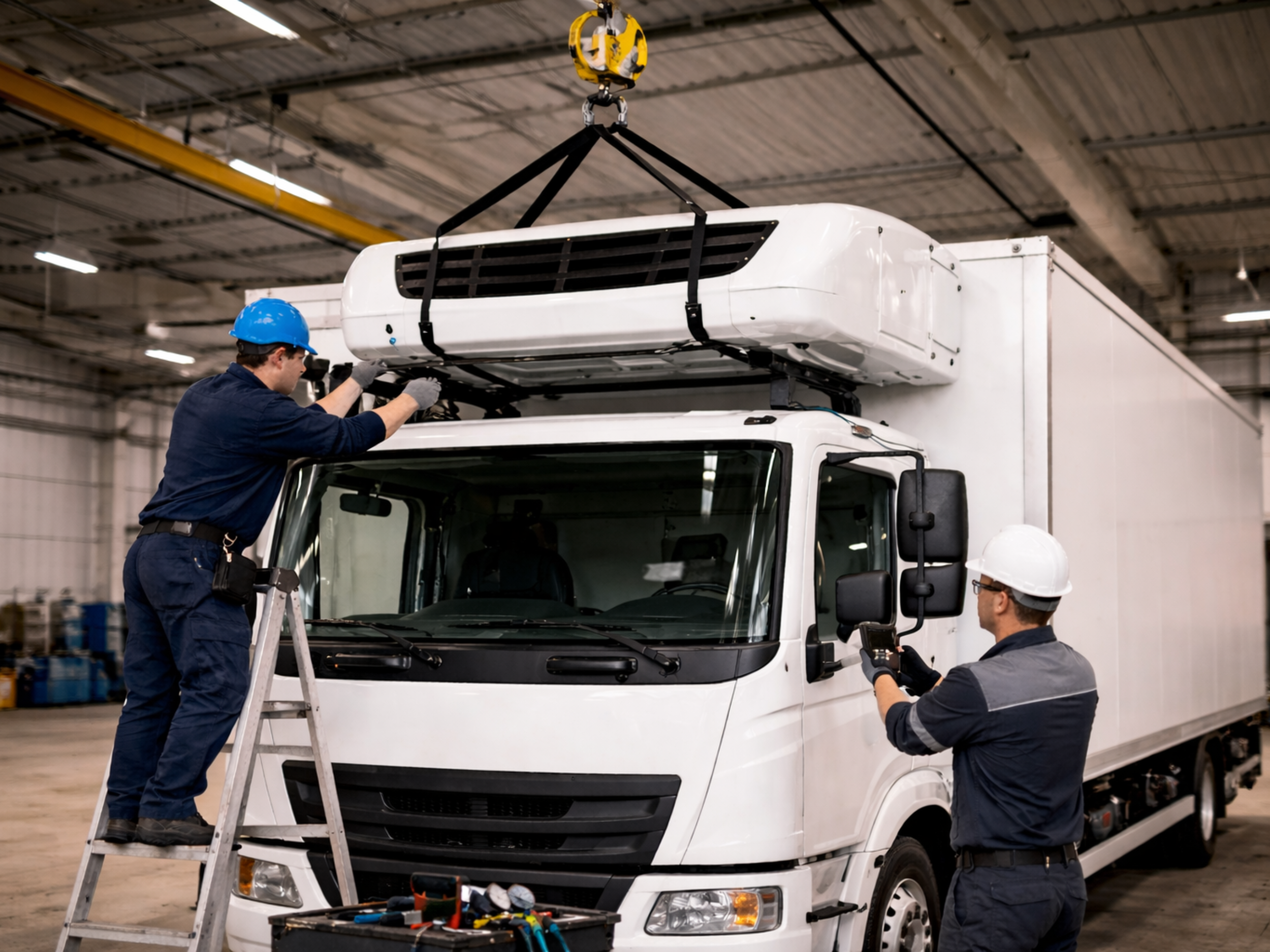
Understanding the Difference: Dry Freight vs Reefer Refrigerated Container
At their core, dry freight and reefer refrigerated containers serve the same basic purpose: transporting goods efficiently across distances. However, the similarity largely ends there. A dry freight van is a standard shipping container designed for non-perishable cargo that can withstand ambient temperatures. These containers are simple, robust, and cost-effective, making them ideal for textiles, machinery, furniture, packaged consumer goods, and other items that do not require climate control. Their appeal lies in their affordability, ease of handling, and minimal operational requirements, which allow businesses to move high volumes of stable cargo without complex logistics.
A reefer refrigerated container, on the other hand, is engineered for temperature-sensitive shipments. Also referred to as a refrigerated reefer container or simply a reefer container, it comes equipped with an integrated refrigeration unit and insulated walls that allow precise control over temperature and, in some cases, humidity. This makes it indispensable for industries such as pharmaceuticals, frozen foods, fresh produce, dairy products, chemicals, and floriculture. Unlike a dry freight van, a reefer container requires a continuous power supply, careful monitoring, and specialized maintenance to ensure cargo integrity throughout transit.
The difference extends beyond structure and function. While dry freight containers are purely transactional -- they transport goods from point A to point B -- reefer refrigerated containers offer an additional layer of value by preserving product quality, ensuring compliance with international shipping and safety standards, and minimizing financial risk associated with spoilage or regulatory non-compliance. Essentially, the choice between the two is not just about the cargo they can carry, but the assurance and protection they provide to a business's operations, revenue, and reputation.
Reefer Refrigerated Container Cost: It's Not Just What You Pay, It's What You Risk
In logistics, cost is often treated as a visible number: the price of the container, the rental rate, or the operating expense per trip. This is where dry freight typically appears to have a clear advantage. A dry freight van has fewer mechanical components, no power dependency, and minimal maintenance requirements, which keeps upfront and day-to-day costs predictably low. For stable, non-perishable cargo, this simplicity translates into operational efficiency and apparent savings.
However, this cost advantage begins to erode when cargo sensitivity enters the equation. Because dry freight containers offer no temperature or humidity control, they expose businesses to risks that are not reflected on an invoice. Heat exposure, unexpected delays, port congestion, or extended transit times can compromise product integrity, leading to spoilage, quality degradation, or outright shipment rejection. In such cases, the financial impact is not limited to the lost cargo itself but extends to regulatory penalties, insurance disputes, missed delivery commitments, and long-term damage to customer trust.
A reefer refrigerated container, by contrast, carries higher visible costs. Energy consumption, specialized maintenance, and monitoring systems all contribute to a higher operational footprint. Yet these costs directly serve a protective function. By maintaining precise temperature conditions throughout transit, a refrigerated reefer container significantly reduces the likelihood of spoilage, non-compliance, or quality disputes. What appears as a higher operating expense is, in reality, a controlled investment in risk mitigation.
For businesses transporting perishables, pharmaceuticals, or regulated goods, this distinction becomes critical. The cost of a single compromised shipment can exceed the cumulative operating cost of a reefer container over multiple journeys. In this context, the reefer does not merely transport goods; it stabilizes revenue, safeguards contractual obligations, and preserves brand credibility. The comparison, therefore, is not between a cheaper dry freight van and a more expensive refrigerated container, but between predictable operational costs and unpredictable financial exposure.
Ultimately, businesses that assess container choice through the lens of risk rather than price alone are better positioned to make decisions that support long-term profitability and operational resilience.
When Dry Freight Works and When a Reefer Refrigerated Container Becomes Strategic
There are many scenarios where dry freight vans make clear commercial sense. For businesses transporting non-perishable goods such as machinery, textiles, packaged consumer products, or industrial components, dry freight offers a cost-efficient and operationally simple solution. When transit routes are predictable, turnaround times are short, and cargo quality is unaffected by ambient temperatures, investing in temperature control adds little practical value. In such cases, a dry freight van supports scale, speed, and margin efficiency without introducing unnecessary operational complexity.
However, the equation changes the moment cargo sensitivity, regulatory oversight, or quality consistency becomes central to the business model. For companies regularly transporting food products, pharmaceuticals, chemicals, or other temperature-dependent goods, a reefer refrigerated container moves beyond being a logistics tool and becomes a business safeguard. While the upfront and operating costs of a refrigerated reefer container are undeniably higher, these costs are often offset by reduced spoilage, fewer insurance claims, lower rejection rates at ports, and more reliable delivery outcomes. Over time, this consistency translates into stronger customer relationships, improved compliance records, and predictable revenue flows.
This is why many businesses choose to buy a reefer container or actively look for a reefer container for sale as part of a long-term operational strategy rather than a short-term cost decision. A refrigerated container protects not just the cargo inside it, but the commercial agreements, brand credibility, and market access that depend on reliable cold-chain performance. In contrast, while dry freight excels in simplicity and affordability, it cannot absorb the risks associated with temperature-sensitive or regulated shipments. The real distinction, therefore, lies not in which container costs less, but in which one aligns more closely with the operational realities and risk tolerance of the business.
The Long-Term Cost Curve of a Reefer Refrigerated Container
When comparing dry freight and reefer refrigerated containers, many businesses focus only on immediate costs. A dry freight van appears economical because its expenses are predictable and easy to manage in the short term. However, this view often ignores how costs evolve as shipment volumes grow, routes extend, or compliance requirements increase. Over time, what initially seems cost-effective can introduce hidden inefficiencies and risk exposure.
A reefer refrigerated container follows a different cost trajectory. Although it involves higher upfront and operating expenses, these costs are more controlled and consistent. Reliable temperature management reduces spoilage, shipment rejections, and quality disputes, which in turn stabilizes operations and margins. For businesses operating at scale or in regulated markets, this predictability often offsets the apparent cost difference with dry freight vans.
In the long run, container choice influences more than logistics spend. A refrigerated reefer container supports scalability, compliance, and customer trust, while reliance on dry freight for sensitive cargo can limit growth and increase operational risk. Seen through this lens, the decision is less about short-term savings and more about long-term resilience and sustainable profitability.
Conclusion
The choice between dry freight and a reefer refrigerated container ultimately recognises a broader business truth: logistics decisions are rarely just operational, they are strategic. While dry freight vans continue to serve as a reliable and cost-efficient solution for non-perishable goods, their limitations become increasingly evident when cargo sensitivity, compliance requirements, and quality assurance enter the equation. In such cases, apparent cost savings can quickly give way to hidden risks, financial exposure, and long-term inefficiencies.
A refrigerated reefer container, by contrast, represents a shift toward cost intelligence rather than cost reduction alone. By offering controlled temperature environments, reduced spoilage, and greater supply chain predictability, reefers help businesses protect not just their cargo, but their contracts, customer relationships, and brand credibility. Over time, this consistency translates into stronger margins and more resilient operations.
For businesses navigating this decision, the focus should not be on which container is cheaper, but on which container aligns with long-term growth, risk tolerance, and operational priorities. This is where experience and infrastructure matter. Sub Zero Reefers brings deep expertise in refrigerated logistics, offering solutions designed to support reliability, compliance, and performance across cold-chain operations. For companies looking to invest in smarter container strategies, Sub Zero Reefers provides the assurance that cost efficiency and cargo integrity do not have to be mutually exclusive.