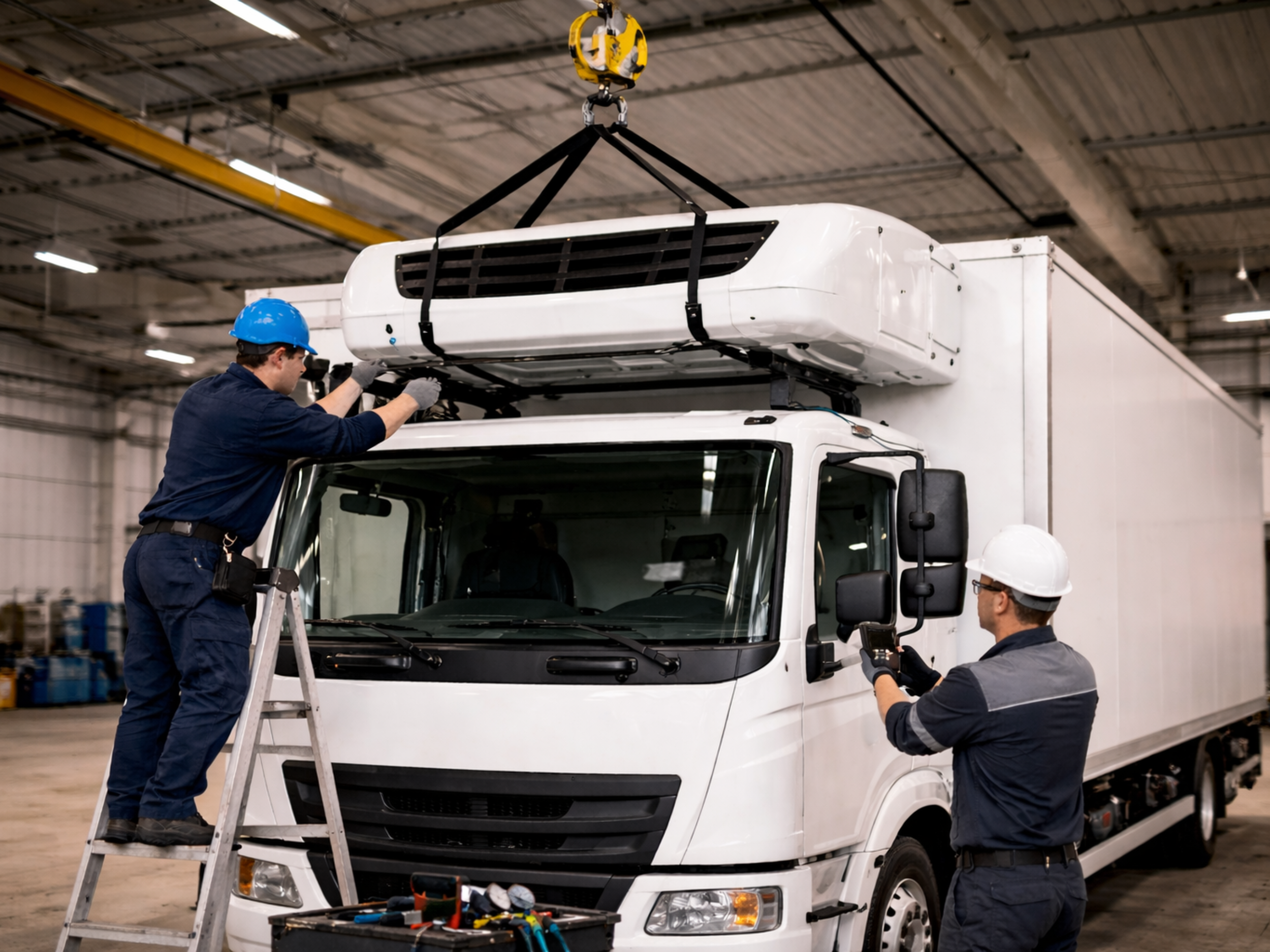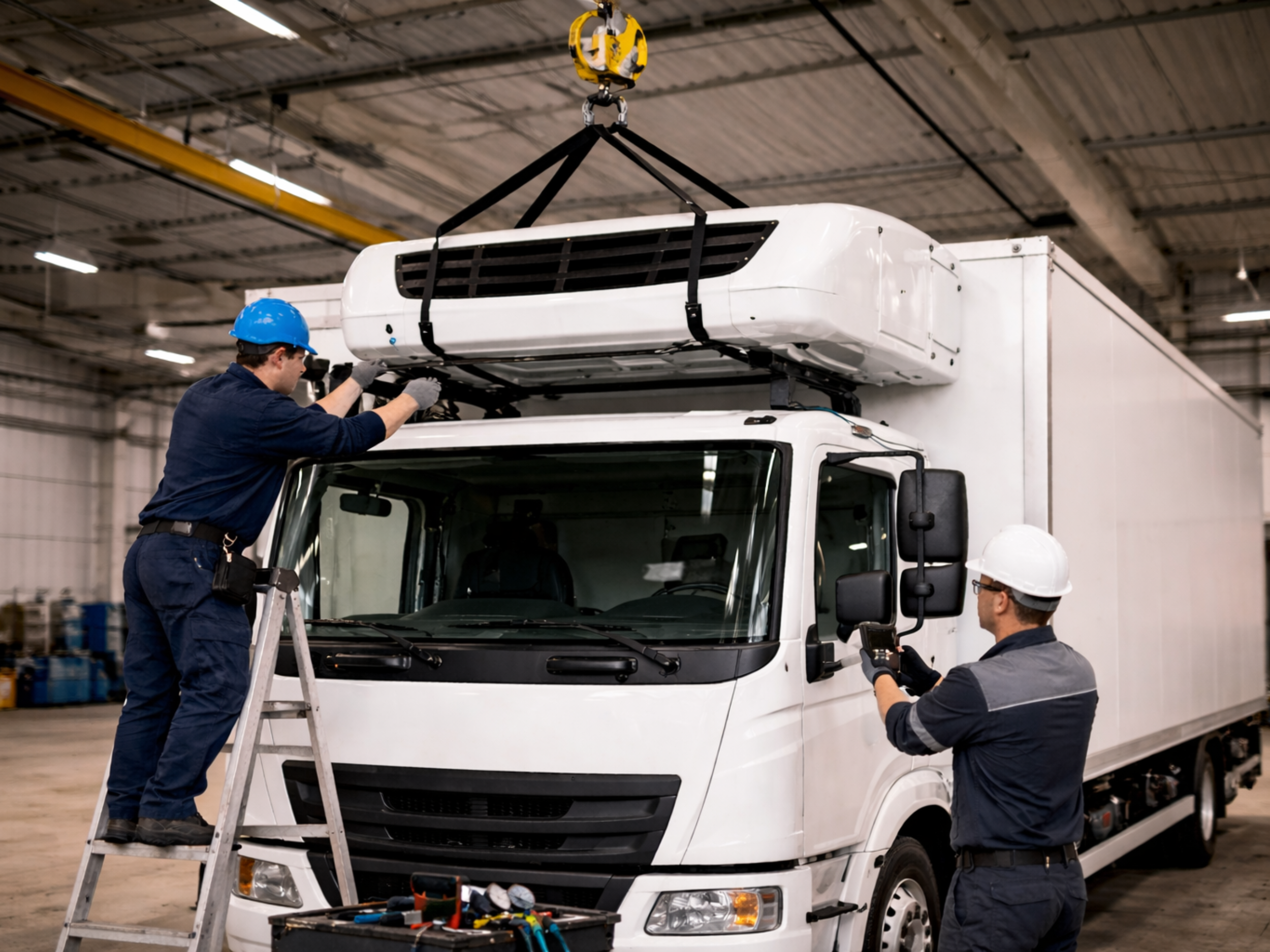
So how do leading manufacturers customize refrigerated trucks without compromising compliance, safety, or reliability?
The answer lies in engineering discipline, process-driven customization, and a deep understanding of how cold chains actually work on the road.
Why Customization Is Critical in Refrigerated Transport
A refrigerated truck transporting dairy over short urban routes faces very different challenges from a long-haul refrigerated container truck moving frozen food across states. Temperature ranges, door openings, payload weight, route duration, and even driver behaviour affect performance.
This is why standardized, one-size-fits-all builds often fail.
Modern cold chain logistics requires:
- Cargo-specific insulation
- Route-specific cooling strategies
- Vehicle-specific structural design
For a serious refrigerated truck body manufacturer, customization is not about cosmetic changes- it’s about engineering the truck around the cargo.
The Compliance Challenge Behind Custom Builds
Every refrigerated truck/van must meet a combination of:
- Temperature control regulations
- Structural and load safety norms
- Food and pharma transport standards
- Vehicle homologation requirements
Whether it’s a small refrigerated truck for last-mile delivery or a multi-axle reefer refrigerated truck for interstate transport, compliance is non-negotiable.
The risk arises when customization is done without a structured framework. Cutting insulation thickness, altering airflow paths, or modifying internal layouts without engineering validation can compromise both performance and compliance.
How Leading Refrigerated Truck Manufacturers Do It Right
1. Customization Begins With the Cargo, Not the Vehicle
Reputable manufacturers start by understanding:
- Product temperature range
- Sensitivity to fluctuations
- Loading and unloading frequency
- Shelf-life risk
A refrigerated food truck manufacturer, for example, designs differently for ice cream versus fresh produce. Ice cream demands sub-zero stability with no tolerance for fluctuation, while produce may require controlled humidity and airflow.
This cargo-first approach ensures compliance is built into the design, not added later.
2. Modular Engineering, Not Ad-Hoc Modifications
The most reliable refrigerated truck manufacturers rely on modular systems:
- Engineered insulation panels
- Pre-tested airflow configurations
- Standardized door and sealing systems
This allows customization without redesigning from scratch every time. Whether it’s a small refrigerated truck or a large refrigerated container truck, the core structure remains compliant, while modules adapt to use cases.
3. Insulation Is Engineered, Not Improvised
Inside every compliant reefer refrigerated truck, insulation does the real work. High-density, purpose-built insulation panels are designed to:
- Maintain thermal integrity
- Resist moisture ingress
- Withstand vibration and road stress
A professional refrigerated truck body manufacturer never alters insulation casually. Thickness, panel composition, and joint sealing are engineered to meet both performance and regulatory requirements- especially critical for inside refrigerated truck environments where even minor leaks cause temperature drift.
4. Airflow Design Is Non-Negotiable
Customization often changes:
- Internal shelving
- Pallet configuration
- Multi-compartment layouts
But airflow must always remain uniform.
Whether it’s a refrigerated truck/van used for pharma or a refrigerated container truck carrying frozen foods, manufacturers validate airflow paths to ensure:
- No hot spots
- No cold trapping
- Consistent temperature from front to rear
This is where compliance meets real-world performance.
5. Vehicle-Specific Customization Matters
A small refrigerated truck used for urban delivery behaves very differently from a long-haul vehicle. Suspension, vibration, and door cycles all affect thermal performance.
Leading manufacturers customize:
- Floor strength and insulation
- Door design and sealing systems
- Structural reinforcements
But these changes are always done within tested parameters to ensure the refrigerated truck remains compliant over its entire lifecycle.
Customization Without Compromising Repairs & Downtime
Compliance doesn’t end at delivery. A compliant refrigerated truck manufacturer designs for:
- Local repairability
- Modular panel replacement
- Minimal downtime
This is especially important for refrigerated food truck manufacturers operating in remote or high-usage environments. A truck that meets standards on Day 1 but can’t be repaired easily will fail in real operations.
Industry-Specific Customization in Practice
Dairy & Ice Cream
- Tight temperature tolerance
- Frequent door openings
- Zero margin for fluctuation
Pharma
- Regulatory documentation
- Stable internal environment
- Clean, sealed interiors
Frozen Food & Seafood
- Long-haul durability
- Sub-zero stability
- Moisture-resistant interiors
Each use case demands customization- but always within a compliant engineering framework.
Where Manufacturers Like Sub Zero Stand Apart
Manufacturers with real cold chain experience understand that compliance is not a checklist- it’s a design philosophy. By engineering refrigerated solutions specifically for Indian routes, climates, and operating realities, they ensure that customization strengthens compliance rather than weakening it.
From inside refrigerated truck design to long-haul refrigerated container truck builds, structured customization ensures performance, safety, and regulatory adherence go hand in hand.
What Businesses Should Look for Before Choosing a Customized Refrigerated Truck
Before finalizing a refrigerated truck/van, businesses should ask:
- Is customization engineered or improvised?
- Are insulation and airflow validated?
- Is the build compliant across its lifecycle?
- Can it be repaired locally without performance loss?
The right refrigerated truck manufacturer will welcome these questions- because compliance-driven customization is their strength, not a risk.
Final Thoughts
Customization is not the enemy of compliance. Poor engineering is.
When refrigerated trucks are designed with discipline, tested systems, and real-world understanding, customization becomes a competitive advantage- not a liability. Whether it’s a small refrigerated truck, a high-capacity reefer refrigerated truck, or a specialized refrigerated container truck, the future of cold chain transport lies in solutions that are both tailored and compliant.
Because in cold chain logistics, performance is not proven in design documents — it’s proven on the road.
Frequently Asked Questions (FAQ)
What types of customizations can be made to refrigerated trucks?
Refrigerated trucks can be customized based on cargo type, route conditions, and operating needs. Common customizations include insulation thickness, internal layout and shelving, multi-temperature compartments, door configurations, airflow design, flooring type, and integration with specific refrigeration units. All customizations are engineered within tested design parameters to ensure temperature stability and regulatory compliance.
How do manufacturers test compliance after customizing a refrigerated truck?
After customization, manufacturers test compliance through temperature validation, airflow checks, insulation integrity testing, and structural inspections. These tests ensure the refrigerated truck maintains consistent temperatures under load, meets food or pharma transport requirements, and performs reliably across real operating conditions before delivery.
How long does it take to customize a refrigerated truck without compromising compliance?
The timeline depends on the level of customization and vehicle type, but most compliant refrigerated truck customizations are completed within a few weeks. Manufacturers that use modular, pre-engineered systems can customize efficiently without skipping validation steps, ensuring both speed and compliance are maintained.
Will my customized refrigerated truck come with a warranty?
Yes. A professionally customized refrigerated truck comes with a warranty covering the truck body and insulation, provided it is built by an authorized refrigerated truck manufacturer. Warranty terms typically apply to both standard and customized components, as long as the vehicle is operated and maintained as per guidelines.