Introduction
The success of any temperature-controlled logistics operation depends on much more than the refrigeration unit alone. Whether you're transporting pharmaceuticals, fresh produce, dairy, seafood, or frozen foods, every component of a refrigerated truck influences product quality, fuel efficiency, operating costs, and ultimately, profitability.
At the heart of every reefer truck is the insulated body that protects cargo from external temperatures. While the refrigeration system generates cooling, the body ensures that the cold stays where it should. A poorly designed body forces the cooling unit to work harder, increases energy consumption, and raises the risk of temperature fluctuations that can compromise sensitive cargo.
As India's cold chain sector continues to expand, businesses are investing in more reliable cold chain equipment to improve operational efficiency and reduce losses. One of the most important decisions fleet owners face is choosing the right body material for their reefer vehicle. Should you opt for a lightweight, corrosion-resistant GRP reefer box or a robust MS reefer container that's built for demanding operations?
The answer isn't simply about choosing the more expensive or more durable option. It depends on several practical considerations, including the nature of your cargo, delivery routes, loading frequency, maintenance strategy, and the total cost of ownership over the vehicle's lifespan.
In this guide, we'll compare GRP and MS reefer bodies across construction, thermal performance, durability, maintenance, payload capacity, and long-term value. Whether you're purchasing your first reefer van, expanding an existing fleet, or evaluating replacement options for a reefer box truck, understanding these differences will help you make a more informed investment decision.
GRP Reefer Box: Construction, Properties & Strengths
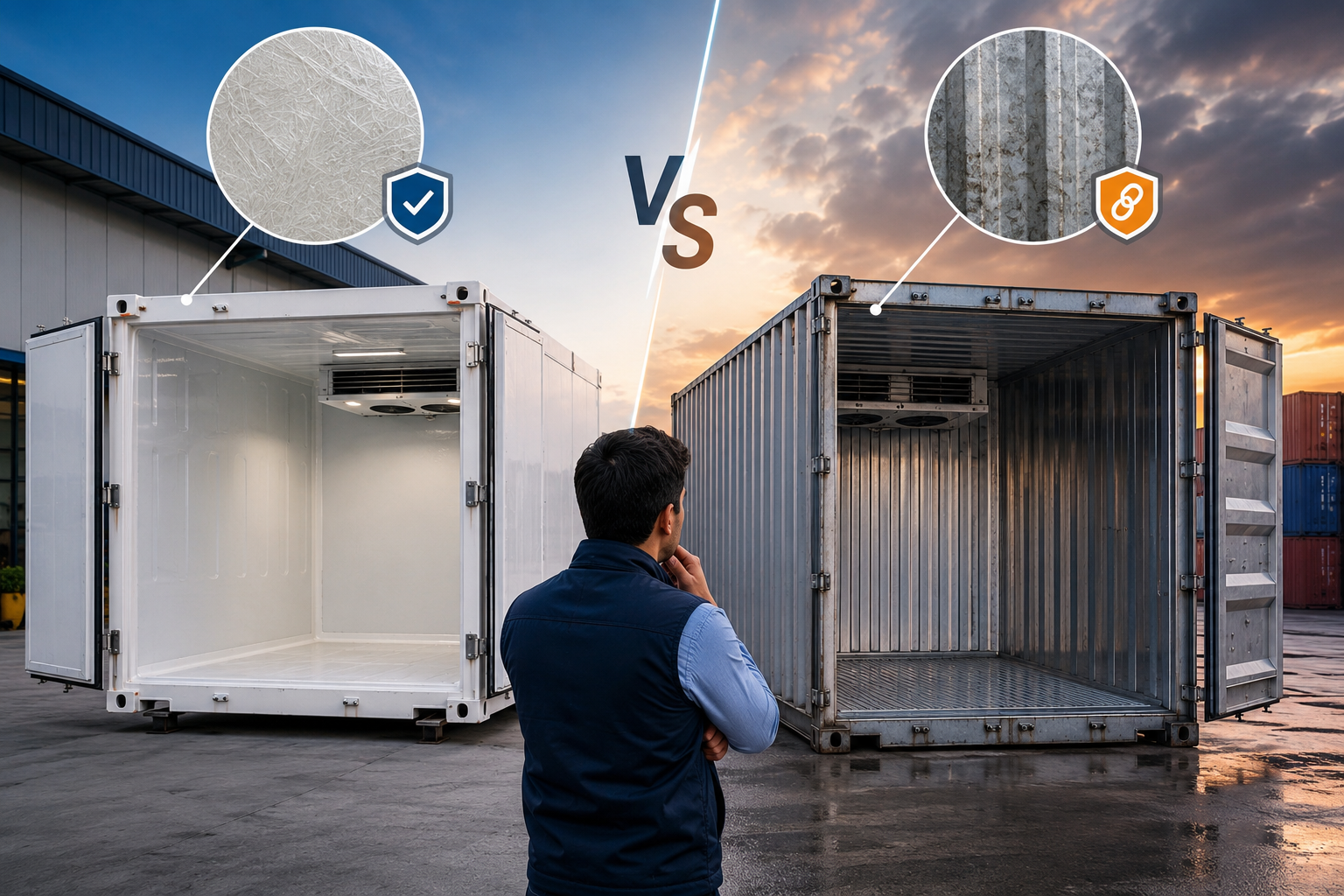
A GRP (Glass Reinforced Plastic) reefer box is built using composite panels that combine layers of fiberglass-reinforced plastic with high-density polyurethane foam (PUF) insulation. This construction creates a body that is lightweight, structurally strong, and highly resistant to external environmental conditions. Unlike conventional steel bodies, GRP does not corrode, making it a preferred choice for industries where hygiene, durability, and temperature consistency are critical.
For businesses operating a reefer truck over long distances or making frequent urban deliveries, a GRP body offers the advantage of reduced vehicle weight without compromising strength. A lighter body allows the vehicle to carry a higher payload while placing less strain on the engine, which can contribute to improved fuel efficiency over time.
Why Glass Reinforced Plastic Is Lightweight and Corrosion Resistant
Glass Reinforced Plastic is engineered by reinforcing a polymer resin with fine glass fibers, creating a material that delivers an excellent strength-to-weight ratio. This means the body remains rigid enough to withstand daily operations while being significantly lighter than traditional metal alternatives.
Another key advantage is its resistance to rust, moisture, and chemicals. Since a reefer vehicle is regularly exposed to changing temperatures, washdowns, humidity, and condensation, corrosion can become a major maintenance concern in metal-bodied containers. GRP eliminates this issue, helping the body retain its structural integrity and appearance over years of service.
When paired with insulated sandwich panel construction and high-density PUF insulation, GRP also minimizes heat transfer. This helps maintain stable internal temperatures, reduces the workload on the refrigeration unit, and supports more energy-efficient cold chain operations.
Ideal Applications for GRP Reefer Bodies
GRP reefer bodies are particularly well suited for industries where product safety, cleanliness, and thermal performance are non-negotiable. They are commonly used for:
- Pharmaceutical and vaccine distribution
- Fresh fruits and vegetables
- Floriculture and horticulture
- Frozen and processed foods
- Quick commerce and last-mile cold deliveries
For fleet operators looking to maximize payload, reduce maintenance, and improve long-term operating efficiency, a GRP reefer box truck is often the preferred choice. It combines reliable insulation with lower lifecycle costs, making it a practical investment for modern temperature-controlled logistics.
MS Reefer Container: Construction, Properties & Strengths
An MS (Mild Steel) reefer container is built using a robust steel outer structure combined with high-density PUF insulation to maintain the desired cargo temperature. Known for its strength and durability, this type of body is widely used in industries that require vehicles to withstand heavy loads, demanding road conditions, and frequent handling.
While an MS body is generally heavier than a GRP alternative, it offers excellent structural stability and remains a reliable choice for fleet operators looking for a cost-effective solution with proven performance. When paired with quality insulation and refrigeration systems, an MS reefer vehicle can deliver dependable temperature control across a wide range of transport applications.
Why Mild Steel Remains a Reliable Choice for Heavy-Duty Fleets
The defining feature of an MS reefer body is its corrugated steel outer skin, which adds rigidity and enhances its ability to withstand everyday wear and tear. This makes it particularly suitable for operations where vehicles are frequently loaded and unloaded or travel on uneven roads.
Steel also simplifies repairs. In the event of accidental damage, welding and component replacement are relatively straightforward, helping reduce vehicle downtime and making maintenance more accessible across service centres.
Although mild steel requires periodic anti-corrosion treatment and repainting to prevent rust, regular maintenance can significantly extend the body's service life. For many businesses, the lower upfront investment offsets these maintenance requirements, especially in less corrosive operating environments.
Ideal Applications for MS Reefer Containers
MS reefer bodies are well suited for industries that prioritize durability and value over weight savings. They are commonly used for:
- Dairy and milk transportation
- Fisheries and seafood logistics
- Poultry and meat distribution
- Ice cream and frozen food transport
- Regional and intercity cold logistics
For businesses expanding their cold chain equipment or adding a dependable reefer box truck to their fleet, an MS reefer container offers a practical balance of structural strength, thermal performance, and cost efficiency. When built with high-quality insulated panels and engineered correctly, it remains a trusted solution for a wide range of temperature-controlled transport requirements.
Also Read: How Refrigerated Truck Capacity Impacts Distribution Speed
Comparing GRP and MS Reefer Bodies for Refrigerated Trucks
Choosing between a GRP and an MS reefer body goes beyond comparing materials. The real difference lies in how each performs over years of operation, from carrying capacity and temperature retention to durability and maintenance. Evaluating these factors together gives fleet operators a clearer picture of which option delivers better value for their specific application.
Weight and Payload Capacity
The weight of the reefer body directly affects how much cargo a reefer truck can legally carry. GRP bodies are considerably lighter than MS bodies, allowing for higher payload capacity and, in many cases, better fuel efficiency. For fleets making frequent deliveries, these incremental gains can translate into improved operational efficiency and higher revenue over time.
Thermal Performance
Both GRP and MS reefer bodies can provide excellent insulation when manufactured using high-quality sandwich panel construction with high-density PUF insulation. However, thermal performance depends less on the outer material and more on factors such as panel thickness, foam density, sealing quality, and the precision of the body construction. A well-engineered reefer body will consistently maintain the required temperature regardless of whether it is made from GRP or MS.
Durability in Real-World Operating Conditions
Indian roads expose reefer vehicles to challenging conditions, including rough terrain, heavy rainfall, humidity, and constant loading and unloading. GRP performs exceptionally well in environments where moisture and corrosion are concerns, making it ideal for coastal regions and hygiene-sensitive applications. MS, on the other hand, offers superior resistance to physical impact and is well suited for demanding operations where structural robustness is a priority.
Maintenance and Repair Requirements
Maintenance plays a significant role in the overall cost of ownership. GRP bodies require minimal upkeep as they are naturally resistant to rust and easier to clean, helping reduce maintenance costs over their lifespan. MS bodies generally have a lower initial purchase price but require regular anti-corrosion treatment, repainting, and periodic inspections to prevent rust. While repairs to steel bodies are often simpler and more widely available, ongoing maintenance should be factored into long-term fleet planning.
Initial Investment vs Lifecycle Value
MS reefer bodies are typically more affordable upfront, making them attractive for businesses with budget constraints or expanding fleets. GRP bodies usually involve a higher initial investment but can deliver lower operating and maintenance costs over time. Rather than focusing solely on purchase price, fleet owners should evaluate the total cost of ownership, including fuel savings, maintenance expenses, vehicle uptime, and expected service life, before making a decision.
Choosing the Right Reefer Body for Your Industry
There is no one-size-fits-all answer when choosing between a GRP and an MS reefer body. The right choice depends on the type of products you transport, your delivery routes, fleet utilization, and long-term operating costs. While both are designed to maintain temperature integrity, their strengths differ based on application. A lightweight GRP body is often preferred for industries that prioritize hygiene, corrosion resistance, and fuel efficiency, whereas an MS body offers greater structural strength and a lower initial investment for heavy-duty operations. Choosing the right body for your reefer truck or reefer van ensures better cargo protection, improved operational efficiency, and a more reliable cold chain equipment setup.
GRP Reefer Body is Best Suited For
GRP reefer bodies are ideal for transporting high-value or temperature-sensitive goods where hygiene and thermal consistency are critical. Their corrosion-resistant construction and lighter weight make them well suited for pharmaceutical and vaccine distribution, fresh fruits and vegetables, horticulture, frozen foods, and last-mile deliveries. For businesses looking to maximize payload while reducing maintenance and fuel consumption, a GRP reefer vehicle offers significant long-term value.
MS Reefer Body is Best Suited For
MS reefer bodies are better suited for operations that demand structural durability and cost efficiency. They are commonly used for dairy, fisheries, poultry, meat, beverages, and regional food distribution, where vehicles are exposed to frequent loading, rough roads, and heavy-duty usage. Although they require periodic maintenance to prevent corrosion, MS bodies remain a dependable choice for fleet operators seeking a robust reefer box truck with a lower upfront investment.
Conclusion
Choosing between a GRP and an MS reefer body isn't about finding a universally better option. It's about selecting the solution that aligns with your cargo, operating environment, fleet objectives, and long-term cost considerations. While GRP offers advantages in terms of weight, corrosion resistance, and lower maintenance, MS remains a dependable choice for businesses that prioritize structural strength and a lower initial investment. Evaluating the total cost of ownership rather than just the purchase price can help you make a decision that delivers lasting value.
At Sub Zero Reefers, we understand that every temperature-controlled operation has unique requirements. That's why our GRP and MS reefer bodies are engineered to meet different industry demands while delivering reliable insulation, structural integrity, and long-term performance. Whether you're expanding your reefer truck fleet, upgrading a reefer vehicle, or investing in dependable cold chain equipment, partnering with an experienced manufacturer can help ensure your fleet is built for efficiency, reliability, and the road ahead.
Frequently Asked Questions
1. What is the difference between a GRP and an MS reefer body?
A GRP reefer body is lightweight, corrosion resistant and requires less maintenance, while an MS reefer body offers greater structural strength and a lower upfront cost. Both provide excellent insulation when engineered for refrigerated truck applications.
2. Is a GRP reefer box lighter than an MS reefer body?
Yes. A GRP reefer box truck is significantly lighter than an MS body, allowing higher payload capacity and improved fuel efficiency. It is a preferred choice for businesses operating high frequency deliveries.
3. Which reefer body is more durable, GRP or MS?
Both are durable in different operating conditions. GRP performs better in corrosive and high moisture environments, while MS provides greater resistance to physical impact and heavy duty applications. The right choice depends on your operational requirements.
4. What is the price difference between GRP and MS reefer bodies?
MS reefer bodies generally have a lower initial purchase cost than GRP bodies. However, GRP can deliver better long term value through lower maintenance costs, improved fuel efficiency and longer service life. The final investment also depends on sandwich panel construction and PUF insulation specifications.
5. Which reefer body is better for pharmaceutical cold chain logistics?
GRP reefer bodies are typically preferred for pharmaceutical transport because they are corrosion resistant, easy to clean and maintain consistent temperatures, making them ideal for sensitive cold chain equipment applications.
6. Can an MS reefer body be replaced with a GRP body on the same truck?
Yes. In many cases an MS body can be replaced with a GRP body if the chassis, payload capacity and mounting points are compatible. The conversion should always be carried out by an experienced refrigerated truck body builder.