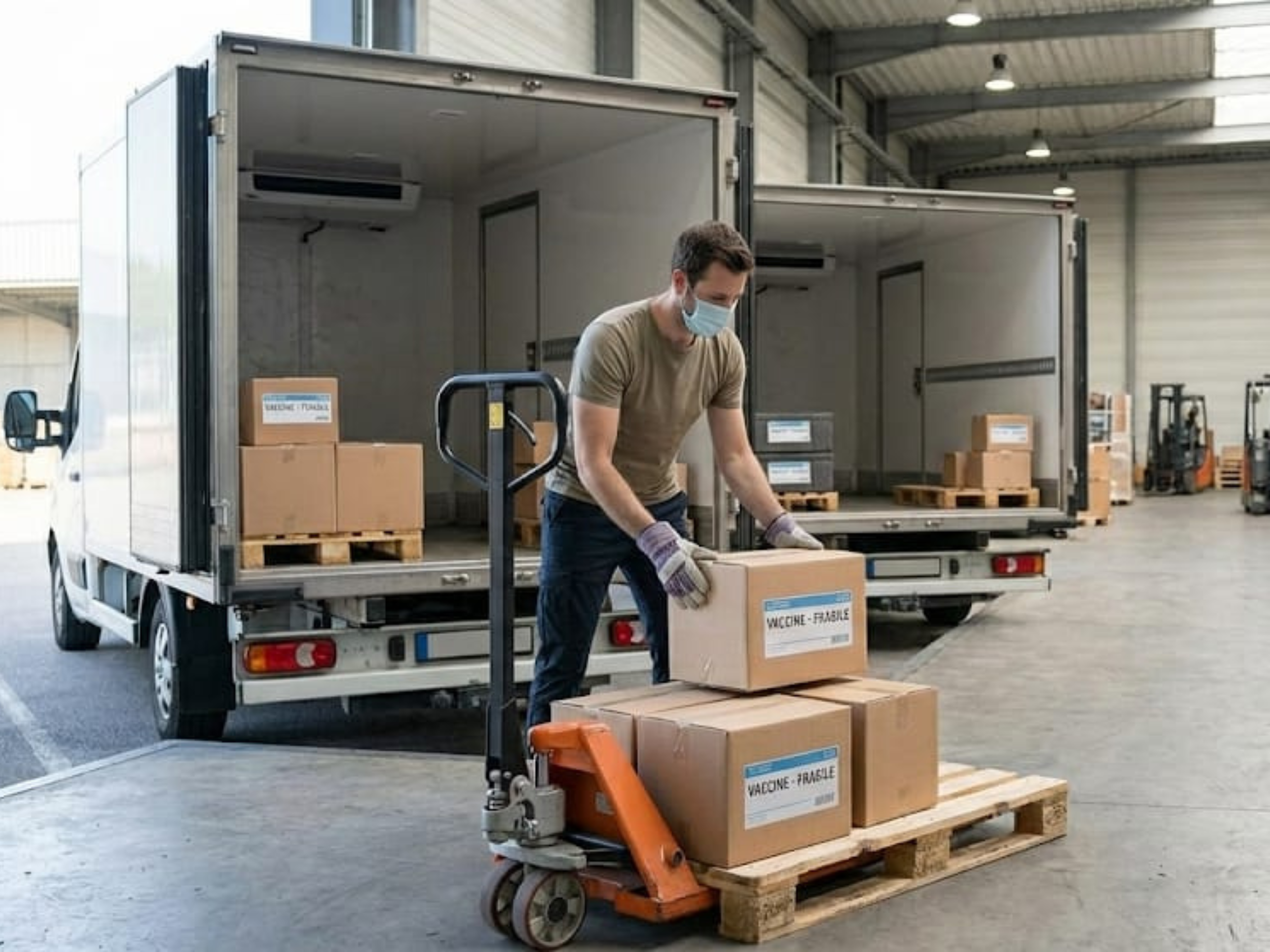
Vaccines are sensitive biological products. A small temperature shift can reduce their strength. Cold chain logistics for vaccine distribution is used because vaccines are made of delicate biological components, like proteins or weakened viruses, that trigger the immune response. Even slight heat or freezing can denature these proteins or damage the active ingredients, making the vaccine less effective. Cold chain logistics maintain precise temperatures during vaccine distribution which is critical to ensure every dose works as intended.
Some stay stable only when chilled while others, like certain CEVA vaccine batches or doses moved under covax vaccine distribution, need ultra low temperatures. This is why the cold chain logistics is the backbone of vaccine distribution.
When temperatures stay consistent, doses remain safe. When they don’t, entire batches can lose potency, leading to delays in routine programs, emergency drives, coronavirus vaccine distribution, and influenza vaccine distribution. The vehicle carrying the vaccines becomes a moving storage unit, which means the quality of the equipment matters as much as the route.
Strong insulation, steady airflow, and reliable temperature control are essential for safe vaccine logistics. Poor construction or uneven cooling can break the chain, which affects the whole vaccine supply chain. That is why manufacturers play such a critical role in vaccine cold chain logistics and vaccine logistics and cold chain management.
Today, logistics teams also expect real time visibility and accurate data recording. Modern vaccine logistics management often includes digital monitoring tools and even technologies like blockchain for vaccine distribution to track every dose along the way.
In short, dependable engineering protects the vaccine and the people waiting for it. Sub Zero Reefers manufactures temperature controlled bodies that support safe, consistent movement of every vaccine shipment, no matter the distance or conditions.
New Era of Cold Chain Logistics for Vaccine Distribution
The way vaccines are moved across the world has changed dramatically in recent years. The global vaccine distribution network now has to respond faster, carry larger volumes, and maintain stricter quality standards in cold chain logistics for vaccine distribution than ever before. Programs like coronavirus vaccine distribution and ongoing influenza vaccine distribution campaigns have exposed the critical role of well-designed cold chain equipment. Here are the key trends shaping this new era:
- Increased Demand for Reliable Reefer Vehicles
Countries and pharmaceutical companies are investing heavily in high-quality refrigerated trucks and trailers to handle sensitive vaccine shipment needs. Longer travel distances, extreme climates, and a growing number of vaccination centers require vehicles that maintain stable temperatures throughout the journey. Advanced manufacturing ensures consistent performance, which is vital for safe vaccine logistics. - More Focus on End-to-End Visibility
Health authorities now require real-time tracking of every dose. This means knowing exactly where a vaccine is, how long it has been in transit, and whether it has stayed within the required temperature range. Vehicles compatible with monitoring systems make vaccine logistics management easier, ensuring that vaccine logistics and cold chain management can meet regulatory compliance and reduce the risk of spoilage. - More Complex Vaccine Profiles
Modern vaccines differ in stability requirements. Some require standard refrigeration between 2-8°C, while others, like mRNA vaccines or certain CEVA vaccine doses, require deep-freeze conditions. This complexity makes specialized refrigerated vehicles and tailored equipment essential. Proper design helps maintain temperature uniformity for every vaccine shipment. - Sustainability Pressures in Cold Chain Logistics for Vaccine Distribution.
Cold chain operations consume a lot of energy, and there is increasing demand for environmentally friendly solutions. Refrigerated vehicles now need to combine efficiency with durability. Better insulation, energy-efficient compressors, and smart temperature control reduce power consumption while supporting vaccine cold chain logistics.
Also read: How Refrigerated Trucks Keep Dairy Products Fresh
How Refrigerated Vehicle Innovations Improve Cold Chain Logistics for Vaccine Distribution
In modern vaccine distribution, refrigerated vehicles are mobile storage units that protect sensitive doses throughout the journey. With long routes, unpredictable delays, and varying climates, the design of these vehicles has become critical.
Advanced insulation, airtight doors, and controlled airflow ensure that vaccines remain stable from the production facility to the clinic. For sensitive doses, such as those in large-scale programs, maintaining consistent temperatures is essential to prevent spoilage.
Technology now plays a key role. Sensors and real-time monitoring give logistics teams the visibility they need, helping track conditions during transit and respond quickly to any issues. Some systems even use blockchain to create secure, tamper-proof records, adding an extra layer of assurance.
Durability is equally important. Vehicles must withstand rough roads, long rural routes, and extreme weather without compromising performance. Reliable design reduces waste, supports smooth supply chain operations, and ensures vaccines reach their destinations safely.
Every improvement—from stronger insulation to smarter monitoring—helps keep vaccines effective. High-quality refrigerated vehicles provide the foundation for safe and efficient vaccine logistics, giving logistics teams confidence that every shipment arrives as intended.
The Role of Technology in the Future of Vaccine Cold Chain Logistics
Technology now plays an essential role in vaccine logistics and cold chain management. As supply chains modernize, a few innovations are gaining momentum.
- Real-time Monitoring for Every Shipment
Modern cold chain equipment allows logistics teams to monitor the exact temperature of each vaccine shipment at every stage. This is critical because even minor temperature fluctuations can compromise sensitive doses, whether it’s part of influenza vaccine distribution or urgent coronavirus vaccine distribution. Real-time alerts help managers take immediate action, preventing potential spoilage and ensuring vaccines remain effective when they reach healthcare facilities. - Blockchain for Secure and Transparent Tracking
Using blockchain for vaccine distribution allows every movement of a dose to be recorded on a secure, tamper-proof ledger. This level of transparency strengthens trust across the vaccine supply chain, making it easier for regulators, healthcare providers, and distributors to verify that vaccines were stored and transported under the correct conditions. It also simplifies compliance and reporting during large-scale immunization drives. - Predictive Cooling and Smart Temperature Control
Advanced refrigeration systems can adjust temperatures automatically in response to environmental changes. This ensures that sensitive vaccines remain stable, even during long trips, power interruptions, or extreme weather. Such technology supports efficient vaccine logistics management, reduces wastage, and allows logistics teams to maintain consistent quality for every dose. - Enhanced Planning and Responsiveness
Smart monitoring tools provide actionable insights, enabling logistics teams to anticipate potential problems before they occur. Dashboards, automated alerts, and performance tracking allow managers to make informed decisions quickly, improving overall reliability in vaccine cold chain logistics. This proactive approach is especially important in large-scale vaccine distribution programs where timing and consistency are critical. - Better Visibility and Accountability for Stakeholders
Technology provides full visibility across the vaccine supply chain, letting all stakeholders track progress and confirm safety measures at every step. From manufacturers to local clinics, everyone can access verified data about temperature, transit times, and handling. This not only ensures safe delivery but also builds confidence in the system, especially for complex initiatives like CEVA vaccine or Covax vaccine distribution.
Why the Right Equipment Strengthens Cold Chain Logistics for Vaccine Distribution
When people talk about vaccine logistics and cold chain management, the conversation often centers on routes, storage facilities, or scheduling. What rarely gets the attention it deserves is the quality of the equipment itself. A strong cold chain doesn’t just happen, it begins with strong, well-engineered vehicles.
A carefully designed refrigerated body keeps temperatures steady, reduces energy consumption, and extends the life of the equipment. Most importantly, it ensures every vaccine shipment arrives safe and effective. Even the most meticulously planned vaccine logistics network can falter if the vehicles aren’t up to the task.
Sub Zero Reefers understands this responsibility. Years of refining insulation, airflow, structural strength, and temperature control mean our vehicles can handle everything from routine vaccine distribution to urgent coronavirus vaccine distribution or CEVA vaccine deliveries. For logistics managers overseeing critical deliveries, this level of reliability turns a complex operation into a smooth, predictable process, giving complete confidence across the vaccine supply chain.
Conclusion
In vaccine distribution, every degree counts, every mile matters, and every dose is precious. The cold chain is more than a process. It is the lifeline that ensures vaccines reach people safely and remain effective. From routine immunization drives to large-scale coronavirus vaccine distribution and critical CEVA vaccine deliveries, the difference between success and failure often comes down to the reliability of the equipment moving those doses.
Sub Zero Reefers builds refrigerated trucks and trailers with precision, durability, and advanced temperature control. Our vehicles are designed to support seamless vaccine logistics management, strengthen the vaccine supply chain, and make vaccine logistics and cold chain management predictable, safe, and efficient.
For logistics managers, pharmaceutical companies, or health authorities looking to upgrade their fleet, choosing the right equipment is a responsibility. With Sub Zero Reefers, you can ensure that every vaccine shipment arrives in perfect condition, every time. Explore our solutions today and build a cold chain you can trust.
Frequently Asked Questions
What is the vaccine cold chain?
The vaccine cold chain is a temperature-controlled supply chain that keeps vaccines effective from manufacturer to administration. It ensures every dose stays within the required temperature range throughout transit and storage.
What equipment is used in the cold chain?
Refrigerated trucks, insulated containers, cold rooms, and portable vaccine carriers are commonly used to maintain proper conditions. Sensors, data loggers, and temperature monitors ensure consistent control.
What temperatures are vaccines stored at?
Most vaccines are stored between 2–8°C, while some, like mRNA-based doses, require ultra-low temperatures around -70°C. Each vaccine’s storage depends on its formulation and stability requirements.
How is humidity and packaging controlled?
Specialized insulated packaging and moisture-resistant containers protect vaccines from humidity. Monitoring tools and climate-controlled storage prevent exposure to damaging moisture or condensation.
