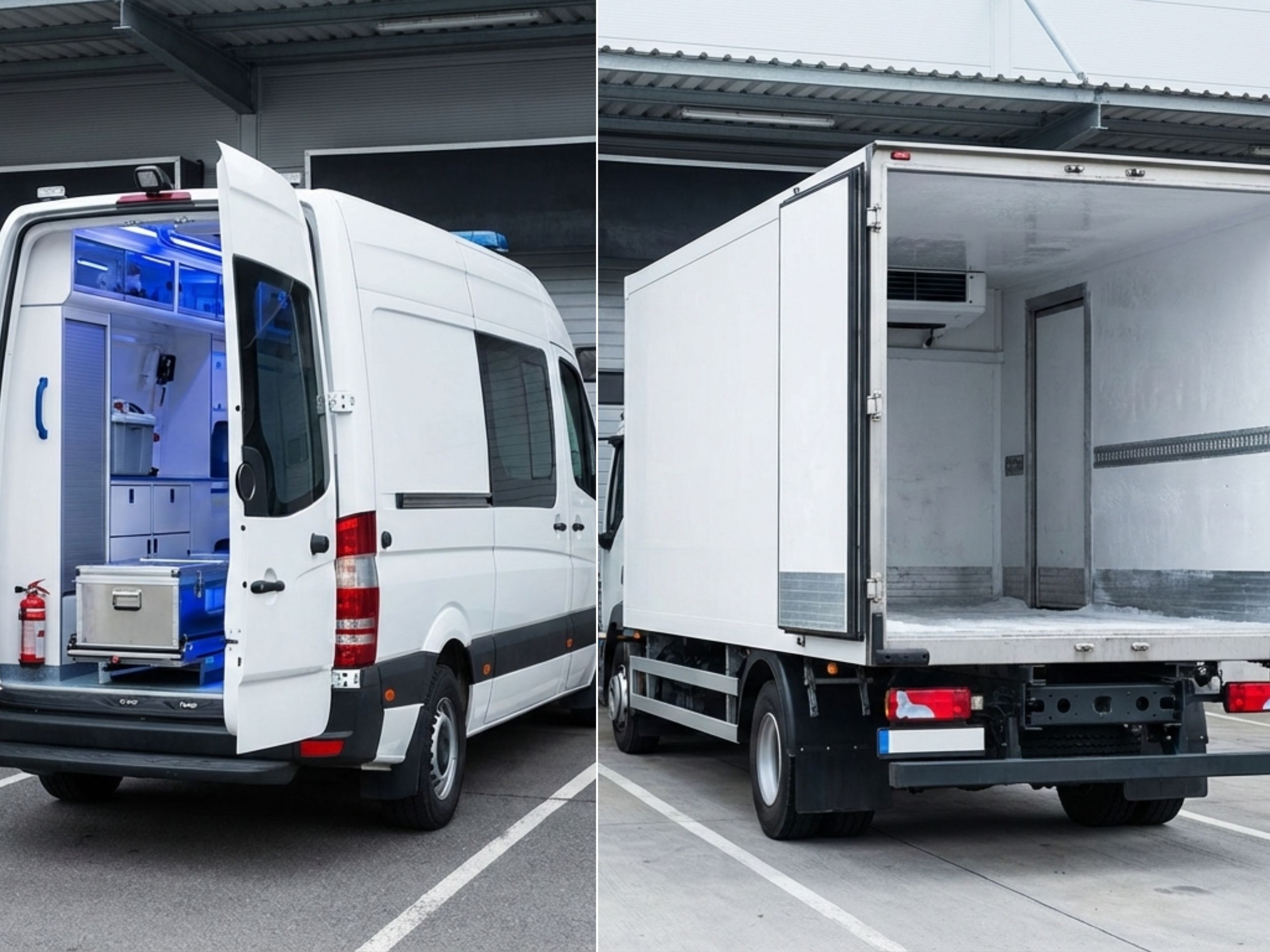
When a doctor says they found an organ match, the race that follows is not just against time. It is against temperature, distance, biology, and uncertainty.
From the second an organ is recovered, its survival depends on one invisible factor staying perfectly stable: the cold chain. In real life, human organ transport via refrigerated trucks is not a straight line from donor to patient. It is a sequence of handovers, vehicles, checkpoints, traffic jams, weather changes, airport queues, and hospital corridors. At each step, the organ is exposed to risk. What protects it through all of this is a carefully controlled temperature environment that never switches off, never drifts, and never fails.
That is what the cold chain truly does. It creates a moving safe zone around something that cannot protect itself. Inside a refrigerated truck, the organ is shielded from heat spikes, humidity changes, and environmental shock. Sensors continuously monitor temperature. Backup power systems stand ready. Alarms trigger the moment even a small deviation appears. This is the frontline of medical organ transport, where engineering quietly supports medicine in the most literal way.
When this system works, surgeons receive an organ that is viable, stable, and ready for transplant. When it fails, the consequences are irreversible. This is why cold chain manufacturing is not just about building reefers that cool. It is about building systems that think, respond, and protect life under pressure.
For manufacturers, this responsibility changes everything.
To truly support modern organ transport, refrigerated systems must be designed with far more than basic cooling performance in mind. Precision temperature stability must be absolute, even when the vehicle is stuck in traffic for hours or climbing through extreme weather. Redundant cooling circuits and backup power cannot be optional. They are survival mechanisms. Remote monitoring must be seamless so every stakeholder can see what is happening inside the truck in real time, not after the fact.
Manufacturers also need to focus on durability and reliability. These vehicles are not moving vegetables or packaged goods. They are carrying living tissue that cannot be replaced. Every component, from insulation to compressor design to door sealing, must perform flawlessly across repeated emergency deployments.
This is the engineering reality behind emergency organ transport via refrigerated trucks . It is not just cold. It is a controlled, resilient, intelligent cold.
And this is where cold chain manufacturers like Sub Zero Reefers define their leadership. By designing reefers that understand the stakes, respond to real-world medical conditions, and perform without compromise, they turn refrigeration into one of the most critical links in modern transplant medicine.
Organ Transport via Refrigerated Trucks as a Risk-Managed System
At the executive and clinical level, organ transport via refrigerated trucks is never treated as a simple movement of cargo. It is treated as a continuously managed risk system operating under severe biological time pressure.
When an organ leaves the donor facility, the objective is not just to deliver it on time. The objective is to preserve its clinical usability across a fragile chain of events where multiple forms of failure are always possible. This is why medical organ transport functions more like critical infrastructure than conventional logistics. Every single decision made during the journey is fundamentally a risk decision.
Thermal Risk in Organ Transport via Refrigerated Trucks
The most visible threat is thermal exposure. Each organ has narrow temperature tolerance limits. Even brief excursions outside the acceptable range accelerate cellular damage and increase the probability of transplant rejection. Refrigeration systems are therefore not simply cooling units. They are the primary clinical safeguard protecting the organ’s biological integrity throughout human organ transport.
Time Risk
Time is not a single countdown clock. It is a series of shrinking buffers. Delays at handover points, traffic congestion, weather disruptions, aircraft scheduling conflicts, or facility readiness can all erode these buffers. In emergency organ transport via refrigerated trucks, these time margins often collapse entirely, forcing logistics teams to operate in continuous crisis mode. The transport plan must constantly adapt in real time while preserving temperature stability.
Mechanical and Power Risk
Every refrigeration system introduces mechanical exposure. Compressors fail. Power supplies fluctuate. Doors open and close. Vibration stresses components over long distances. Advanced refrigerated trucks designed for medical use must anticipate these realities. Redundant cooling circuits, backup power, rapid temperature recovery, and fault tolerance are no longer premium features. They are baseline survival requirements in modern organ transplant logistics.
Operational and Handoff Risk
Risk intensifies at transition points. The movement from operating theatre to transport vehicle, from road to air, from airport to transplant center. Each handoff introduces potential for temperature drift, documentation errors, or data loss. The cold chain must be engineered not for ideal conditions but for these imperfect, high-pressure transitions that define real-world organ recovery transport.
Failure Mode Management
Unlike conventional freight, not all failures are equal. In blood and organ transport, some failure modes are recoverable and others are terminal. A brief routing delay may be survivable if thermal stability is maintained. A temperature excursion may permanently compromise the organ regardless of how quickly it arrives. Mature transport systems are therefore designed around identifying which failures can be absorbed and which must never occur.
This is the hidden reality of liver transportation and all transplant logistics. The work is not in moving the organ. The work is in controlling risk across a complex system where biology, engineering, and human decision-making intersect under extreme pressure.
What the public sees as logistics is only the surface. Beneath it operates one of the most demanding risk management systems in modern medicine.
Why Temperature Control in Organ Transport via Refrigerated Trucks Is Critical
In transplant medicine, the first lifesaving intervention does not happen in the operating room. It happens the moment the organ is placed into a temperature-controlled environment. From that point onward, every clinical outcome is shaped by how well the cold chain performs. During medical organ transport and organ recovery transport, no surgeon, medication, or medical device is actively protecting the organ. Only temperature control is.
This makes the cold chain the single continuous clinical safeguard throughout the entire pre-surgical lifecycle of the organ. While surgeons prepare and patients wait, the refrigeration system is preserving tissue viability, slowing cellular decay, and maintaining transplant suitability across every kilometer of travel. In this context, refrigerated trucks are not logistics assets. They are mobile clinical environments.
The precision, resilience, and fault tolerance of their refrigeration systems directly influence transplant success rates. This is why manufacturers designing reefers for human organ transport are, in effect, building medical equipment. Their engineering decisions determine whether an organ arrives in a condition that can sustain life. Whether the industry formally classifies it that way or not, the cold chain now functions as a critical extension of modern transplant medicine.
Also read: Cold Chain Logistics For Meat Distribution
Design Philosophy: From Cooling Units to Life-Critical Infrastructure
In organ transport, refrigerated trucks are no longer passive carriers. They are mobile medical environments. The performance of their refrigeration systems directly determines whether an organ remains viable for transplantation. This perspective reframes cold chain design from “keeping things cold” to “safeguarding life under uncertainty.” Manufacturers are not simply building vehicles, they are engineering a critical medical subsystem.
Every human organ transport mission involves multiple risk layers: temperature variation, mechanical stress, transit delays, and handoff vulnerabilities. The reefer is the only constant in this chain. Unlike conventional cargo, failure is not just inconvenient, it is irrecoverable. That reality fundamentally changes design priorities. Medical organ transport systems must anticipate stress, recover from disruptions, and maintain absolute reliability.
Core Design Principles for Life-Critical Reefers
- Absolute Temperature Integrity: Organs tolerate a narrow temperature range, often 2°C–8°C. Any deviation risks cellular damage. Advanced emergency organ transport reefers must maintain consistent thermal conditions despite door openings, traffic delays, or extreme weather.
- Redundancy and Fail-Safe Mechanisms: Backup compressors, dual power sources, and fail-safe circuits are essential. In high-stakes operations like organ recovery transport, redundancy transforms potential catastrophic failure into a controlled incident.
- Rapid Recovery Capabilities: Every transition introduces potential exposure. Liver transportation and other sensitive organ transfers demand systems that restore optimal temperature within minutes, not hours.
- Integrated Monitoring and Data Transparency: Continuous real-time monitoring ensures organ transplant logistics teams can respond proactively. Telemetry tracks temperature, vehicle status, and environmental conditions, allowing teams to intervene before minor deviations become critical failures.
- Mechanical and Operational Resilience: Refrigerated trucks for medical use must withstand vibration, long transit durations, and variable infrastructure quality. Life-critical design assumes these stressors as the baseline, not the exception.
When a refrigerated truck is engineered as life-critical infrastructure rather than standard cargo equipment, every element directly contributes to transplant success. This shift in perspective elevates cold chain manufacturing from logistics support to a core enabler of modern healthcare.
For manufacturers like Sub Zero Reefers, this approach positions them not merely as suppliers but as essential partners in blood and organ transport, shaping outcomes for patients, hospitals, and entire healthcare networks.
Conclusion
Organ transport is not simply logistics. It is a carefully orchestrated risk system where every decision, every handoff, and every degree of temperature matters. The success of a transplant depends as much on engineering precision as it does on surgical skill. From emergency organ transport to routine human organ transport, the cold chain is the first and most critical line of defense in preserving organ viability.
Manufacturers of refrigerated trucks play a pivotal role in this ecosystem. Life-critical design, redundancy, real-time monitoring, and resilience under operational stress are no longer optional, they are essential. These capabilities directly influence patient outcomes, operational reliability, and the trust hospitals place in their logistics partners.
Sub Zero Reefers leads the industry in creating purpose-built, high-performance refrigerated systems that meet these exacting demands. By designing reefers as mobile medical environments, Sub Zero ensures that every organ, from liver transportation to broader blood and organ transport, arrives safely, reliably, and within the precise temperature window required for a successful transplant.
For logistics managers, healthcare networks, and transplant coordinators seeking dependable solutions, investing in advanced refrigerated technology is not just operational, it is lifesaving. Discover how Sub Zero Reefers can strengthen your organ transplant logistics and ensure that every mission, every organ, and every life is protected from start to finish.
Frequently Asked Questions
- How is organ transportation managed in refrigerated trucks?
Organs are packed in sterile, temperature-controlled containers and continuously monitored during transit, with precise refrigeration maintaining 2°C–8°C. Real-time sensors and backup systems ensure stability throughout the journey. - How long can organs be transported in refrigerated trucks?
Transport time depends on the organ: kidneys up to 24 hours, livers 8–12 hours, hearts 4–6 hours. Refrigerated trucks maintain viability within these strict windows. - What types of organs are typically transported via refrigerated trucks?
Commonly transported organs include kidneys, livers, hearts, lungs, and pancreases, often for regional or last-mile delivery between hospitals and transplant centers. - Can refrigerated trucks transport organs internationally?
Yes, for cross-border transport, organs are moved via refrigerated trucks to and from airports, maintaining temperature control until handover to air carriers. - What types of laboratory samples require refrigerated transport?
Samples like blood, plasma, tissue biopsies, vaccines, and certain diagnostic reagents require refrigerated transport to preserve integrity and prevent degradation.
