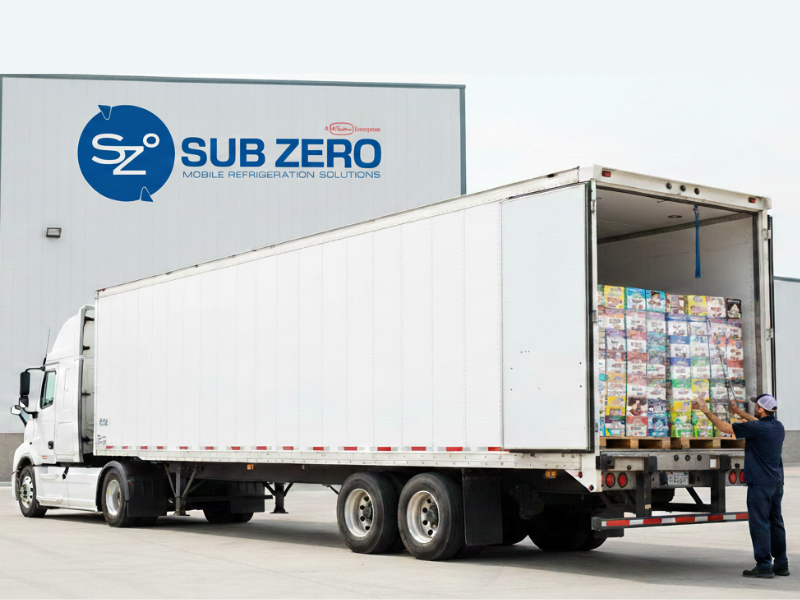
Ice cream might look simple on a menu, but it’s one of the most demanding products in the food supply chain. It doesn’t forgive temperature mistakes. Even a brief rise in heat can undo hours of careful production. The texture changes. Ice crystals form. The taste dulls. And once it melts and refreezes, there’s no way to hide it. The customer immediately knows something went wrong long before the first bite. Refrigerated trucks for ice cream delivery ensure perfect quality on every route.
To make it harder, ice cream doesn’t move slowly. It moves fast. Summer campaigns, festival offers, school vacations, influencer-driven launches, demand can skyrocket overnight. Consumers expect ice cream delivery, dessert delivery, and frozen dessert delivery to feel instant and flawless no matter how hot it is outside.
When you see a freezer full of ice cream in a shop or a perfectly frozen tub arriving at someone’s home, it looks effortless. But that smooth experience only happens when the refrigerated trucks for ice cream delivery works exactly the way it’s supposed to. Every player relies on one thing staying rock solid during the journey: the refrigerated truck.
That truck isn’t just transport. It’s a protector. It’s the only thing standing between a brand’s hard work and the risk of melted stock, customer complaints, and wasted capital. That’s why this blog doesn’t just talk about cooling technology. It looks at what it really takes to keep ice cream frozen from the factory floor all the way to the last mile. And it highlights how manufacturers continue to push the cold chain forward for brands that can’t afford uncertainty.
What Makes a Refrigerated Truck Perfect For Ice Cream Delivery?
Ice cream is far more sensitive than most frozen products. Even a small temperature rise can change its texture and taste. At -18°C it stays perfect. At 0°C it starts melting. And once it melts and refreezes, the smooth body becomes icy and grainy and that’s something customers notice immediately.
This is why brands that rely on ice cream delivery, dessert delivery, frozen dessert delivery, or any form of frozen foods delivery can’t afford temperature mistakes. Delays, long unloading times, or manual handling errors don’t just slow operations. They lead to returns, wasted stock and unhappy customers.
The only way to protect product quality through every season and every route is deep, uninterrupted freezing from the moment the tubs leave the factory to the last mile. And that level of reliability depends on how well the refrigerated truck is designed, built and maintained.
Calling it a truck with a freezer doesn’t do it justice. Refrigerated trucks for ice cream delivery is a precision-engineered setup that fights external heat, prevents temperature dips and keeps cargo frozen for dessert delivery, ice cream delivery, and last mile delivery even when the road conditions are unpredictable. Some of the most important elements include:
- High performance reefer units
These units are built specifically for deep-freeze cargo. For ice cream and other frozen foods delivery, the cooling system must consistently hold -18°C or lower even in peak summer heat. Stability matters more than brute cooling power. If the temperature cycles up and down, the product experiences micro-thawing, which affects texture and taste. - Advanced insulation design
Insulation is the difference between a regular cold box and a true frozen transport system. Sub Zero Reefers uses multi-layer insulated panels that minimise heat gain so the cooling system doesn’t need to overwork. This leads to steady freezing conditions for ice cream delivery without unnecessary energy use. - Airflow that prevents hotspots
When cartons are stacked close together, warm air pockets can form. Purpose-built airflow avoids this. Even temperature distribution ensures that products near the rear doors stay just as frozen as those located next to the reefer unit. This level of control is crucial for last mile delivery across long routes. - Doors built for efficiency
Frequent loading and unloading is part of dairy transport, store replenishment and last mile delivery. Every door opening introduces heat. Refrigerated truck manufacturers reduce the impact by using stronger seals and faster air recovery systems while designing body structures that retain cold for longer. - Telematics and real-time monitoring
Temperature control today is digital. Real-time monitoring notifies teams instantly if a deviation occurs, a door is left open or the cooling load changes. This blend of hardware and software builds trust across the temperature controlled logistics process, reducing human error and product losses.
Also Read:
Why Refrigerated Trucks for Ice Cream Delivery Need Special Designs
There was a time when one type of refrigerated truck was expected to handle every frozen category. Poultry, vegetables, pharmaceuticals and ice cream all moved in the same fleet. That approach made sense when delivery volumes were low and frozen foods weren’t driving demand. The market has changed completely.
Today, the frozen category is one of the most competitive in food logistics, and brands depending on ice cream delivery, frozen dessert delivery and frozen foods delivery can’t rely on generic reefers anymore.
Here’s what really triggered the shift:
- The frozen category is expanding fast with more premium ice creams, artisanal desserts and D2C food brands entering the market.
- Delivery cycles are faster due to ecommerce and quick commerce expectations.
- Seasonal peaks and promotional campaigns create volume unpredictability across regions.
- Even a small temperature rise during last mile delivery can result in massive product losses.
- Retailers and customers are now unwilling to accept thawed or refrozen products, even once.
- Brands want scalability without the fear of melted inventory damaging their reputation.
As a result, the industry is moving away from one-size-fits-all refrigerated trucks and toward specialised builds designed for different cargo needs. Ice cream and frozen desserts require deeper freezing, stronger insulation and faster air recovery after door openings. Pharmaceuticals or frozen seafood, on the other hand, require completely different cooling behaviour.
This is the gap where Sub Zero Reefers has become a preferred partner. They don’t operate as a logistics provider. They operate as a manufacturer focused on engineering vehicles that enable high-performance cold chain operations. Their builds help cold store operators and temperature controlled logistics companies deliver frozen products in the exact condition they left the factory.
The takeaway is simple.
- It’s no longer enough to move products from Point A to Point B
- The new priority is protecting product integrity every minute of the journey
Purpose-built frozen transport gives brands room to scale confidently. Campaigns can launch in peak summer without risk. New cities can be added without worrying about temperature shock on arrival. And retailers can trust that every shipment will meet customer expectations.
How Sub Zero Became India’s Most Trusted Builder of Deep-Freeze Reefer Trucks?
Sub Zero Reefers isn’t in the business of transporting ice cream. They’re in the business of building the trucks that protect it. That difference matters. Ice cream doesn’t travel on perfect highways or predictable routes. Vehicles get stuck in traffic. They face humidity near ports, long halts at tolls and unloading delays at crowded retail stores. A freezer unit alone cannot survive that environment. A purpose-built truck can.
Every refrigerated body Sub Zero manufactures is designed to protect frozen cargo in real-world use cases, not just in lab conditions. That’s one of the reasons they’ve become the top choice for brands relying on ice cream delivery, frozen dessert delivery, dessert delivery and high-volume frozen foods delivery.
What sets them apart is simple: they don’t build a truck first and add cooling later. The cooling experience is engineered into the design from the beginning.
Some of the strengths that separate Sub Zero from other manufacturers:
- Thermal engineering that keeps heat out even in peak summer temperatures
- Reefer systems calibrated for deep-freeze stability rather than fluctuating cycles
- Panels that resist temperature rise during door openings in dairy transport and last mile delivery
- Airflow design that stops warm and cold pockets from forming anywhere inside the body
- Build quality that maintains freezing performance for years, not just in the first few months
- Food-grade body finish that protects hygiene from factory to retailer
- Smart telematics that monitor and report temperature deviations in real time to support temperature controlled logistics
These aren’t aesthetic choices. They protect product integrity. They reduce spoilage. They help cold chain brands deliver on customer expectations without absorbing losses caused by thawing.
And for ice cream brands trying to scale into new cities, launch seasonal campaigns or strengthen D2C delivery, this level of reliability becomes a competitive advantage. When the refrigerated truck is engineered correctly, temperature stops being a risk factor.
That is why Sub Zero Reefers has earned its reputation not just as another manufacturer, but as the most trusted refrigerated truck maker for deep-freeze cargo in India.
Why Refrigerated Trucks for Ice Cream Delivery Matter
Transporting ice cream is not just about moving cartons. It is about guarding the brand experience from the moment the product leaves the factory until the moment a customer opens the box at home.
That requires trucks built for deep freeze performance. Trucks designed to defeat heat, humidity and handling errors at every stage of the delivery chain.
Sub Zero Reefers helps brands do exactly that by manufacturing refrigerated trucks engineered specifically for frozen cargo protection. Because when the truck is reliable, the product stays reliable.
If you are planning to scale ice cream delivery, expand frozen foods delivery, or upgrade your temperature controlled logistics, it may be time to explore a transport solution designed specifically for frozen success. Your supply chain is one of a kind. Give us insight into your cargo and your market plans. We’ll help you choose and customise the perfect refrigerated truck for long-term reliability.
