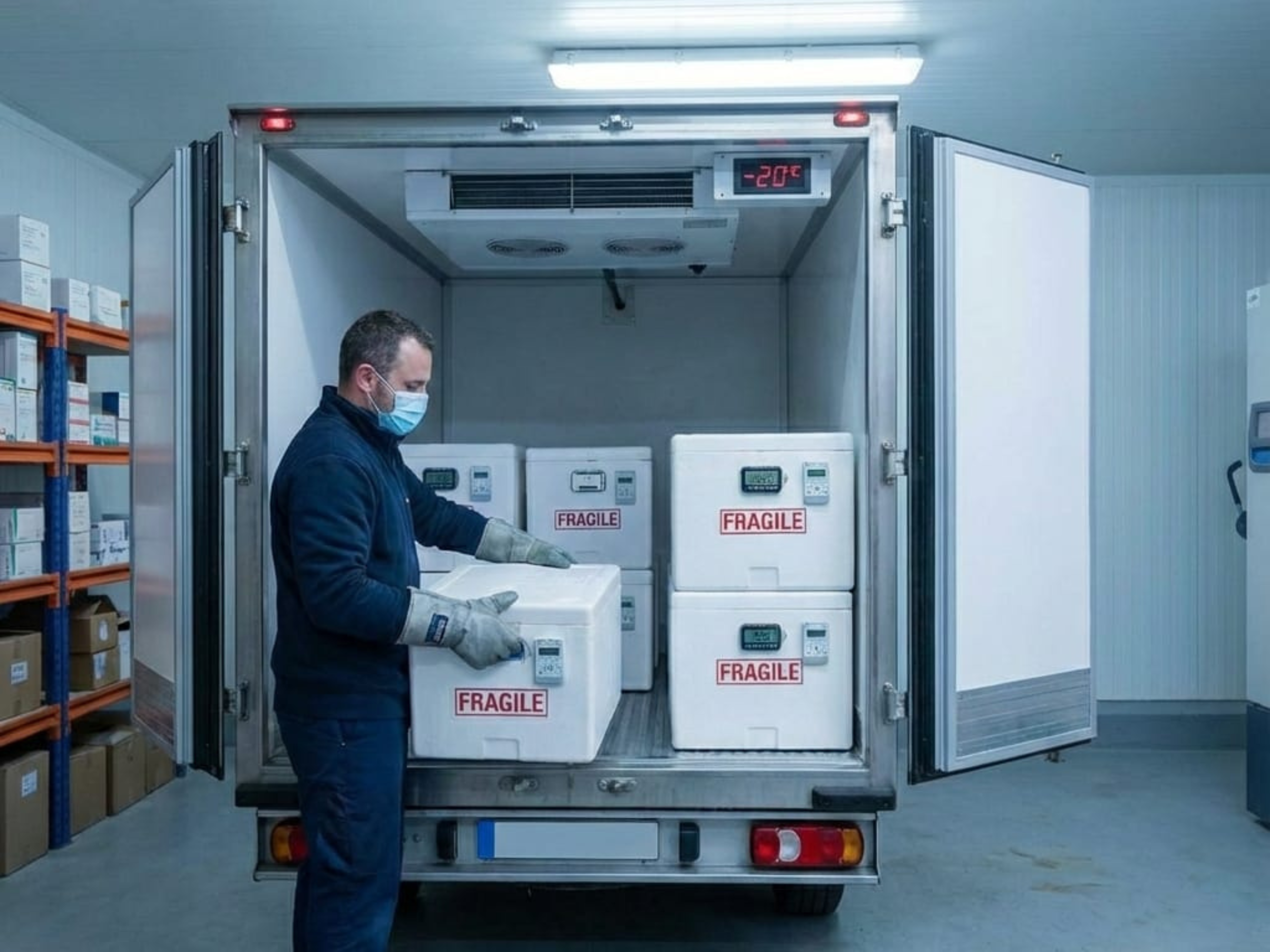
In today’s healthcare landscape, temperature controlled logistics ensure that medicines reach patients safely with precision and reliability. Many life-saving drugs are highly sensitive to even minor temperature fluctuations. A difference of a few degrees, can reduce their potency, alter their chemical composition, or render them entirely ineffective. This makes temperature controlled logistics not just a convenience but an essential element of the healthcare supply chain.
For manufacturers of temperature-sensitive drugs, the stakes are particularly high. Every step of the supply chain, from production and storage to transport and final delivery, must safeguard the integrity of these products. This includes vaccines, biologics, insulin, and other critical medicines included in the temperature sensitive drugs list, each with its own specific storage and handling requirements. Any lapse in maintaining the correct conditions can compromise patient safety and lead to significant financial and reputational risks.
Recognizing this, Sub Zero Reefers has positioned itself as a leading manufacturer of advanced refrigerated transport solutions. Their systems are engineered to meet the stringent demands of controlled temperature logistics, ensuring that medicines are kept within precise temperature ranges at all times.
From real-time monitoring and data-driven alerts to specialized insulation and refrigeration technology, Sub Zero Reefers provides comprehensive medicine logistics services that allow manufacturers to deliver their products with confidence, knowing that quality and efficacy are preserved from factory floor to patient bedside.
The Complexity Behind Temperature Controlled Logistics
The cold chain looks simple from the outside. Medicines are packed at the factory, shipped through a network, and delivered to hospitals or distributors. But once you deal with temperature sensitive drugs, the entire operation becomes far more delicate. These products cannot recover from a temperature swing. Once damaged, they stay damaged, which is why every step of the journey needs careful engineering and dependable equipment.
This is where the real challenges begin.
- Climate VariabilityWeather is one of the toughest variables to control. A batch of biologics packed in a 5°C warehouse may be perfectly safe inside. But the moment someone rolls that pallet toward the loading ramp, temperatures can jump sharply. On a hot afternoon, the gap between warehouse and truck can expose products to heat in seconds.Medicines on the temperature sensitive drugs list often react to small deviations. Even a few minutes outside the recommended range can affect potency. Good cold chain equipment has to compensate for these unpredictable conditions, especially in regions where summers are harsh or humidity spikes quickly.This is why strong insulation and uniform airflow inside the reefer body matter as much as advanced cooling technology. They help protect the product even when the external climate is working against you.
- Unpredictable DelaysDelays are part of logistics. They become risky when the cargo is made up of temperature-sensitive drugs that rely on stability. A traffic jam can hold a vehicle longer than expected. A breakdown can stretch a two-hour trip into six. Inspections at toll booths, local checkpoints, or customs may slow movement without warning.If the equipment is not built for long-duration temperature retention, these delays turn into product losses. That’s where high-density insulation, efficient cooling systems, and robust temperature-holding capabilities become essential parts of controlled temperature logistics.They give logistics teams confidence that even if the journey doesn’t go as planned, the products remain safe.
- Handovers and Human-Dependent Handling in Temperature Controlled LogisticsEvery time a shipment moves from one team to another, the cold chain becomes more vulnerable. Transfers from warehouse to truck, truck to air cargo, and air cargo to last-mile units all expose the shipment to the outside environment.If doors stay open longer than needed or if the shipment is positioned incorrectly, temperatures can shift before anyone notices. These risks multiply during multi-stop deliveries, where vehicles must open and close their doors repeatedly.Sub Zero Reefers designs systems that maintain internal temperature stability even through these disruptions, reducing the margin of error and lowering the risks tied to manual processes.
- Regulatory and Documentation PressurePharmaceutical distribution is governed by strict rules. Each batch must be traceable. Each reading must be recorded. Regulators expect proof that products were stored and transported within their required temperature range at all times.For companies handling temperature sensitive drugs, this means equipment must go beyond standard cooling. It must support accurate monitoring, dependable temperature recording, and consistent performance throughout the journey.
Cold Chain Success Starts With Strong Engineering
The safe movement of medicines does not begin when a truck starts its journey. It begins much earlier, at the manufacturing stage of the equipment that will carry them. When you’re dealing with temperature-sensitive drugs, the quality of the engineering behind the cold chain system becomes the single biggest factor determining whether a shipment stays effective or fails midway.
This is why strong, reliable design matters more than speed, distance, or manpower. The cold chain is only as safe as the technology that protects it.
Instead of thinking of temperature control as something that happens during transport, it helps to see it as a built-in property of the equipment itself. When the engineering is right, the system behaves like a controlled environment from the moment a product is loaded.
This is what it really means.
Insulation that does more than “keep things cool”
Insulation in high-quality reefer bodies isn’t just foam in the walls. For controlled temperature logistics, insulation acts like a shield that slows down external heat, stabilizes internal temperatures, and preserves sensitive medicines during delays or door openings.
Biologics and vaccines on the temperature sensitive drugs list rely on this protective layer. If insulation density is inconsistent or the panels are poorly bonded, temperature drift happens quickly. Sub Zero Reefers builds panels with high-density materials and precise manufacturing techniques so temperature stability becomes predictable, not hopeful.
Airflow designed around medicine, not cargo
Traditional refrigerated vehicles focus on cooling space. Pharmaceutical cold chain systems need to cool with intention.
The airflow must move in a way that eliminates hot pockets, distributes temperature evenly, and keeps products like insulin, injectables, and other temperature sensitive drugs safe no matter where they are placed inside the chamber.
By engineering airflow patterns that reach every corner of the reefer body, Sub Zero Reefers prevents thermal layering and ensures that every unit of medicine receives the same level of protection.
Temperature Controlled Logistics with Cooling systems that recover quickly
Any cold chain environment can face disruptions opening a door for loading, pausing during inspection, or rerouting because of road conditions. What separates a strong system from an average one is how quickly it returns to the required temperature after a disturbance.
A fast recovery rate is essential for temperature-controlled logistics, especially when transporting products that react to even brief deviations. Sub Zero Reefers designs its systems to bring temperatures back to the desired range rapidly so the cold chain is restored with minimal risk.
Temperature Controlled Logistics with Structural Strength
Medicines often travel far before reaching end users. Poor roads, harsh weather, and long-duty cycles test the durability of every component. Reefer bodies that flex, vibrate excessively, or allow micro-leakages can compromise temperature consistency.
Sub Zero Reefers focuses on structural integrity as much as cooling performance. Reinforced joints, premium-grade materials, and leak-proof design ensure long-term stability, making the equipment suitable for demanding medicine logistics services where reliability is non-negotiable.
Smart monitoring that helps people make better decisions
Modern pharmaceutical logistics need visibility, not guesswork. Real-time temperature data, alerts, and monitoring tools help logistics teams stay informed and react early.
For shipments involving temperature-sensitive drugs, early detection of a deviation can be the difference between saving the load and losing it. Sub Zero Reefers’ technology supports this transparency by enabling continuous tracking and generating actionable insights during the journey.
Also read: How Refrigerated Products Keep Dairy Products Fresh
Why Temperature Controlled Logistics Reliability Matters
Cold chain reliability has a direct impact on public health because the products it protects are often fragile, high value and essential for patient care. Many modern therapies fall under temperature sensitive drugs, which means even a small temperature shift can reduce their effectiveness. When these products are transported through the healthcare ecosystem, from manufacturers to hospitals and pharmacies, they rely on stable temperature-controlled logistics to preserve their potency.
Every player in the chain depends on systems that can maintain consistent cooling, handle unexpected delays and deliver medicines safely without fluctuation. This becomes even more important as the temperature sensitive drugs list grows with new biologics, injectables and specialized treatments that need precise handling from production to delivery. Strong infrastructure, clear visibility and reliable equipment reduce wastage, protect patient outcomes and support the credibility of pharmaceutical supply chains.
Most logistics conversations revolve around faster routes or bigger fleets, but the real story behind safe pharma movement is quieter. It starts inside the vehicle itself. Sub Zero builds refrigerated bodies that can hold their ground even when temperatures outside swing wildly. This matters a lot, especially when you’re dealing with temperature sensitive drugs, because a few degrees in the wrong direction can erase months of research and manufacturing effort.
Their engineering focuses on stability more than speed. Strong insulation, reliable cooling systems, and precise airflow design work together to maintain controlled conditions that match the needs of modern temperature controlled logistics. It’s the kind of consistency that pharma teams depend on, especially when handling a varied temperature sensitive drugs list where every product may have its own limits.
This is also where good partners make all the difference. Many providers move cargo. Sub Zero protects it. Their design-first approach supports safer medicine logistics services, giving manufacturers and distributors the confidence that their products will stay potent and effective from dispatch to delivery.
Conclusion
Reliable cold chain performance is never an accident. It comes from careful design, strong materials, and a clear understanding of what fragile cargo needs to stay safe. As the demand for temperature sensitive drugs grows and supply chains become more complex, the industry needs partners who can deliver more than basic cooling. It needs manufacturers who understand the science, the risks, and the responsibility that come with moving life saving products.
Sub Zero fills that gap with purpose built refrigerated bodies that support dependable temperature controlled logistics across diverse routes and climates. Their engineering keeps conditions stable, their systems reduce spoilage, and their focus on quality gives pharma teams a level of certainty that is hard to find. For companies looking to strengthen their medicine logistics services or manage a wider temperature sensitive drugs list, Sub Zero offers a foundation you can trust.
If you want your temperature dependent cargo to stay safe, consistent, and compliant through every mile, explore Sub Zero’s advanced refrigerated body solutions. They’re built to protect what matters.
Frequently Asked Questions
- How is temperature actually monitored during transit?
Temperature is tracked through onboard sensors and data loggers that record conditions in real time. Drivers and control teams receive alerts if the temperature moves outside the safe range. - Can temperature sensitive medicines be delivered internationally?
Yes, they can. Shipments follow strict packaging, insulation, and documentation standards to keep products stable during long cross-border journeys. - Are there specific regulations governing the transport of temperature sensitive medicines?
Most countries follow GDP guidelines that define how these products must be stored, handled, and transported. Compliance ensures medicines stay safe and effective throughout the journey. - What are temperature sensitive medicines?
These are medicines that lose their quality or effectiveness if they’re exposed to heat or cold. They usually need controlled environments during storage and transport.
