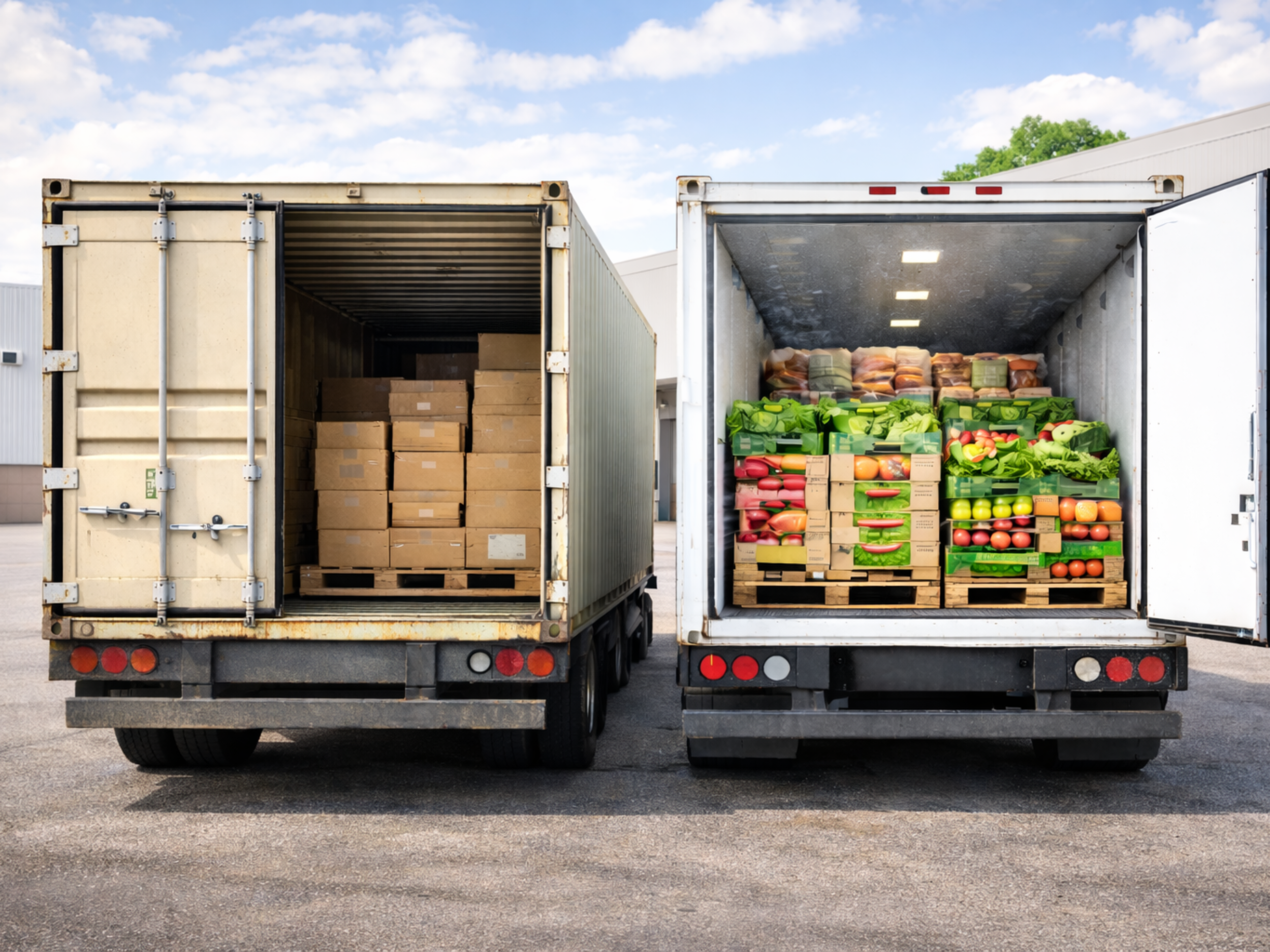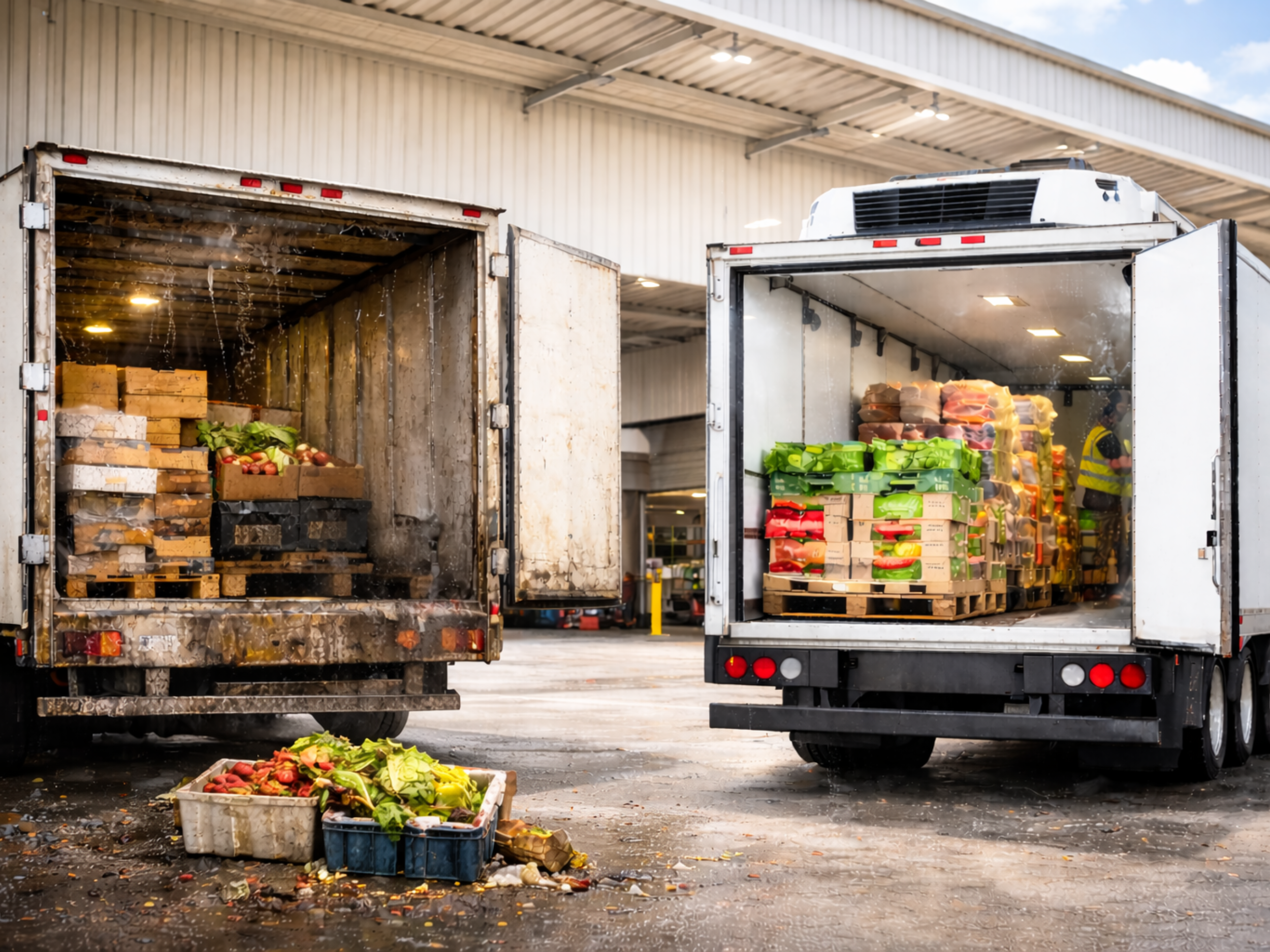
The assumption that any trailer can safely transport any cargo is one of the most costly misconceptions in logistics. Using dry freight for perishable goods, whether due to limited capacity or cost pressures, converts what should be protective equipment into a liability, with consequences rippling through supply chains and compromising product quality.
Dry freight trailers form the backbone of commercial logistics. These standard 53-foot enclosed trailers excel at protecting cargo from weather and unauthorized access, making them ideal for non-perishable goods. The market offers broad carrier networks, competitive pricing, and general availability. However, this accessibility tempts shippers facing tight capacity or cost pressures to use dry vans for temperature-sensitive shipments, a fundamentally flawed approach.
Dry freight trailers are engineered for structural strength and weather resistance, not temperature control. Aluminum or composite panels offer minimal insulation without climate control systems, leaving cargo vulnerable to temperature swings, solar heat, and thermal properties of the cargo itself, factors that compromise perishable products long before delivery.
The Perishable Paradox: When Protection Becomes Exposure
Perishable goods operate on biological timers. From production onward, natural breakdown accelerates with heat and slows with cold. Temperature control is not optional; it determines whether products arrive fresh or spoiled.
A common scenario illustrates the problem: A shipper transports leafy greens via dry freight to save costs and secure available capacity. The evening pickup feels mild, and overnight transport seems manageable. However, once sunrise arrives, the uninsulated trailer walls absorb solar radiation directly. Without cooling systems, interior temperatures climb rapidly by mid-morning. The produce loses moisture, respiration increases, and cellular breakdown accelerates. Upon arrival, the shipment may appear acceptable initially but spoils within hours rather than days, converting a profitable shipment into a loss.
From Spoilage to Stock-Outs: The True Impact of Equipment Mismatch
Consequences extend far beyond single shipments. Retailers and distributors employ strict quality protocols, including temperature tracking and shelf-life assessments. Temperature-exposed shipments commonly face full rejection, triggering costly reactions: returns, destruction, claims processing, and expedited replacement shipments at premium freight rates.
Empty shelves result in lost sales and customer dissatisfaction. Brand trust erodes rapidly when poor-quality products reach stores. Wilted produce, spoiled dairy, or off-scented food generates complaints and negative social media coverage. One visible failure damages retailer relationships and brand reputation substantially.
Food safety regulations mandate safe transportation conditions preventing spoilage and contamination. Companies using dry freight for temperature-sensitive items face compliance exposure, potentially resulting in penalties, recalls, or legal action, consequences far exceeding proper equipment costs.
Strategic Architecture for Perishable Supply Chain Resilience
Building resilient perishable supply chains requires designing transportation decisions around product risk rather than short-term availability.
Prioritize Equipment Fit Over Spot Availability
Perishable goods must always use temperature-controlled transportation. Planning contracts and capacity in advance reduces pressure to rely on dry freight during peak periods when product loss risks peak.
Build Temperature Risk Into Routing Decisions
Transit distance, climate zones, and delivery windows require combined evaluation. Longer routes, daytime deliveries, or warmer regions increase exposure in dry freight bodies, making refrigerated options essential for sensitive products.
Strengthen Packaging and Load Configuration
Proper packaging, airflow, pallet spacing, and insulation enhance reefer performance and reduce cooling system stress, particularly during high-demand cycles.
Use Data to Enforce Accountability
Temperature monitoring, load tracking, and documented handling procedures create supply chain visibility. Data-backed insights identify weak points, prevent repeat failures, and justify proper equipment investment.
Conclusion
Perishable supply chains fail through accumulated compromises under pressure, choosing availability over suitability, cost over control, and speed over protection. While dry freight serves non-perishables effectively, it cannot manage the biological and thermal realities of temperature-sensitive cargo. When perishables enter standard dry freight trailers, risk simply gets delayed rather than eliminated.
True supply chain resilience requires deliberate, informed transportation decisions: planning refrigerated capacity ahead of peak demand, understanding product-specific temperature limits, and refusing shortcuts that undermine product quality and brand trust. The cost of correct decisions remains predictable; the cost of incorrect ones rarely is.