Why Airflow Design Matters More Than Temperature Inside a Refrigerated Truck
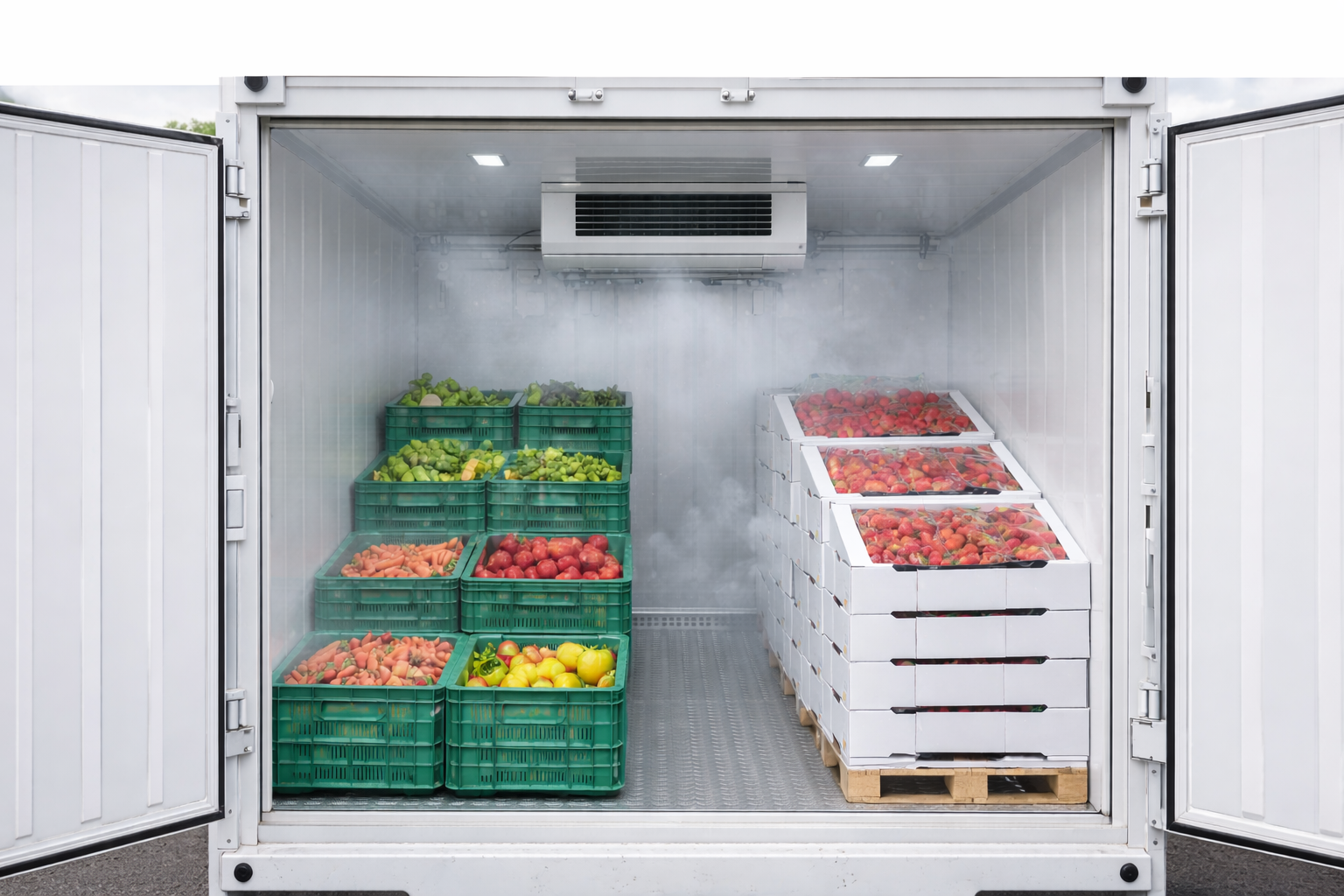
Understanding airflow design means looking beyond the cooling unit and focusing on how air actually behaves once it enters the cargo space. Cold air is supplied from the evaporator and must be guided deliberately along the full length of the vehicle.
Baffle plates prevent cold air from falling directly to the floor. Clear return air paths carry warmer air back to the evaporator, completing the circulation loop.
When this loop is disrupted, cold air tends to accumulate at the front while warmer air stagnates deeper in the load.
Common Airflow Failures Inside Refrigerated Trucks That Lead to Spoilage
1. Cargo Loaded Beyond Airflow Limit
When cargo is stacked too tightly, return air paths get blocked. The refrigeration unit continues to push cold air, but the air has no clear route back through the load. This creates stagnant zones where temperature rises unchecked, leading to localized spoilage even when overall readings appear compliant.
2. Damaged or Misaligned Baffle Plates
Cold air short-circuits back to the unit, leaving large sections undercooled. The evaporator reads a satisfactory return air temperature while cargo in the mid and rear sections remains at higher temperatures, creating conditions where spoilage develops undetected.
3. Inadequate or Poorly Designed Ducting
Air tends to bypass the load and cool empty spaces. Without properly engineered ducts that direct airflow into and around the cargo, the refrigeration system works harder without effectively reaching all product surfaces, wasting energy while failing to protect the load.
4. Compromised Interior Insulation
Creates localized warm zones where heat infiltration disrupts the airflow balance. Damaged panels or gaps in insulation allow external heat to penetrate specific areas, forcing cold air to work against thermal leaks rather than maintaining uniform conditions across the entire cargo space.
5. Frequent Door Openings and Partial Unloading
Disrupts internal air balance and introduces warm air. Each door opening allows cold air to escape and ambient air to enter, breaking the established circulation pattern. During multi-drop deliveries, repeated openings compound the problem and the airflow system must re-establish equilibrium each time.
The Rear-End Risk: Why Airflow Consistency Matters in Refrigerated Trucks
Maintaining temperature stability at the rear is one of the most persistent challenges in refrigerated truck design. The evaporator is typically mounted at the front, meaning cold air must travel the full length of the cargo space before reaching the rear wall.
Cold air naturally follows the path of least resistance. Over long routes, rear pallets cool more slowly as air loses velocity and temperature along the way. Obstructions in the load further reduce the volume of cold air that reaches the back of the truck.
Operational Impact: Uneven cooling leads to inconsistent product core temperatures, increasing the likelihood of partial load rejections. Products at the rear may arrive at temperatures outside acceptable ranges while front-positioned cargo remains well within limits, creating a false sense of compliance when only select points are measured.
Engineering Airflow for Real-World Performance
Effective airflow design focuses on maintaining continuous circulation rather than simply lowering air temperature at the source. The goal is to ensure that every pallet position receives adequate cold air and that return paths remain unobstructed throughout the journey.
Preventing short-circuit airflow is equally critical. When cold air returns to the evaporator without passing through the load, the system registers false satisfaction while cargo temperatures drift. Properly positioned baffle plates, ceiling ducts, and floor channels work together to force air through the intended path.
Airflow systems must account for real loading behavior. Pallets are rarely stacked identically, loads shift during transit, and multi-drop routes change the internal volume at each stop. Robust airflow engineering anticipates these variables and maintains circulation effectiveness across a range of loading conditions.
Conclusion
Airflow is the difference between refrigeration that looks effective on paper and refrigeration that actually protects cargo in transit. Purpose-driven airflow design transforms the refrigerated truck inside from a basic cooling space into a controlled environment.
Frequently Asked Questions
Refrigeration slows bacterial growth by lowering temperature and reducing microbial activity. By maintaining consistent cold temperatures throughout the cargo space, the rate of spoilage is significantly reduced, extending the usable shelf life of perishable products during transport.
Cold air is released from the evaporator and guided through ducts and baffle systems to flow evenly across the cargo. The air travels along the ceiling or through dedicated channels, passes over and around the load, and returns to the evaporator through floor-level return paths, completing a continuous circulation loop.
A refrigerated truck uses a cooling unit to lower air temperature inside the cargo space and circulate it around the load. The refrigeration system draws warm air from the cargo area, cools it through the evaporator, and pushes the cold air back into the space through a network of ducts and channels designed to maintain uniform temperature conditions.