The way a product is transported can be just as important as how it is manufactured. For industries such as cosmetics and biotechnology, maintaining product quality doesn't end at the production facility. It extends to every stage of storage, handling and delivery.
Consider the difference between a premium skincare formulation exposed to excessive heat and a biological product transported outside its prescribed temperature range. One may experience changes in texture or formulation stability, while the other could lose its intended efficacy. Despite these differences, both highlight the importance of a well-designed cold chain system.
As the demand for specialised cosmetics and biotech delivery grows, conventional transportation solutions may not always be sufficient. Businesses need to look beyond refrigeration capacity and evaluate insulation, temperature consistency, airflow and monitoring capabilities.
This brings us to a more important question: What makes a reefer truck suitable for transporting cosmetics and biotechnology products?
The answer lies in choosing the right combination of cold chain equipment and temperature control mechanisms, based on the product's specific requirements. Because effective cold chain management isn't simply about keeping products cool; it's about ensuring they reach their destination in the condition they were manufactured to be in.
Hidden Complexity of Cosmetics Delivery and Biotech Cold Chain Logistics
Not all temperature-sensitive products respond to environmental changes in the same way. While some cosmetics may experience changes in texture, consistency or formulation when exposed to heat, certain biotechnology products can lose their potency when transported outside their prescribed temperature range. This distinction makes cosmetics and biotech delivery a specialised segment of cold chain logistics, where transportation conditions must be determined by the nature of the cargo rather than a standard refrigeration setting.
Understanding these differences is the first step towards choosing the right cold chain system.
Cosmetics Delivery: When Formulation Stability Becomes a Cold Chain Challenge
Cosmetics are often perceived as products that can withstand conventional transportation conditions. However, formulations containing active ingredients, emulsions, essential oils and specialised compounds can be sensitive to prolonged heat exposure and temperature fluctuations. These changes may affect product consistency, fragrance, colour and formulation stability.
While standard makeup delivery may not require active refrigeration, certain premium skincare, dermatological and temperature-sensitive formulations may benefit from an insulated vehicle or controlled-temperature transportation, depending on manufacturer specifications.
Biotech Cold Chain: Where Temperature Deviations Compromise Product Integrity
Biotechnology products present a different level of transportation sensitivity. Vaccines, biological medicines, diagnostic reagents, enzymes and biological samples may require specific refrigerated, frozen or ultra-low-temperature conditions to preserve their integrity.
Even temporary deviations from approved transportation limits can affect product potency or usability. This makes precise cold storage temperature control, continuous monitoring and documented handling procedures essential components of cosmetics biotech delivery and specialised pharmaceutical logistics.
Cosmetics Delivery vs Biotech Cold Chain: Different Temperature Sensitivities
Despite their differences, cosmetics and biotechnology share one fundamental requirement: maintaining product quality throughout transportation. However, applying the same cold chain management approach to both categories can create unnecessary risks.
While certain cosmetic products may require protection from excessive ambient heat, biological materials may need tightly controlled temperature environments. The challenge for logistics operators is to identify these differences and select the appropriate reefer truck, insulation and cold chain equipment to meet each product's specific transportation requirements.
What Actually Determines the Right Reefer Truck Specification for Cosmetics Delivery?
Selecting a reefer based solely on its ability to achieve a particular cold storage temperature can be misleading. Effective cold chain logistics depends on how consistently a vehicle maintains the required conditions throughout the journey, irrespective of external temperatures, cargo volume or delivery duration. This requires evaluating the entire cold chain system, from insulation and refrigeration capacity to airflow and temperature monitoring. Each component of the cold chain equipment plays a role in determining whether the vehicle can protect the cargo under actual operating conditions.
Temperature Range vs Uniformity in Cosmetics Delivery Cold Chain Logistics
Reaching the desired temperature is only one part of effective temperature control. A reefer truck must also maintain uniform conditions across the cargo compartment. Poor air circulation, frequent door openings and incorrect cargo placement can create localised temperature variations, even when the refrigeration unit displays the correct reading. For cosmetics delivery and biotechnology transportation, maintaining temperature consistency is therefore just as important as achieving the prescribed temperature range.
Insulation Performance and Thermal Retention for Cold Chain Equipment
Insulation determines how effectively a refrigerated vehicle prevents external heat from entering the cargo compartment. High-quality insulated sandwich panels, appropriate PUF insulation density, well-sealed joints and properly fitted doors help minimise thermal exchange. Better insulation also reduces the refrigeration system's workload, supporting energy efficiency and temperature stability. For an insulated vehicle or reefer box operating in demanding climatic conditions, the quality of construction directly influences its thermal performance.
Refrigeration Capacity and Cold Storage Temperature Operating Conditions
The refrigeration unit must be selected according to the vehicle's cargo volume, required temperature range, journey duration and expected external temperatures. A system designed for smaller loads may struggle to maintain the required conditions when operating at full capacity or under high ambient temperatures. Similarly, an unnecessarily oversized system may introduce operational inefficiencies. The right reefer specification balances cooling capacity with the actual demands of the transportation cycle.
Airflow and Compartment Design for Cosmetics Delivery and Biotech Cold Chain
Consistent cooling depends on how effectively refrigerated air circulates throughout the cargo compartment. Blocked air outlets, tightly packed shipments and unsuitable stacking arrangements can restrict circulation and create temperature differences. This becomes particularly important in multi-temperature reefers, where separate compartments need appropriate airflow management and thermal separation. For cosmetics biotech delivery, compartment design should support the specific handling and temperature requirements of each cargo category.
Temperature Monitoring and Data Traceability in Cold Chain Management
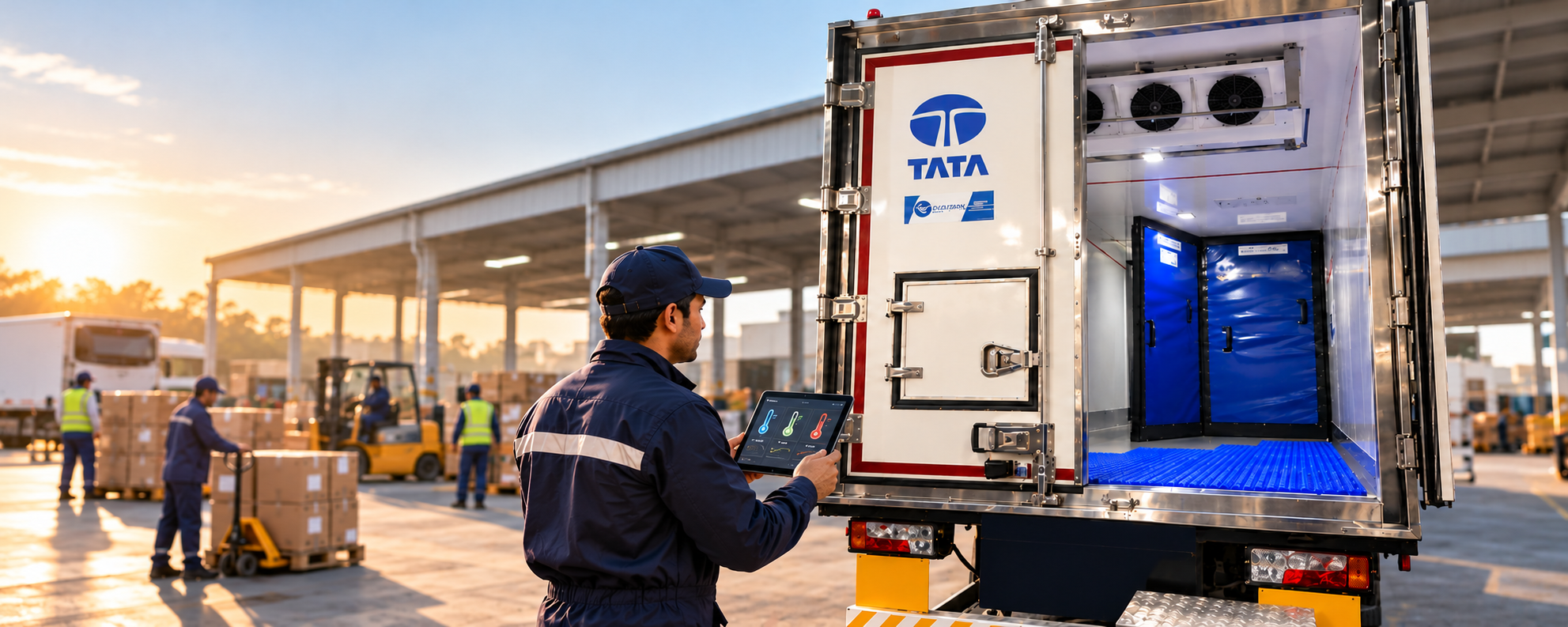
Refrigeration alone cannot establish whether products have remained within their prescribed transportation limits. Digital temperature sensors, data loggers and deviation alerts provide visibility into the conditions experienced throughout the journey. While monitoring requirements vary by product, they are particularly important for biotechnology shipments that require documented temperature histories and excursion assessments. Effective cold chain management combines reliable refrigeration with accurate monitoring, traceability and clearly defined response procedures.
Single vs Multi-Temperature Reefer Truck for Cosmetics Delivery: Which Makes Sense?
Choosing between a single-temperature and multi-temperature reefer depends on the nature of the cargo, its prescribed transportation conditions and the distribution model. While both configurations serve different requirements within cold chain logistics, the decision should ultimately be driven by temperature compatibility, delivery frequency and operational efficiency.
Single-temperature reefers maintain one controlled temperature throughout the cargo compartment, making them suitable for dedicated shipments where all products have similar storage and transportation requirements. They offer a relatively straightforward approach to temperature control and are particularly useful for businesses handling consistent cargo categories.
- Dedicated cargo: Suitable for transporting products with similar temperature requirements.
- Simplified temperature management: One refrigeration system maintains the required compartment temperature.
- Operational suitability: Ideal for dedicated cosmetics delivery, pharmaceutical distribution and compatible biotech shipments.
- Consistent conditions: Helps maintain a uniform thermal environment when supported by appropriate insulation and airflow.
Multi-temperature reefers, on the other hand, are designed to transport different categories of temperature-sensitive cargo within separate compartments of the same vehicle. Using insulated partitions and independent temperature-control arrangements, they allow logistics operators to manage multiple temperature zones within a single cold chain system. This configuration can be particularly useful for businesses handling diverse cosmetics biotech delivery requirements across multiple locations.
- Multiple temperature zones: Different compartments can maintain different specified temperature ranges.
- Flexible partitioning: Fixed, movable or adjustable partitions accommodate varying cargo volumes.
- Independent monitoring: Compartment-specific temperature monitoring helps track individual zones.
- Better fleet utilisation: Enables compatible products with different temperature requirements to be transported together.
- Route flexibility: Supports consolidated distribution across multiple delivery points.
Ultimately, a single-temperature reefer works best for dedicated shipments, while a multi-temperature configuration offers greater flexibility for mixed-cargo operations. However, neither configuration is universally suitable for every product. Businesses must evaluate the required cold storage temperature, refrigeration capacity, airflow and insulation performance before selecting the right reefer truck.
Also Read: Multi-Temperature Refrigerated Trucks for Versatile Applications
What Should Businesses Evaluate Before Investing in a Reefer Truck for Cosmetics Delivery?
Investing in a reefer truck requires more than comparing refrigeration capacities or identifying the lowest achievable temperature. Businesses must assess how well the vehicle aligns with their cargo requirements, distribution model and operating conditions. For cosmetics delivery and biotechnology transportation, the right cold chain equipment should maintain product-specific temperature conditions while supporting efficient, reliable and consistent movement. Before selecting an insulated vehicle or refrigerated body, logistics operators should evaluate a combination of engineering, operational and maintenance parameters.
Key considerations include:
- Cargo profile: Understand the products being transported, their temperature sensitivities, stability requirements and handling specifications.
- Temperature requirements: Identify the required cold storage temperature, permissible fluctuations and any manufacturer-defined excursion limits.
- Insulation performance: Evaluate PUF insulation, panel construction, thermal retention and door-sealing quality.
- Refrigeration capacity: Ensure the refrigeration unit can maintain the required conditions across different cargo loads and ambient temperatures.
- Airflow distribution: Assess whether the compartment design supports uniform cooling without creating localised temperature variations.
- Temperature monitoring: Look for digital monitoring, data logging and deviation alerts to strengthen cold chain management.
- Compartment configuration: Determine whether a single-temperature or multi-temperature cold chain system better suits the distribution requirements.
- Hygiene and durability: Consider easy-to-clean interiors, moisture-resistant flooring and construction quality.
- Maintenance and serviceability: Evaluate repair accessibility, spare parts availability and long-term maintenance requirements.
Ultimately, the right reefer specification should follow the cargo, not the other way around. A vehicle's ability to achieve a particular temperature does not automatically guarantee consistent performance throughout transportation. Businesses should prioritise thermal performance, operational suitability and appropriate validation to build a dependable cold chain logistics network.
Conclusion
The growing demand for specialised cosmetics and biotechnology transportation highlights an important shift in cold chain logistics: the focus is moving from simply maintaining low temperatures to ensuring product-specific environmental control. While cosmetics may require protection against excessive heat and formulation instability, biotechnology products often demand more precise temperature management to preserve their integrity and effectiveness. The right transportation solution must account for these differences.
From insulation quality and refrigeration capacity to airflow distribution, compartment design and temperature monitoring, every specification contributes to the performance of a refrigerated vehicle. Choosing between a single-temperature and multi-temperature reefer should ultimately depend on the cargo profile, distribution requirements and operating environment.
As India's cold chain ecosystem continues to evolve, the need for thoughtfully engineered refrigerated transportation will become increasingly important. With decades of experience in insulated vehicle bodies and refrigerated transportation solutions, Sub Zero Reefers brings together engineering expertise, product innovation and application-led design to support these evolving requirements.
Explore Sub Zero's refrigerated transportation solutions to understand how the right vehicle body configuration can contribute to a more reliable and efficient cold chain.
Frequently Asked Questions
1. What temperature should cosmetics be transported at?
Cosmetics do not have a universal transportation temperature requirement. While many products can be transported at ambient temperatures, sensitive skincare formulations may require controlled conditions based on their stability data and manufacturer recommendations.
2. Do beauty products need cold chain transport in India?
Not all beauty products require refrigerated transportation. However, certain heat-sensitive formulations, serums and dermatological products may benefit from an insulated vehicle or temperature-controlled delivery to protect product quality during India's high-temperature conditions.
3. What reefer specifications are required for biotech product transport?
Biotech transportation requires product-specific temperature control, high-performance insulation, suitable refrigeration capacity, uniform airflow and continuous temperature monitoring. The reefer truck must be configured according to the biological product's prescribed storage and transportation conditions.
4. What is GDP compliance for cosmetics cold chain logistics?
GDP (Good Distribution Practice) refers to quality standards that help maintain product integrity throughout storage and distribution. While pharmaceutical GDP requirements do not automatically apply to all cosmetics, businesses should follow applicable product regulations and establish appropriate cold chain management, documentation, temperature monitoring and handling procedures.
5. How is biotech cold chain different from pharmaceutical cold chain?
Biotech cold chain logistics often involves highly sensitive biological materials such as vaccines, enzymes, proteins and cell-based products. While pharmaceutical cold chains cover a broader range of medicines, biotech transportation may require more specialised temperature ranges, validated packaging, stricter monitoring and product-specific handling protocols.