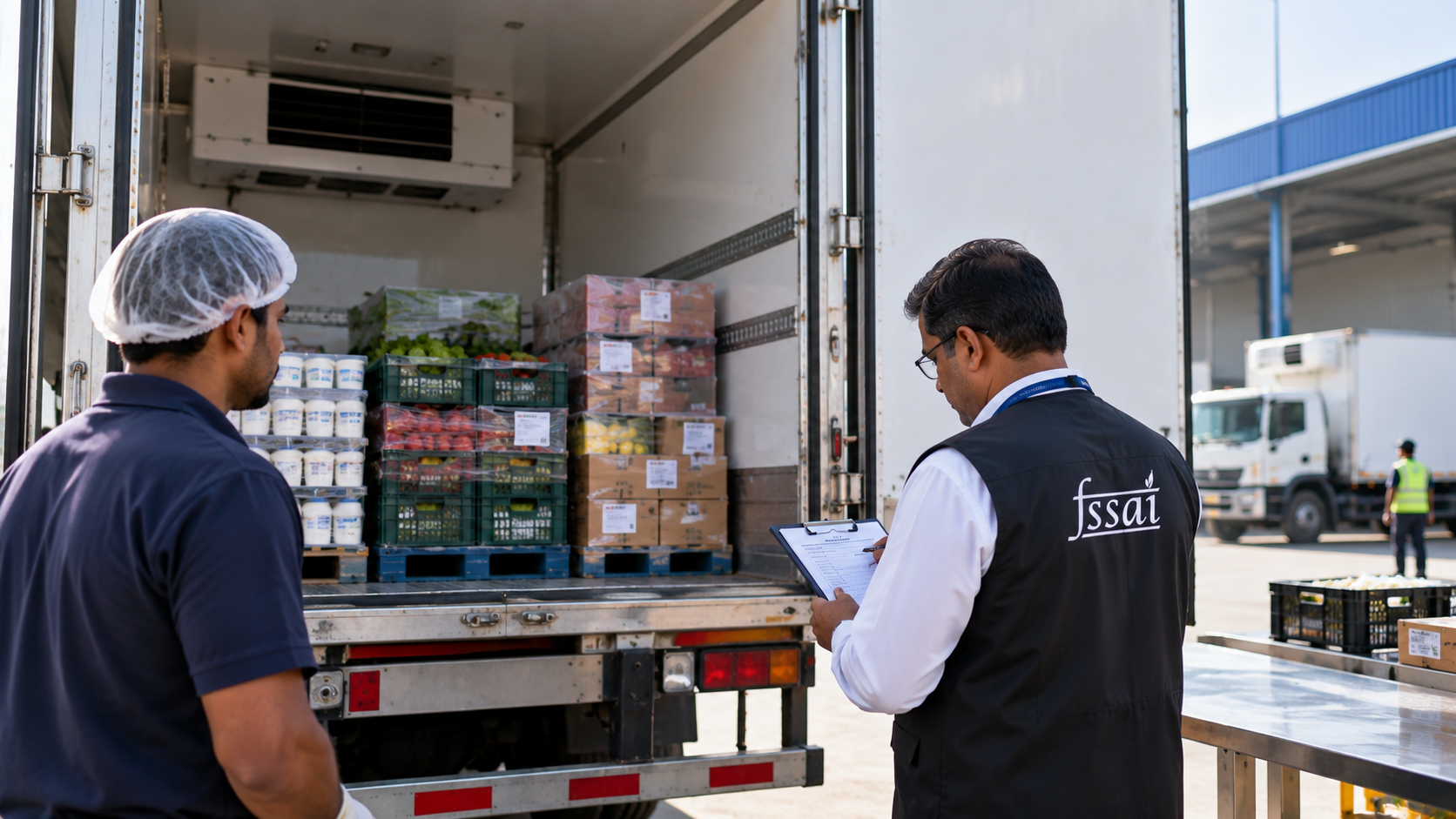
When a temperature-sensitive chemical or industrial product leaves a controlled manufacturing environment, its biggest challenge may begin after it leaves the facility. Long transit hours, high ambient temperatures, loading delays, traffic stoppages and frequent opening of cargo doors can gradually affect the temperature conditions inside the vehicle.
The impact is not always obvious. Depending on the material, temperature fluctuations can alter viscosity, crystallisation, phase stability, curing behaviour or chemical stability. A resin can become harder to handle, an adhesive can change its application properties, or a formulation can lose the consistency it was designed to maintain.
This is why transporting such products is about more than simply choosing a refrigerated truck. The objective is to maintain the temperature conditions the product actually needs throughout its journey.
That could mean active refrigeration, high-performance insulation, controlled airflow, continuous temperature monitoring or a combination of all four. While some applications may only require an insulated vehicle, others may need a specialised reefer truck, reefer van or reefer vehicle designed for tighter temperature control.
In practical terms, effective cold chain logistics starts with one basic question: What does the product need to remain stable, and can the transportation system consistently provide it? That understanding is what turns a basic temperature-controlled shipment into a reliable cold chain system.
Temperature Is Only One Part of the Chemical Cold Chain Logistics Risk
For chemicals and industrial products, temperature is critical, but it is rarely the only factor affecting product integrity. A material may be temperature-sensitive without necessarily requiring continuous refrigeration. In some cases, the priority may simply be to prevent excessive heat, freezing or sudden fluctuations. What matters is understanding the product’s thermal profile, how it responds to temperature changes, how long it can tolerate them, and what happens when conditions move outside its defined range.
Before selecting the right cold chain equipment or vehicle, several factors need to be assessed:
- Required temperature range: Establish the acceptable minimum and maximum temperatures based on product specifications.
- Temperature stability: Repeated fluctuations can affect certain materials even when the overall temperature appears acceptable.
- Duration of exposure: The impact of a temperature deviation depends on both its severity and how long it lasts.
- Heat and freeze sensitivity: Some products are vulnerable to excessive heat, while others may crystallise, solidify or change when exposed to low temperatures.
- Physical and chemical behaviour: Temperature changes can influence viscosity, crystallisation, phase separation, curing, solubility and stability.
- Hazard classification: For certain chemicals, temperature control also has safety implications and may influence vehicle, ventilation and monitoring requirements.
This is why the product specification should come before vehicle selection. A temperature-sensitive shipment may require a refrigerated truck, reefer truck, reefer van or insulated vehicle, depending on its thermal behaviour, route and handling conditions.
Ultimately, effective cold chain management is not about keeping a product as cold as possible. It is about maintaining the specific conditions required to keep it stable, safe and fit for use.
Designing the Vehicle Around the Product: A Cold Chain Logistics Approach
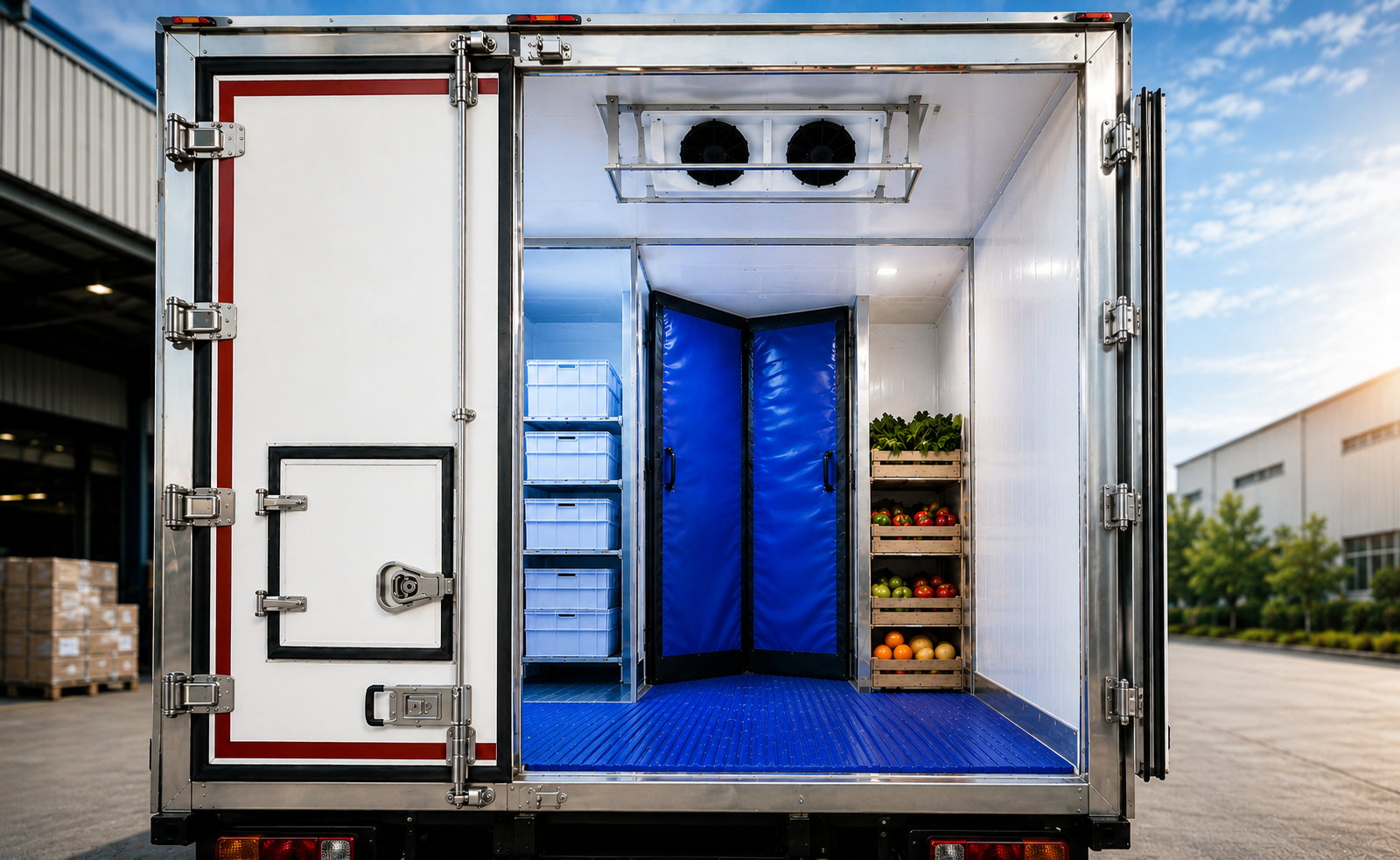
Once the product’s thermal requirements are clear, the next step is to translate them into the right transportation setup. This is where cold chain logistics becomes more than simply choosing a vehicle with a refrigeration unit. The vehicle needs to create and maintain an environment suited to the product, route, payload and handling conditions. Insulation, refrigeration, airflow and vehicle configuration all need to work together to maintain consistent conditions throughout the journey.
Insulation
Insulation is the first line of defence against external temperature changes. A well-engineered insulated body limits heat transfer between the cargo compartment and the outside environment, helping maintain temperature stability and reducing the load on the refrigeration system. Its effectiveness, however, depends on the complete body construction, including insulation material and thickness, doors, joints, flooring, seals and potential thermal bridges. For temperature-sensitive industrial cargo, insulation should therefore be viewed as an integral part of the cold chain system, not simply a feature of the vehicle body.
Refrigeration Capacity: Matching the Refrigerated Truck to Chemical Cargo Demands
The refrigeration unit needs to be matched to the actual thermal demands of the application. Vehicle size alone does not determine cooling requirements. Ambient conditions, the temperature of the product at loading, journey duration, frequency of door openings and the required pull-down time can all influence the refrigeration load. An appropriately specified system can maintain the required temperature more consistently, while an incorrectly sized unit may struggle under demanding conditions or operate inefficiently.
Airflow
Maintaining the right set temperature does not necessarily mean that every part of the cargo compartment experiences the same conditions. Airflow determines how effectively conditioned air is distributed throughout the body and helps minimise localised hot or cold spots. The placement of pallets, containers and other cargo can influence circulation, making adequate clearance around air outlets and sensible load distribution important considerations when transporting temperature-sensitive materials.
Refrigerated Truck, Reefer Van or Insulated Vehicle: Choosing the Right Configuration
The choice of an insulated vehicle, reefer van, refrigerated truck, reefer truck or specialised reefer vehicle should be based on the product, payload, route and level of temperature control required. A reefer van may be suitable for smaller urban deliveries, while longer routes or larger industrial loads may require a refrigerated truck with greater cooling capacity. Where different products need different temperature conditions, a multi-temperature configuration may offer a more appropriate solution.
The underlying principle is straightforward: the vehicle should be designed around the product and its journey, rather than the product being adapted to a standard vehicle. This approach creates a more reliable and efficient temperature-controlled transportation system while reducing the risks associated with thermal variation.
What a Reliable Cold Chain System Should Monitor in Chemical Transport
A reliable cold chain system needs to do more than display the temperature inside a vehicle. For chemical and industrial products, monitoring should provide visibility into the conditions that can affect product integrity throughout the journey. This means tracking not only temperature, but also the events and operating conditions that can explain why temperature changes occur. A well-designed monitoring framework should cover:
- Product temperature: Where relevant, monitoring the actual product temperature provides a more meaningful indication of cargo conditions than relying only on the vehicle’s internal air temperature.
- Air temperature: Continuous monitoring of the cargo compartment helps identify fluctuations, uneven cooling and potential hot or cold zones.
- Sensor placement: Sensors should be positioned strategically within the cargo area to provide representative readings rather than relying on a single measurement point.
- Temperature trends: Recording temperature continuously helps identify gradual changes and repeated fluctuations that may otherwise go unnoticed.
- Door openings: Tracking door-opening events helps correlate temperature changes with loading, unloading or handling activity.
- Transit time: The longer the shipment remains in transit, the greater the potential exposure to changing ambient and operating conditions.
- Refrigeration performance: Monitoring the refrigeration system can help identify issues before they result in a significant temperature excursion.
- Pre-loading conditions: The vehicle and cargo should be checked before departure to ensure that the required temperature conditions are established from the beginning of the journey.
- Data logging and traceability: Maintaining a record of temperature and relevant events creates a traceable history of the shipment and supports investigation if an excursion occurs.
- Real-time alerts: For critical cargo, automated alerts can help logistics teams respond to temperature deviations while the shipment is still in transit rather than discovering the issue only at delivery.
The objective is not simply to collect more data. It is to create actionable visibility, so that a cold chain operator can identify deviations, understand their cause and respond before a manageable variation becomes a product-integrity issue.
Building Resilience Into Chemical Cold Chain Logistics and Refrigerated Truck Operations
Even a well-designed cold chain system can be challenged by conditions that are difficult to control. A delayed dispatch, extended loading time, traffic congestion, refrigeration failure or unexpected change in ambient temperature can expose a shipment to conditions outside its intended range.
This is why effective cold chain management should not only focus on maintaining ideal conditions, but also on how the system responds when those conditions are disrupted. Building resilience means anticipating these risks, creating safeguards and ensuring that a temporary deviation does not immediately become a product-integrity issue.
Planning for Thermal Risk in Chemical Cold Chain Logistics Routes
Cold chain logistics should begin with understanding where temperature exposure is most likely to occur. Route length, ambient conditions, loading patterns, delivery schedules and the frequency of door openings can all influence thermal stability. Identifying these risk points in advance allows operators to determine where additional insulation, refrigeration capacity, monitoring or contingency measures may be required.
Managing Loading and Unloading to Protect Cold Chain System Integrity
The cold chain does not begin when the vehicle starts moving. Loading and unloading can create significant periods of thermal exposure, particularly when cargo doors remain open for extended periods. Pre-conditioning the cargo compartment, minimising loading time and following defined handling procedures can help reduce unnecessary temperature variation.
Preparing for Refrigerated Truck Equipment Failure in Chemical Cold Chain Management
A refrigeration unit can fail, sensors can malfunction and vehicles can experience unexpected downtime. A resilient cold chain system therefore needs contingency planning, including equipment alarms, preventive maintenance, backup arrangements and clear escalation procedures. The objective is not to assume that failures will never happen, but to ensure that the system can respond when they do.
Using Cold Chain Management Data to Strengthen Chemical Logistics Operations
Temperature data becomes more valuable when it is used beyond basic compliance reporting. Historical readings can reveal recurring temperature deviations, problem routes, inefficient loading practices or equipment performance issues. Over time, this information can help improve vehicle specifications, operating procedures and overall cold chain management.
Designing the Cold Chain System for Real-World Chemical Transport Conditions
Ultimately, resilience comes from designing the cold chain system for the journey that actually takes place, not an idealised journey. A reefer truck, reefer van or insulated vehicle must be capable of maintaining product conditions across realistic operating scenarios, including high ambient temperatures, delays, repeated door openings and varying payload conditions. A cold chain that can withstand these variables is far more dependable than one designed only to perform under controlled conditions.
How to Design a Cold Chain System for Chemical and Industrial Transport in India
-
Define the Product’s Thermal Profile
Establish the acceptable temperature range, sensitivity to fluctuations, duration of exposure tolerance, and physical or chemical behaviour under temperature change (viscosity shift, crystallisation, phase separation, curing). This defines the cold chain system requirement before any vehicle is selected.
-
Select the Right Vehicle Configuration
Match the vehicle to the product and journey: an insulated vehicle for short routes with modest temperature sensitivity; a reefer van for smaller urban chemical deliveries; a refrigerated truck for longer routes, larger industrial loads, or tighter temperature control requirements. Multi-temperature configurations suit mixed chemical consignments.
-
Specify Insulation and Refrigeration Capacity
Design the refrigerated truck’s insulated body to minimise heat transfer based on ambient conditions and route duration. Match refrigeration capacity to actual thermal load — including product temperature at loading, journey duration, and door-opening frequency — not just the vehicle’s maximum cooling specification.
-
Plan Airflow and Load Distribution
Ensure adequate clearance around air outlets and sensible load arrangement within the cold chain system vehicle. For chemical cargo, localised temperature variations caused by blocked airflow can affect product stability even when the refrigerated truck’s overall temperature appears within range.
-
Implement Multi-Parameter Cold Chain Monitoring
Monitor product temperature, air temperature at multiple points, door-opening events, refrigeration performance, transit time, and pre-loading conditions. For chemical cold chain management, real-time alerts allow logistics teams to respond to deviations while the refrigerated truck is still in transit — not after delivery.
-
Build Resilience Into Cold Chain Operations
Plan for refrigerated truck equipment failure with alarms, preventive maintenance schedules, backup arrangements and escalation procedures. Identify high-risk thermal exposure points on each route — loading docks, port delays, traffic corridors — and design cold chain logistics contingency measures for each.
Conclusion
For chemical and industrial products, reliable temperature-controlled transport is ultimately about protecting product integrity throughout the journey. The right cold chain system considers the material’s thermal behaviour, the route it will travel, the risks it may encounter and the level of control required to keep conditions within the specified range.
This makes cold chain logistics a combination of product understanding, vehicle engineering, monitoring and operational discipline. Whether the application calls for an insulated vehicle, reefer van or fully refrigerated truck, the objective remains the same: minimise thermal risk and create consistency from loading to final delivery.
As the industry moves towards more specialised temperature-sensitive applications, cold chain solutions will need to become increasingly product-specific and resilient. At Sub Zero, this thinking is reflected in the approach to designing temperature-controlled transport solutions around the requirements of different industries, rather than treating refrigeration as a one-size-fits-all solution. For businesses evaluating their next cold chain setup, that product-first approach is a useful place to begin.
Frequently Asked Questions
1. What chemicals need temperature-controlled transport?
Certain resins, adhesives, coatings, specialty chemicals, active ingredients and temperature-sensitive formulations may require cold chain logistics, depending on their specified storage and transport conditions. A refrigerated truck, reefer van or insulated vehicle should be selected based on the product’s thermal profile.
2. Is a reefer truck different from a hazmat transport vehicle?
Yes. A refrigerated truck or reefer truck is designed for temperature control, while a hazmat vehicle is designed for hazardous-material transport requirements. Some chemical cold chain logistics shipments may require both capabilities, depending on the material’s classification.
3. What type of reefer body is best for chemical transport?
The right refrigerated truck or reefer vehicle depends on the product, temperature range, payload, route and safety requirements. Proper insulation, suitable cold chain equipment and continuous temperature monitoring are key considerations for chemical cold chain management.
4. What regulations apply to temperature-controlled chemical transport in India?
Requirements depend on the chemical’s classification and transport conditions. Cold chain management for chemical cargo must consider applicable Indian safety, packaging, labelling and hazardous-material transport regulations alongside cold chain system temperature requirements.
5. Can agrochemicals be transported in a standard reefer truck?
Not necessarily. A refrigerated truck provides temperature control, but agrochemical transport may also require specific packaging, segregation, compatibility measures and safety procedures based on product classification. The cold chain logistics setup must address both temperature and safety requirements.
6. What is the temperature range required for resin and adhesive transport?
There is no standard range. Resins and adhesives have different temperature requirements depending on their formulation. The cold chain system should follow the manufacturer-specified transport temperature rather than applying a generic refrigerated truck temperature setting.