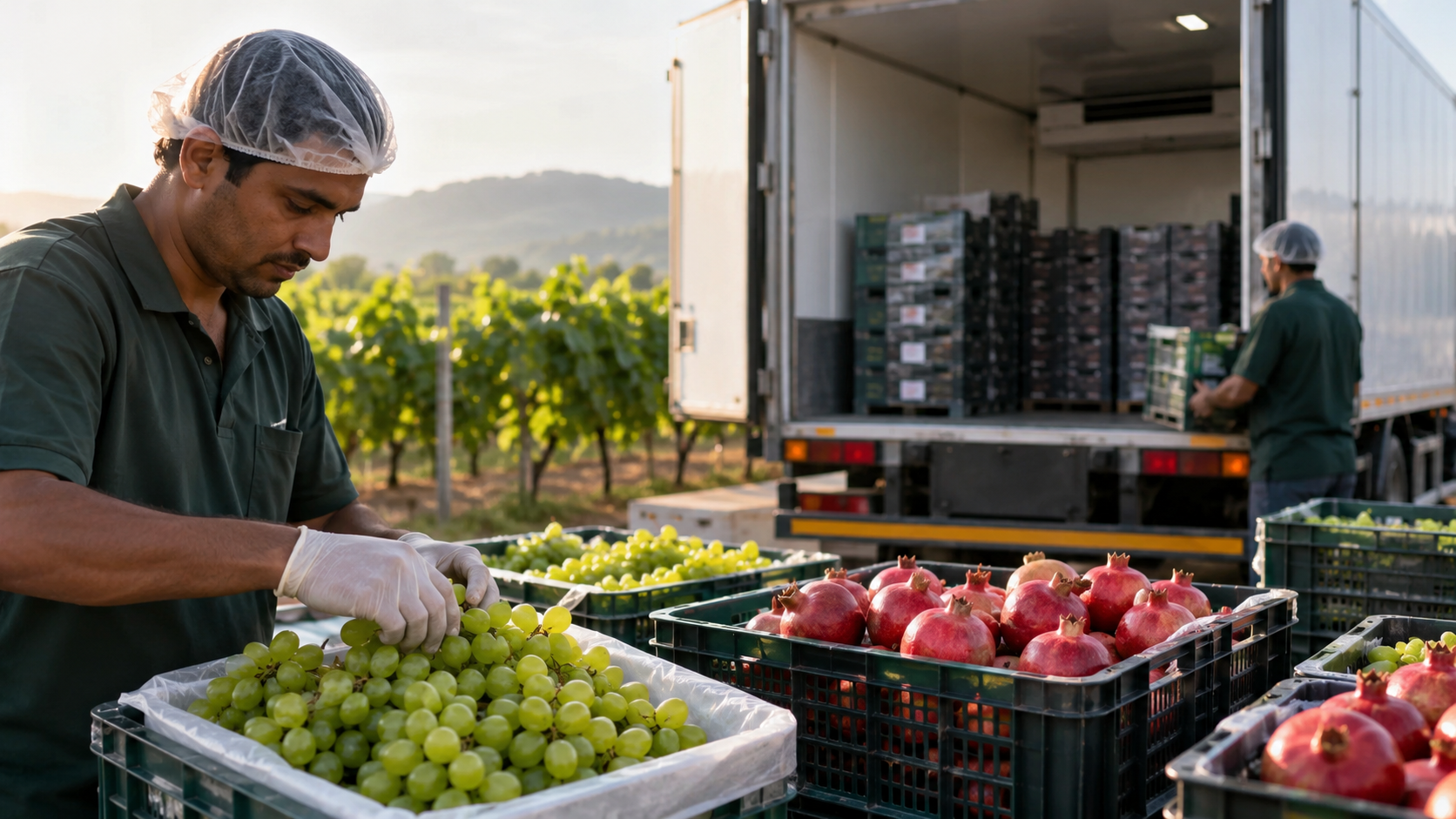
You see a box of grapes or pomegranates at a supermarket and think of freshness. The exporter sees something very different: a journey that may have started days earlier, at a farm, and passed through packhouses, cold storage, highways, ports and international transit before reaching the buyer.
The difficult part is that the fruit does not get a second chance.
A grape bunch that looks perfect at harvest can lose quality if it sits too long before cooling. A pomegranate can arrive with moisture loss, bruising or decay even when there was no obvious problem at the farm. During the post-monsoon period, these risks become harder to manage because high humidity, wet field conditions, temperature fluctuations and increased microbial pressure can follow the fruit through the supply chain.
This is why fruit transport after the monsoon is not simply about getting produce from the farm to the port. The real challenge is protecting the quality that the farmer has already created.
For exporters, the question is therefore not just, “How quickly can we move the fruit?” It is, “Can we maintain the right conditions for the fruit throughout the journey?” That is where a well-designed cold chain logistics system becomes critical. From harvesting and pre-cooling to storage, loading and refrigerated transportation, every transition can influence the final quality of an export shipment.
Why Grapes and Pomegranates Need Different Cold Chain Strategies for Fruit Transport
Grapes and pomegranates may travel through the same export network, but their post-harvest requirements are different. Grapes are more sensitive to temperature fluctuations, excess moisture and decay, so rapid cooling, steady conditions, good airflow and careful handling are important for preserving their firmness and shelf life. Pomegranates have a tougher outer skin, but can still suffer from moisture loss, shrivelling and damage during prolonged storage or transit. These differences become more important after the monsoon, when humidity and changing ambient conditions can add to the risk of quality loss.
This means fruit transport cannot follow a one-size-fits-all approach. Pre-cooling, packaging, airflow, loading and temperature management need to be planned around the specific fruit being moved. A reefer truck can maintain the required environment during transit, but it cannot compensate for produce that was poorly cooled or improperly handled before loading. The same principle applies to fruit and vegetable transportation, where each commodity needs conditions suited to its shelf life, moisture sensitivity and transit duration.
What Makes a Reefer Truck Effective for Export Fruit Transport
Understanding the specific requirements of grapes and pomegranates is only the first step. The next challenge is maintaining those conditions once the fruit leaves the controlled environment of the packhouse. This is where refrigerated transportation becomes critical. However, an effective system is not defined by the refrigeration unit alone. Vehicle selection, insulation, airflow, loading practices and temperature stability all influence how well the fruit is protected during transit.
Choosing the Right Reefer Truck or Reefer Van for Export Fruit Transport
The choice between a refrigerated truck and a reefer van should depend on the quantity of produce, route length, loading requirements and distribution model. Larger export movements typically require the capacity and refrigeration performance of a reefer truck, while a reefer van may be more practical for smaller consignments or shorter movements between farms, collection centres and packhouses. The objective is to match the vehicle to the journey rather than simply choosing the largest available option.
Why Insulation Is as Important as Refrigeration in Export Fruit Transport
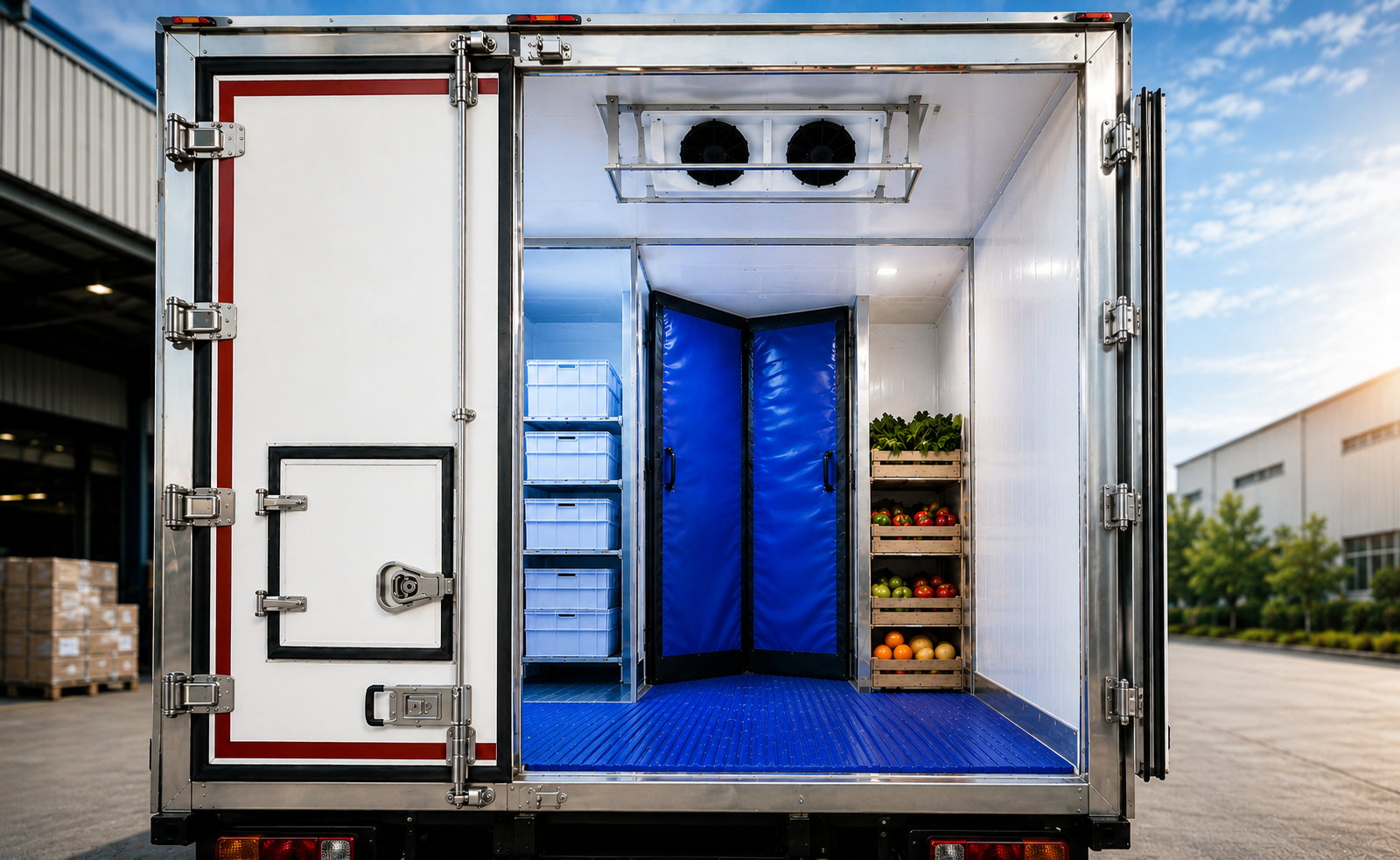
A refrigeration system can generate the required temperature, but the vehicle body needs to retain it effectively. Good insulation limits the exchange of heat between the cargo area and the outside environment, which becomes particularly important when vehicles operate through varying ambient conditions. For post-monsoon fruit transport, where humidity and external temperatures can fluctuate, effective insulation helps the refrigeration system maintain a more stable internal environment without unnecessary thermal load.
Temperature Stability in Fruit Transport: Why Colder Is Not Always Better
It may seem logical to assume that lowering the temperature will keep fruit fresh for longer. In reality, each commodity has its own handling requirements, and unnecessarily low temperatures can create their own quality risks. The focus should therefore be on maintaining stable, commodity-appropriate conditions throughout the journey. For exporters, avoiding repeated temperature fluctuations can be just as important as achieving the target temperature in the first place.
Airflow in Reefer Trucks: How It Determines Even Cooling in Fruit Transport
Refrigeration only works effectively when cooled air can circulate around the load. Poorly arranged cartons, excessive loading density or blocked air passages can create warm spots within the cargo area, even when the refrigeration unit is functioning normally. Packaging and pallet arrangement should therefore support airflow rather than restrict it. This is particularly important in fruit and vegetable transportation, where different portions of a load may respond differently to changes in temperature and humidity.
Loading Practices That Protect Refrigeration Performance During Fruit Transport
The conditions inside the vehicle can change significantly during loading. Keeping the doors open for extended periods allows warm and humid outside air to enter, while loading produce that has not been adequately pre-cooled places additional demand on the refrigeration system. Coordinating pre-cooling, vehicle preparation and loading schedules can reduce this exposure. Once loaded, the cargo should also be arranged to maintain appropriate air circulation throughout the journey.
Why a Reefer Truck Cannot Replace Pre-Cooling in Export Fruit Transport
One of the most important distinctions in cold-chain management is the difference between pre-cooling and refrigerated transportation. Pre-cooling removes field heat and brings the produce closer to its required transportation conditions before dispatch. The reefer truck is then responsible for maintaining those conditions during transit. Expecting the vehicle to rapidly cool warm produce can increase cooling time and compromise the consistency of the load.
Ultimately, effective refrigerated transportation comes from treating the vehicle as one part of a larger cold-chain system. The right equipment, proper pre-cooling, suitable packaging, efficient loading and stable operating conditions need to work together to protect export fruit throughout the journey.
Also Read: How to Transport Frozen Goods Without Compromising Quality
Where Cold Chain Logistics Can Break During the Export Fruit Transport Journey
Even a well-planned cold chain can lose its effectiveness at the points where fruit changes hands or environments. Grapes and pomegranates may be carefully cooled at the packhouse, but delays, poor handling or exposure to changing ambient conditions can undo that work before the shipment reaches the port. For exporters, identifying these weak points is essential to making fruit transport more consistent and reducing avoidable quality losses.
1. Harvest-to-Cooling Delays Compromise Fruit Transport Cold Chain Logistics
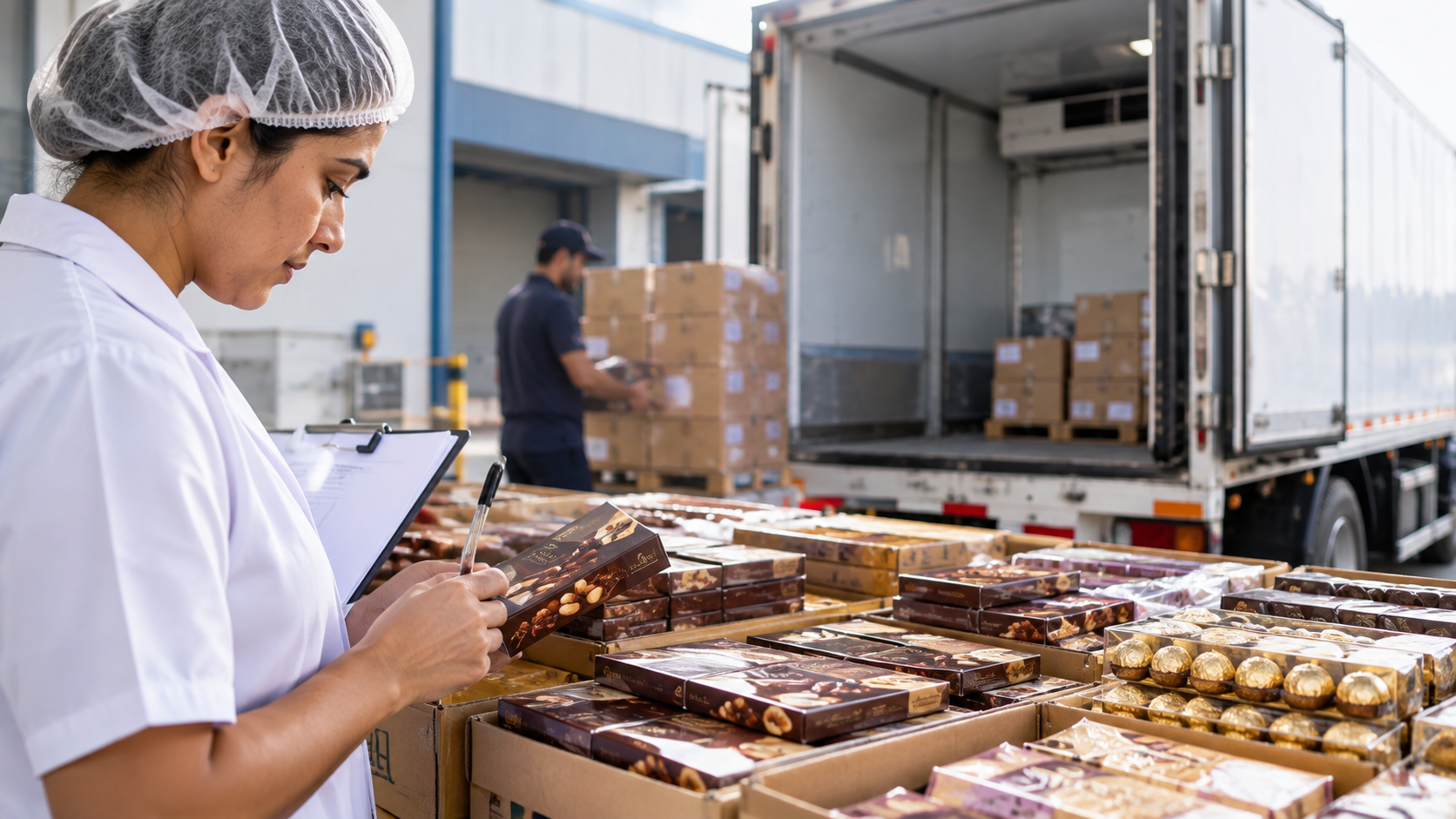
The period between harvesting and pre-cooling is particularly important. If freshly harvested fruit remains exposed to warm or humid conditions for too long, its quality can begin to decline before it even enters refrigerated storage. Delays during loading and unloading can create another temperature break, especially when cold produce is exposed to outside conditions for extended periods.
This is why coordination between harvesting, packhouse operations, cold storage and the reefer truck is important. The vehicle should be ready before loading begins, so produce spends as little time as possible outside controlled conditions.
2. Poor Airflow and Temperature Control in Transit
Refrigeration alone does not guarantee uniform cooling. Overloaded vehicles, tightly packed cartons or blocked air passages can restrict circulation and create warmer areas within the cargo. Temperature fluctuations can become particularly problematic during long-distance journeys, where even small deviations may affect shelf life.
A properly insulated refrigerated truck, combined with suitable loading patterns and continuous temperature monitoring, helps maintain more stable conditions. Data loggers and tracking systems can also help exporters identify temperature excursions and understand where problems occurred during transit.
3. Port Delays and Mode Changes: High-Risk Points in Export Fruit Transport
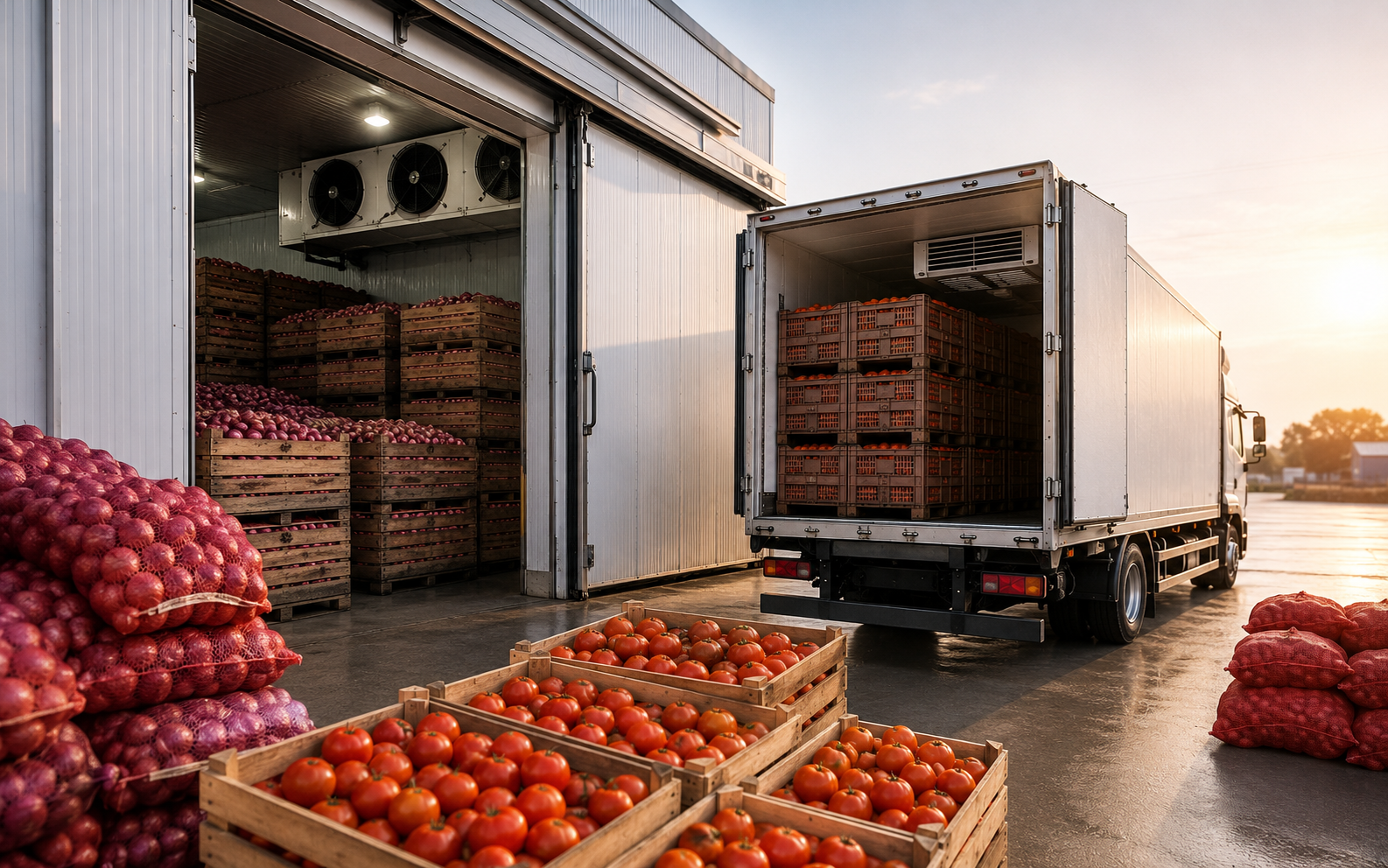
The cold chain does not end when the reefer truck reaches the port. Waiting times, unloading, documentation, container transfers and delays before vessel loading can all expose produce to conditions outside the intended temperature range. The same applies when fruit moves between road transport, cold storage and reefer containers.
A reliable cold chain logistics plan therefore needs to account for the entire journey, not just the road leg. The goal is to minimise uncontrolled exposure at every transition, from farm collection and packhouse handling to storage, fruit and vegetable transportation and international shipment. This becomes especially important for exporters managing different commodities, including grapes, pomegranates and other perishable produce.
Also Read: Optimizing Refrigerated Transportation: Advanced Temperature Control Systems
Post-Monsoon Cold Chain Logistics Checklist for Grape and Pomegranate Fruit Transport
Once the potential weak points are identified, exporters need to translate them into a consistent process. Post-monsoon fruit transport requires greater attention because humidity, moisture and fluctuating temperatures can affect fruit quality at several stages of the journey. The aim is not simply to keep the produce cold, but to maintain suitable conditions from harvest and pre-cooling through storage, road transportation and port handover. A practical cold chain logistics checklist should therefore cover:
-
Reduce the Gap Between Harvest and Pre-Cooling
Grapes and pomegranates should not remain exposed to field conditions longer than necessary after harvest. Prompt pre-cooling removes field heat and prepares the produce for controlled cold chain logistics storage and fruit transport.
-
Prepare the Reefer Truck Before Loading
A reefer truck should be clean, properly insulated and pre-cooled to the required temperature before loading begins. This reduces the initial thermal load on the refrigeration system and protects fruit quality from the start of the fruit transport journey.
-
Pack for Both Protection and Airflow
Export packaging must protect fruit from bruising while allowing refrigerated air to circulate around the cargo. Poorly arranged cartons or pallets restrict airflow and create warm spots within the reefer truck — even when the refrigeration unit is functioning normally.
-
Maintain Stable Conditions During Transit
A refrigerated truck is most effective when temperature conditions remain consistent throughout the fruit transport journey. Data loggers and temperature monitoring systems help identify fluctuations or refrigeration interruptions before they affect the export shipment.
-
Minimise Exposure During Loading and Unloading
Every time cargo doors open, warm and humid post-monsoon air enters the controlled environment. Keeping loading, unloading and transfer periods as short as possible reduces unnecessary temperature and moisture fluctuations in cold chain logistics operations.
-
Plan for the Port Handover
Cold chain logistics does not end when the reefer truck reaches the port. Coordinate with cold storage facilities and refrigerated containers to prevent delays and uncontrolled exposure while the shipment transitions between fruit transport modes.
-
Maintain Records Across the Journey
Temperature records, loading times, delays and handover details provide exporters with full visibility into how the shipment was handled. This is especially useful for identifying recurring issues across fruit and vegetable transportation operations and improving future export shipments.
-
Account for Commodity-Specific Requirements
Grapes and pomegranates do not require identical handling conditions. Temperature, humidity, packaging and transit practices should be planned according to fruit variety, shipment duration and destination requirements rather than applying one approach to every fruit transport consignment.
A strong post-monsoon export strategy ultimately comes down to maintaining consistency at every stage. When pre-cooling, packaging, vehicle performance, monitoring and port coordination work together, exporters have a better chance of preserving the quality established at harvest. In other words, effective cold chain logistics is not about one piece of equipment or one stage of fruit transport. It is about keeping the right conditions intact until the fruit reaches its final destination.
Conclusion
For grape and pomegranate exporters, the post-monsoon period is a reminder that quality can be lost at any point between harvest and destination. Managing humidity, temperature fluctuations, handling, airflow and transit delays requires more than simply adding refrigeration to the journey. It requires a connected cold chain logistics system where pre-cooling, storage, packaging and fruit transport work together to protect the produce throughout its journey.
The right transportation setup plays an important role in maintaining that continuity. A well-insulated reefer truck or refrigerated truck, supported by appropriate airflow and temperature monitoring, can help reduce the risks associated with long-distance movement and changing ambient conditions. For exporters, the objective is simple: preserve as much of the quality created at the farm as possible until the fruit reaches the buyer.
With experience in refrigerated transportation and cold-chain solutions, SubZero Reefers focuses on designing vehicles that support the practical requirements of temperature-sensitive cargo. For exporters looking to strengthen their post-monsoon fruit transport operations, understanding the right vehicle, body construction and refrigeration requirements can be a useful place to start. Explore Sub Zero's range of refrigerated transport solutions to find the right fit for your export journey.
Frequently Asked Questions
1. What temperature is required for grape export cold chain?
Grapes are generally transported at around 0°C with high relative humidity to minimise moisture loss and decay. Exact conditions can vary by variety, packaging and export destination. A reefer truck helps maintain these fruit transport conditions consistently throughout the journey.
2. When is the grape export season in India?
India’s main grape export season generally runs from January to April, with Maharashtra — particularly Nashik — being a major production and export region. Effective cold chain logistics is critical during this period to maintain fruit transport quality through long-distance movement.
3. What reefer truck specifications does APEDA require for fruit export?
APEDA export protocols focus on maintaining suitable temperature, hygiene and handling conditions throughout fruit transport. The reefer truck should provide adequate insulation, reliable temperature control, cleanliness and monitoring capabilities based on the fruit type and export destination requirements.
4. What temperature is needed for pomegranate transport?
Pomegranates are generally transported at around 5°C to 8°C with high relative humidity to minimise moisture loss and shrivelling. A suitable refrigerated truck can help maintain stable cold chain logistics conditions during long-distance fruit transport.
5. What are EU cold chain requirements for Indian grape imports?
EU-bound Indian grapes must meet requirements covering temperature management, food safety, traceability, residue limits and phytosanitary controls. A controlled cold chain logistics system helps maintain grape quality from pre-cooling through export fruit transport and international transit.
6. What is the best reefer van for fruit export from Nashik?
The best reefer van depends on fruit volume, route, transit duration and required temperature range. For Nashik exporters, the vehicle should offer reliable insulation, stable temperature control, adequate airflow and easy loading for temperature-sensitive fruit and vegetable transportation.