A clinical shipment rarely signals its importance at first glance. A sealed box moves through a network. A label carries coded information. A timestamp marks its journey. On paper, it looks like any other consignment moving through a clinical supply chain system.
But within that shipment could be a high-value biologic, a dose in the vaccine cold chain, or an investigational product forming the backbone of ongoing clinical trial logistics. These are not commercial goods that can tolerate minor inconsistencies. They are highly sensitive materials, often developed over years, where even a brief deviation can compromise stability, efficacy, or regulatory compliance.
This is the underlying reality of the clinical supply chain. It operates in a space where risk is rarely visible but always present. A temperature excursion does not announce itself. There is no immediate, observable failure when a product drifts outside its required range. Instead, the impact surfaces later, in the form of failed batches, delayed trials, or compromised outcomes.
As therapies become more complex and temperature-sensitive, the demands on clinical trial supply systems have intensified. Biologics, cell and gene therapies, and advanced vaccines require tightly controlled environments, often within narrow temperature bands such as 2°C to 8°C. Maintaining these conditions consistently, across varied geographies and unpredictable transit conditions, is one of the most critical challenges in modern cold chain logistics pharmaceuticals.
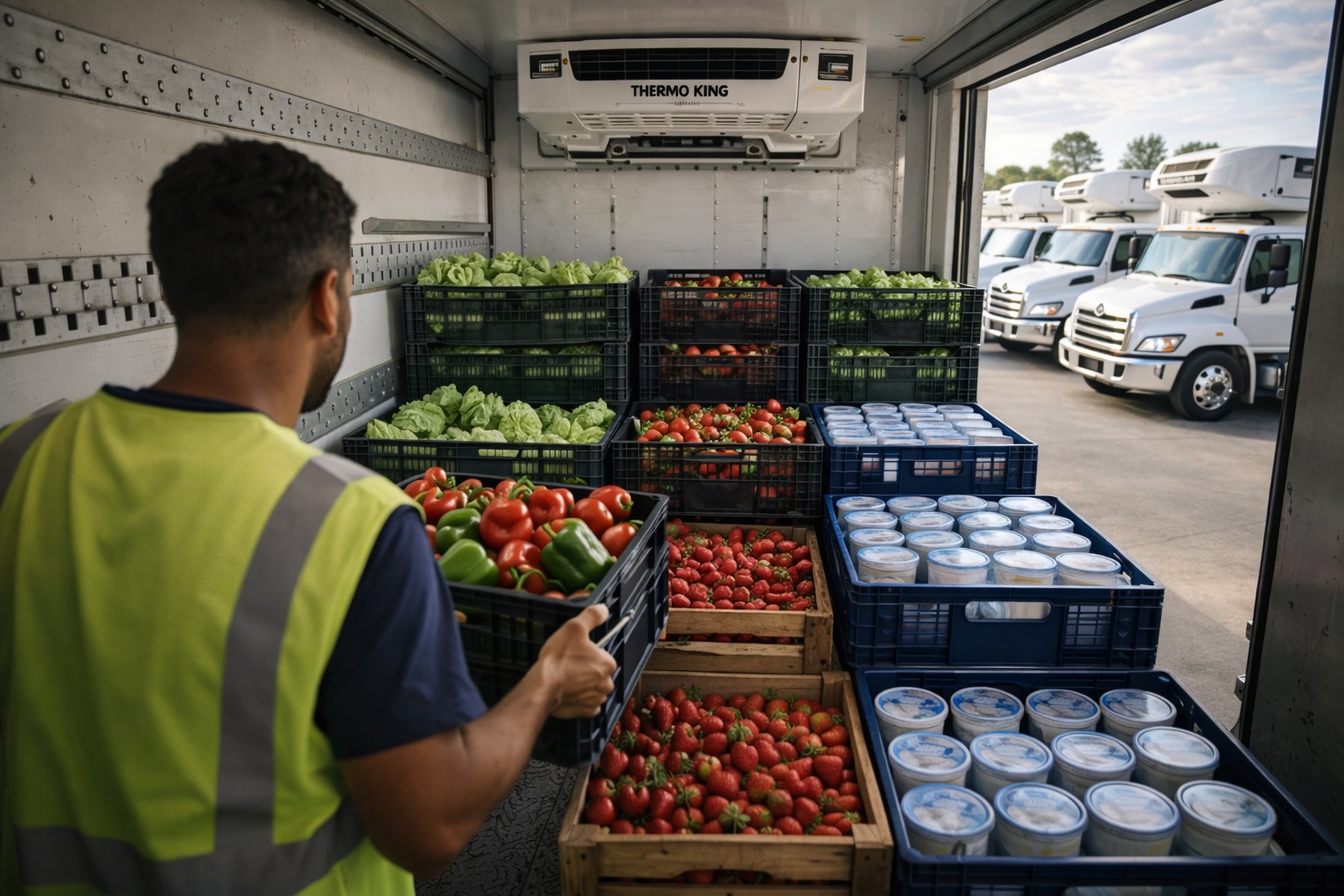
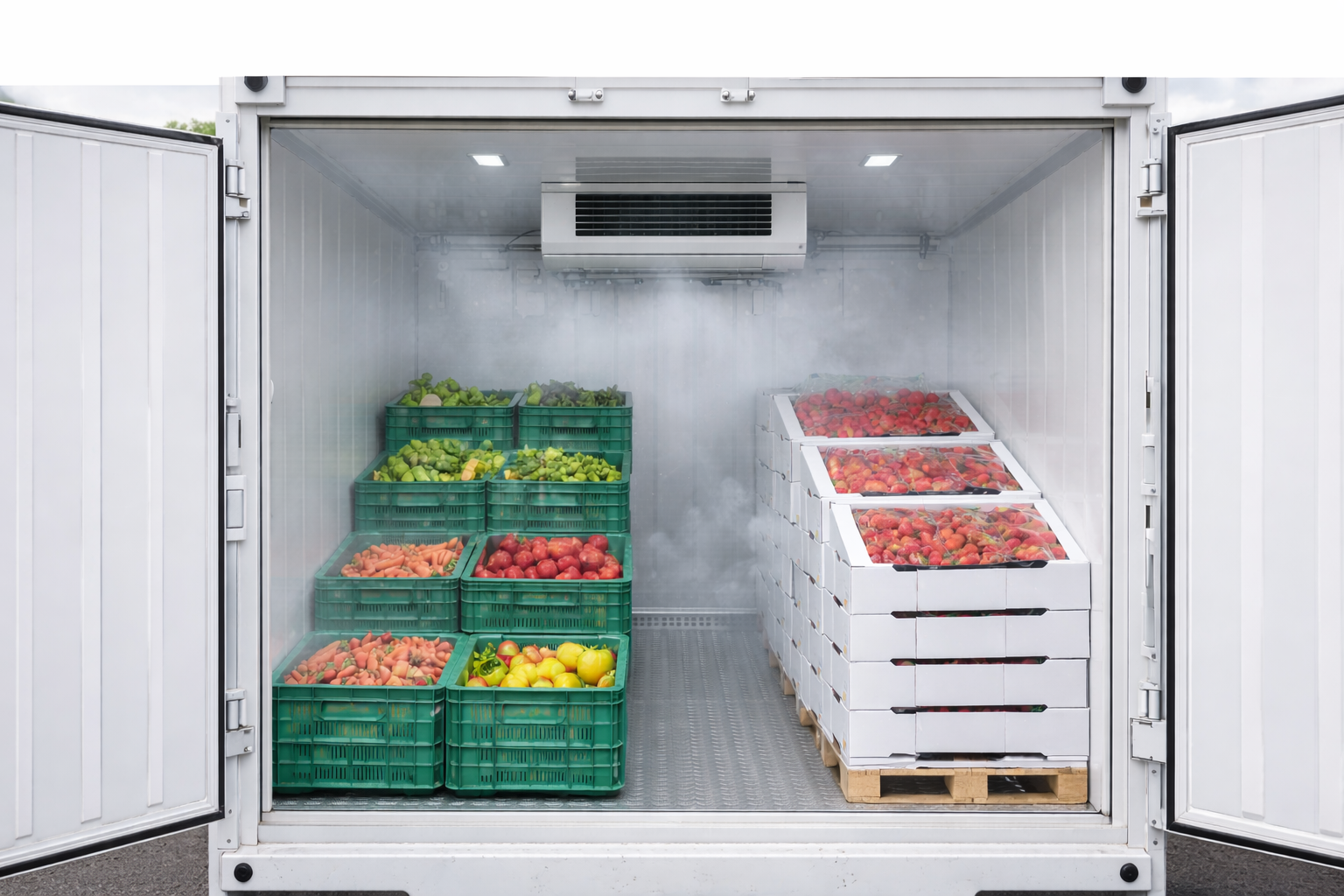
This is where temperature controlled logistics moves from being an operational requirement to a scientific necessity. Every stage, from storage to last-mile delivery, must function as a continuous, validated environment. Within this chain, transportation plays a particularly decisive role. A refrigerated truck or reefer van is not just a mode of movement. It is an active extension of the storage environment, responsible for preserving product integrity under real-world stress.
How Clinical Trial Supply Has Evolved Beyond Traditional Pharma Logistics
The structure of clinical trial supply has changed significantly over the past decade, moving away from the predictability of traditional pharmaceutical distribution toward a far more dynamic and fragmented model. Earlier systems were designed for bulk movement, stable demand, and relatively uniform delivery pathways. In contrast, today’s clinical supply chain operates on smaller batch sizes, higher-value consignments, and timelines that leave little room for delay or deviation. This shift is largely driven by the rise of complex therapies, including biologics and personalized treatments, which require tighter environmental control and faster, more responsive movement.
At the same time, the expansion of decentralized and multi-site trials has added another layer of complexity to clinical trial logistics. Instead of shipping to a limited number of centralized locations, trial materials now move across multiple cities, often reaching remote or infrastructure-constrained sites. Each additional touchpoint increases the risk of temperature excursions, handling inconsistencies, and transit delays. As a result, the margin for error across the entire clinical supply chain has narrowed considerably.
To support this evolving landscape, there is a growing reliance on highly controlled and precisely managed pharma cold chain systems. It is no longer enough to simply maintain a temperature range at origin and destination. Consistency must be ensured throughout the journey, across varying external conditions and operational disruptions. This is where robust temperature controlled logistics, supported by purpose-built transport solutions, becomes critical to maintaining the integrity and reliability of modern clinical trials.
What Makes Pharma Cold Chain Fundamentally Different
At a surface level, cold chain logistics may appear uniform across industries. Food, chemicals, and pharmaceuticals all rely on controlled temperatures during storage and transport. But the reality is that cold chain logistics pharmaceuticals operate under a completely different level of precision, accountability, and risk.
In most industries, temperature control is about preserving quality. In pharmaceuticals, it is about preserving efficacy. The difference is critical. A slight deviation in temperature may shorten shelf life in food products, but in the pharma cold chain, it can compromise the chemical stability of a drug, alter its intended performance, or render it unusable altogether. This distinction becomes even more pronounced with the rise of biologics, specialty drugs, and vaccines, all of which are inherently more sensitive to environmental changes. As a result, the expectations from temperature controlled logistics in pharma are far stricter, with minimal tolerance for variability at any point in the journey.
To understand this difference more clearly, it helps to break down the core characteristics that define pharmaceutical cold chain systems:
- Extremely narrow temperature ranges: Most pharmaceutical products, especially vaccines and biologics, must be maintained within tightly controlled bands such as 2°C–8°C, with some requiring even stricter conditions. Unlike conventional logistics, there is no flexibility to drift within a broader range.
- High sensitivity of drug composition: Biologics and injectables are structurally complex and can degrade rapidly when exposed to temperature fluctuations. This makes stability highly dependent on consistent environmental control across the entire clinical supply chain.
- Zero tolerance for temperature excursions: In segments like the vaccine cold chain, even brief deviations outside the prescribed range can lead to irreversible potency loss. There is often no visible indication of damage, which makes prevention far more important than detection.
- Continuous exposure risk during transit: Unlike static storage environments, transportation introduces constant variability. Every transfer, delay, or door opening increases the risk of temperature instability, especially in clinical trial logistics where routes are less predictable.
- Regulatory and compliance intensity: Pharmaceutical logistics is governed by strict standards, including GDP, requiring documented proof that temperature conditions were maintained throughout. This elevates temperature controlled logistics from an operational task to a validated, auditable system.
- End-to-end continuity, not point-in-time control: Maintaining temperature at origin and destination is no longer sufficient. The focus has shifted to uninterrupted control across the entire journey, ensuring that the product remains within defined conditions at every stage of movement.
Also Read: Refrigerated Containers vs Cold Logistics: ROI Comparison
Why Clinical Trial Logistics Breaks Down in the Real World
On paper, clinical trial logistics are designed to be precise and controlled. In practice, it operates in environments that are anything but predictable. Unlike conventional distribution models that follow fixed routes and centralized delivery points, clinical shipments move through fragmented networks, often involving multiple stops, varied site conditions, and evolving timelines. This creates a layer of operational complexity that directly impacts the stability and integrity of products moving through the clinical supply chain.
One of the defining characteristics of this system is the prevalence of multi-drop deliveries. A single shipment may be routed across several trial sites, each with its own schedule and readiness level. Every additional stop increases handling time and introduces new exposure risks. These routes are rarely linear, and delays at one location can cascade across the entire delivery cycle, putting pressure on temperature controlled logistics systems to maintain consistency over extended durations.
Another often overlooked factor is site readiness. Clinical sites may not always be prepared to receive shipments immediately upon arrival. Delays in unloading, lack of proper storage infrastructure, or administrative hold-ups can extend the time a shipment remains inside the vehicle. In such scenarios, the transport system effectively becomes a temporary storage unit within the broader pharma cold chain, and its performance becomes critical.
Frequent door openings during multi-stop deliveries add another layer of risk. Each time the cargo area is accessed, there is a sudden influx of external air, especially in high ambient temperature conditions. This leads to thermal fluctuations that require rapid recovery. If the system is not designed for quick stabilization, these repeated exposures can gradually push the internal environment outside acceptable limits, particularly in sensitive segments like clinical trial supply.
To put this into perspective, the operational challenges in clinical trial logistics often include:
- Multi-drop delivery cycles: Multiple delivery points increase handling frequency and cumulative exposure risk.
- Dynamic and unpredictable routes: Real-world variables such as traffic and delays extend transit time beyond planned conditions.
- Inconsistent site infrastructure: Not all trial locations are equally equipped to handle time-sensitive or temperature-sensitive deliveries.
- Repeated door openings: Each access event introduces thermal shock, especially in hot climates.
- Extended vehicle dependency: The reefer van or refrigerated truck must function as both transport and temporary storage within the pharma cold chain.
These factors highlight a crucial reality. In the clinical supply chain, risk is not concentrated in one stage. It accumulates through small, repeated operational challenges. Managing these variables requires more than basic refrigeration. It demands highly responsive, well-engineered temperature controlled logistics systems that can adapt to real-world conditions without compromising product integrity.
The Limitations of Standard Reefer Trucks in Pharma Cold Chain
At a glance, most reefer van or refrigerated truck solutions appear capable of handling temperature-sensitive cargo. They cool, they maintain a set range, and they are widely used across industries. But in the context of cold chain logistics pharmaceuticals, this baseline capability is not enough.
Pharmaceutical movement, especially within the clinical supply chain, demands far tighter control, faster system response, and consistent performance under unpredictable real-world conditions. Standard reefer systems are typically designed for general perishable goods, where minor fluctuations are acceptable. In pharma, those same fluctuations can lead to product degradation without any visible warning.
The gap, therefore, is not in whether a system can cool, but in how precisely and consistently it can maintain the required conditions throughout the journey. This is where generic solutions begin to fall short in temperature controlled logistics.
Airflow Is Not Uniform by Default
Most standard reefers focus on cooling output rather than how that cooling is distributed. In practice, this leads to uneven airflow across the cargo space, especially when shipments are densely packed or irregularly loaded. Certain areas may receive consistent cooling, while others experience temperature variation or stagnation.
In clinical trial logistics, where products are highly sensitive, this lack of uniformity creates hidden risk. A shipment may appear compliant based on average readings, while specific pockets within the load fall outside the required range. For the pharma cold chain, uniform airflow is not a refinement. It is a necessity.
Thermal Recovery Defines Real Performance
Maintaining temperature in a closed environment is relatively straightforward. The real test begins when that environment is disrupted. Every door opening introduces warm external air, especially in high ambient conditions, causing immediate temperature spikes inside the vehicle.
Standard refrigerated truck systems are often not designed for rapid recovery after such exposure. In multi-drop clinical trial supply routes, repeated door openings can lead to cumulative temperature drift. Without fast stabilization, the system struggles to bring conditions back within range, increasing the risk of deviation across the journey.
Insulation Determines Stability, Not Just Cooling
Cooling systems are only as effective as the environment they operate within. Insulation plays a critical role in maintaining internal temperature, particularly during delays, idle periods, or external heat exposure. However, many generic reefer van solutions rely on basic insulation that is insufficient for extreme conditions.
In markets with high ambient temperatures, this becomes a major limitation for temperature controlled logistics. Poor insulation increases dependency on continuous cooling, reduces system efficiency, and makes it harder to maintain stable conditions over time. For the clinical supply chain, this directly impacts reliability.
Monitoring Without Control Is a False Safety Net
Modern reefer systems often include temperature monitoring, but visibility alone does not guarantee control. Data loggers and tracking systems can indicate when a deviation has occurred, but they do not prevent it.
In cold chain logistics pharmaceuticals, the expectation goes beyond tracking. Systems must be capable of actively maintaining and correcting temperature conditions in real time. Without this, monitoring becomes reactive rather than preventive, which is not sufficient for high-stakes environments like the vaccine cold chain or clinical trial logistics.
Cooling Capacity Is Not the Same as Consistency
A system may be capable of reaching the desired temperature range, but sustaining that range under real-world conditions is a different challenge altogether. Factors such as route variability, load changes, and external climate all test the consistency of performance.
In the clinical supply chain, consistency is what defines compliance. A technically capable refrigerated truck that cannot maintain stable conditions throughout the journey introduces risk at every stage. This is why temperature controlled logistics for pharma must be engineered for reliability under stress, not just performance under ideal conditions.
Conclusion
In the clinical supply chain, success is rarely visible. There are no obvious markers when everything works as it should. No headlines for shipments that arrive within range, no recognition for systems that quietly maintain integrity across long and complex routes. And yet, that silent consistency is what determines whether a clinical trial progresses as planned or faces costly setbacks.
As therapies become more advanced and clinical trial supply grows more decentralized, the margin for error continues to shrink. The expectations from pharma cold chain systems are no longer limited to compliance. They demand precision, repeatability, and resilience under real-world conditions. This is especially true in high-stakes segments like the vaccine cold chain and broader cold chain for vaccines, where even the smallest deviation can have far-reaching consequences.
At the center of this shift is transportation. A refrigerated truck or reefer van is no longer just a link in the chain. It is an active, controlled environment that must perform with the same reliability as a storage facility. This is where the difference between standard solutions and engineered systems becomes clear.
For organizations operating in cold chain logistics pharmaceuticals, the focus must move beyond basic capability toward assured performance. This means investing in temperature controlled logistics that are designed for consistency, validated for real-world conditions, and capable of maintaining product integrity at every stage of movement.
Sub Zero Reefers operates at this intersection of engineering and reliability. By building reefer vans and refrigerated truck systems specifically for demanding applications like clinical trial logistics, they address the gaps that conventional solutions often overlook. From airflow design to insulation performance and system responsiveness, the focus is on ensuring that critical shipments arrive exactly as intended.
Frequently Asked Questions
What is the clinical supply chain and why is it important?
The clinical supply chain refers to the end-to-end process of sourcing, storing, and delivering investigational drugs, biologics, and vaccines for clinical trials. It is critical because any disruption or temperature deviation can compromise product integrity, delay trials, and impact patient safety.
What makes clinical trial logistics more complex than regular pharma logistics?
Clinical trial logistics involves smaller, high-value shipments, multi-site deliveries, and unpredictable timelines. Unlike traditional distribution, it requires precise coordination and strict environmental control, making temperature controlled logistics essential throughout the journey.
What is the role of temperature controlled logistics in pharma?
Temperature controlled logistics ensures that pharmaceutical products are transported within specific temperature ranges, typically between 2°C and 8°C. This is crucial in the pharma cold chain, where even minor deviations can affect drug stability and effectiveness.
Why are refrigerated trucks and reefer vans important in clinical trial supply?
A refrigerated truck or reefer van acts as a mobile controlled environment within the clinical supply chain. These vehicles are designed to maintain consistent temperatures during transit, which is especially important in clinical trial supply where products are highly sensitive.
What challenges affect the vaccine cold chain during transportation?
The vaccine cold chain faces challenges such as high ambient temperatures, frequent door openings, long transit times, and inconsistent last-mile infrastructure. Maintaining a stable cold chain for vaccines requires advanced monitoring and reliable transport systems.
How does GDP impact cold chain logistics in pharmaceuticals?
Good Distribution Practice (GDP) sets the standards for handling and transporting pharmaceutical products. In cold chain logistics pharmaceuticals, GDP ensures proper temperature monitoring, validated transport systems, and full traceability, helping maintain product quality across the clinical supply chain.