Seafood is one of the most temperature-sensitive products in global trade. The moment it is harvested, enzymes begin breaking down tissue, bacteria multiply faster in warmer conditions, and moisture loss slowly affects texture, weight, and appearance. These changes are not abstract. They directly affect grading, pricing, and whether a shipment is accepted or downgraded at its destination.
This is why seafood logistics is not defined only by distance or delivery timelines. It is defined by how consistently temperature is controlled across the journey. In seafood transport, even a small break in the cold chain can reduce shelf life or lead to complete rejection in export-driven markets. Cold chain infrastructure becomes the deciding factor here. It is not an added layer of support. It is the system that protects product value from the point of harvest to the point of sale.
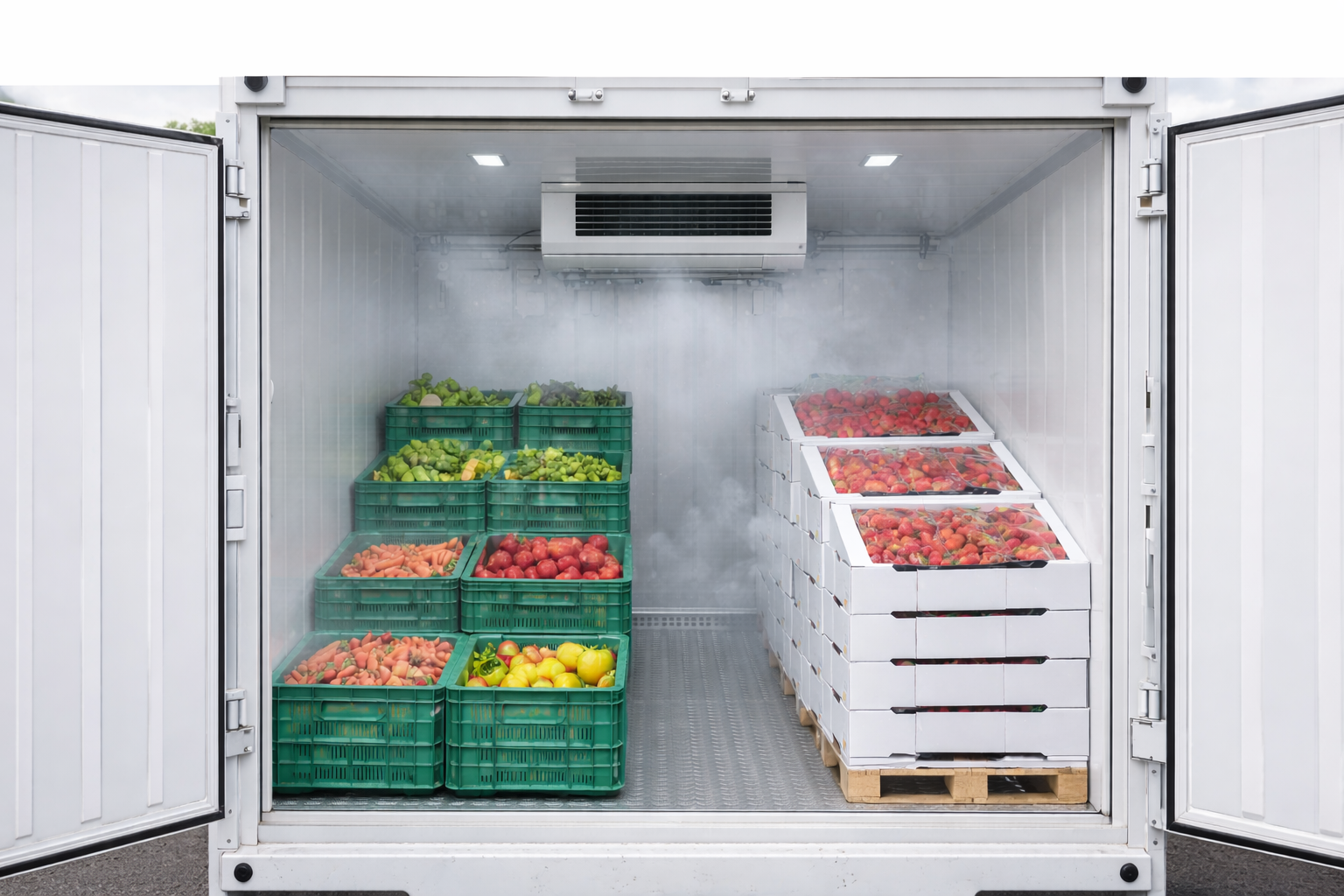
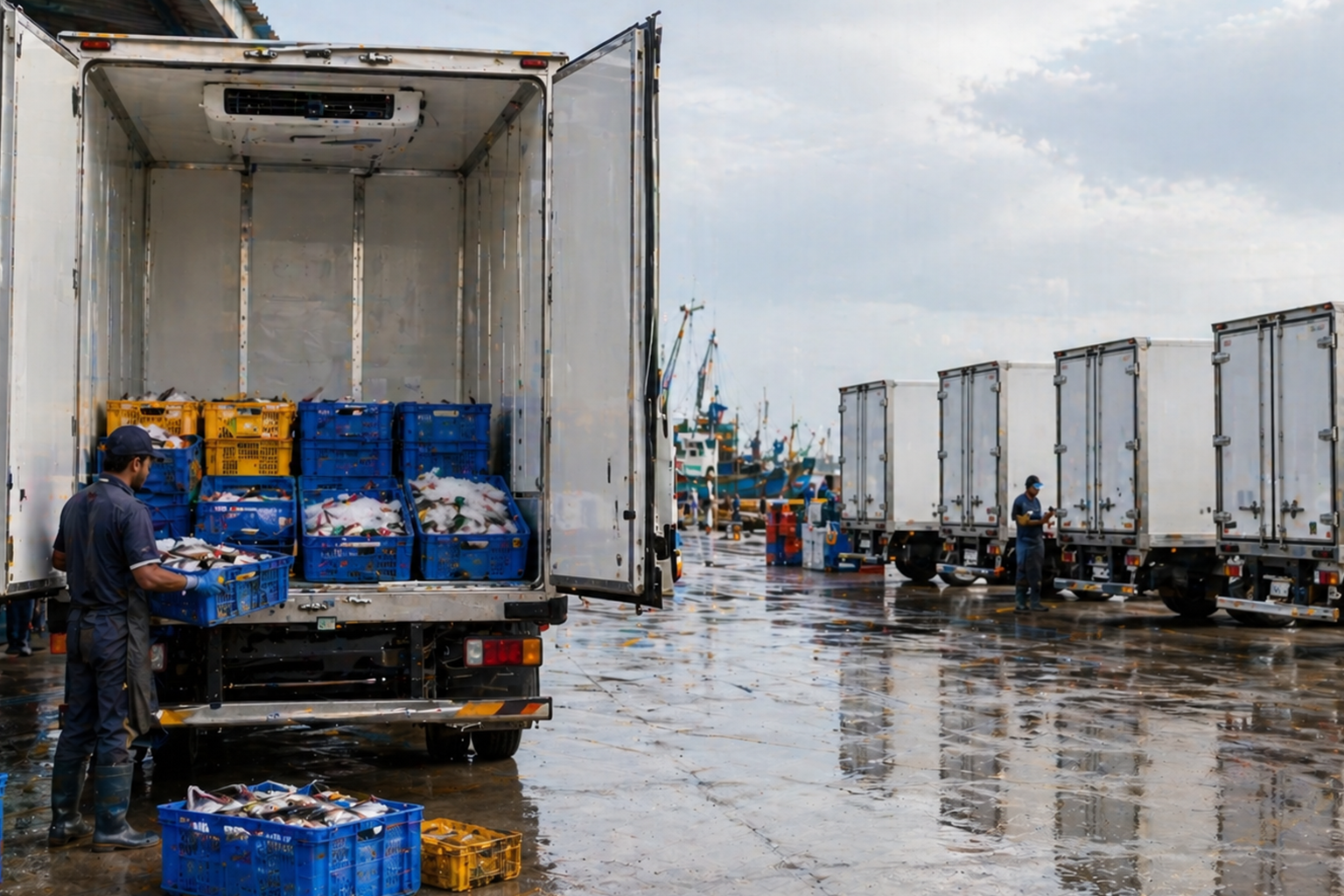
At the centre of this system is the reefer truck. A refrigerated vehicle in seafood transportation is not just a mode of movement. It is a controlled environment on wheels. Its job is simple but strict: maintain a stable temperature range regardless of external heat, humidity, or travel duration. Whether the cargo is moving from landing centres to processing plants or from warehouses to ports, the condition inside the truck determines the outcome of the entire shipment.
This is why seafood logistics is judged differently from most other supply chains. A delivery that arrives late but intact is still acceptable. A delivery that arrives on time but compromised in quality is not. Once this is clear, the business decision becomes more layered. Maintaining a dependable fleet of refrigerated vehicles is expensive, but relying on inconsistent capacity creates its own risks. This is where the decision between owning and leasing a refrigerated truck becomes critical for seafood businesses.
Why Temperature Control Defines Every Step of Seafood Logistics
In seafood transportation, temperature control is not an added feature or an operational upgrade. It is the core condition that decides whether the product retains its commercial value or not. Fish, shrimp, and other seafood items remain biologically active even after harvest, which means any fluctuation in temperature during transit directly accelerates spoilage and affects texture, freshness, and safety standards.
A refrigerated truck exists to eliminate that variability by maintaining a stable and controlled environment from the point of origin to the final destination. This becomes even more critical in seafood logistics, where the movement of goods is tightly linked to strict timelines, hygiene protocols, and export-grade compliance requirements. Unlike general cargo, seafood cannot tolerate delays or inconsistent cooling, which is why the system demands continuous temperature retention, faster turnaround cycles, and real-time stability throughout the journey.
In such conditions, infrastructure like a reefer van or a fully engineered refrigerated fleet is not a support mechanism. It becomes the basic requirement for keeping the entire supply chain functional and financially viable.
The Real ROI Question: Buy vs Lease
For seafood businesses, the decision to buy or lease a reefer truck is not just a financial comparison. It sits at the intersection of operational control, risk exposure, and how reliably a business can protect product quality across every shipment. Seafood margins are tightly linked to freshness. That means even small inefficiencies in fleet availability or temperature consistency can quietly eat into profitability. This is why the ROI question needs to be looked at beyond purchase cost and monthly lease payments.
It really comes down to two things: how often the fleet is used, and how critical control over the cold chain is to the business model.
-
Ownership as a Long-Term Cost and Control Strategy
Buying a refrigerated truck makes sense when seafood operations are stable, repeatable, and high-volume. The logic here is simple. Once the asset is paid off, the cost per trip reduces significantly, and the business gains full control over scheduling, maintenance standards, and route planning.
But the deeper value of ownership is control over cold chain consistency. In seafood logistics, timing and temperature cannot be left to external availability. Owned fleets allow businesses to design operations around product needs rather than fleet constraints. This becomes especially important for exporters or large distributors who move high volumes across fixed routes.
The trade-off is capital intensity. Ownership ties up working capital and also places responsibility for maintenance, breakdown recovery, and system upgrades entirely on the business. If utilization is not high enough, the asset starts to lose its financial advantage.
-
Leasing as a Flexibility and Risk Management Tool
Leasing a reefer van or refrigerated fleet works differently. Instead of committing capital upfront, businesses pay for access and usage. This structure is often preferred by growing seafood operators or companies dealing with seasonal fluctuations.
The main advantage here is flexibility. Fleet size can be adjusted based on demand cycles, festival peaks, export windows, or sudden market opportunities. It also reduces the pressure of long-term asset ownership, especially when business volumes are still evolving. Leasing also shifts part of the operational burden. Maintenance schedules, repairs, and vehicle uptime are often managed by the provider, which reduces downtime risk for the business.
However, the trade-off is cost accumulation over time. If usage remains consistently high, leasing can become more expensive than ownership. The business also has less control over customization and long-term fleet optimization.
Also Read: Refrigerated Containers vs Cold Logistics: ROI Comparison
Why Operational Efficiency Matters More Than Ownership in Reefer Truck ROI
Most businesses evaluate ROI by comparing the cost of buying versus leasing a reefer truck, but that only captures a small part of the financial picture. In seafood logistics, the real driver of profitability sits inside day-to-day operational performance. A poorly engineered or inconsistently maintained vehicle can quietly increase costs across multiple areas at once. Fuel consumption tends to rise when refrigeration systems are inefficient or when insulation fails to hold temperature, forcing the system to work harder. At the same time, even minor temperature fluctuations can damage seafood quality, leading to spoilage, downgrades, or rejected consignments.
Breakdowns or frequent servicing add further downtime, which disrupts delivery schedules and reduces fleet productivity. Over time, these issues also affect cargo integrity, where products may technically arrive but no longer meet the required freshness standards for premium pricing or export compliance. Whether a business operates a leased reefer van or owns a full refrigerated fleet, the consistency of performance across every trip is what ultimately defines ROI. This is why engineering quality and system reliability often have a greater financial impact than the ownership model itself.
Strategic Decision Framework for Seafood Businesses
The buy vs lease decision for a reefer truck becomes clearer when it is viewed through how the business actually operates, not just how it spends. Seafood logistics is tightly connected to timing, product sensitivity, and demand fluctuations. So the right choice depends on how predictable the operation is, how much control is needed over the cold chain, and how efficiently the fleet will be used across the year.
There is no universal answer here. But there is a practical way to evaluate it through three core lenses:
-
Demand Stability
The first factor is how consistent your seafood movement really is across months. If your business moves steady volumes every day or follows a predictable supply cycle, ownership starts to make more sense. In this case, a refrigerated truck becomes a long-term operational asset. You are not guessing usage patterns. You already know the routes, frequency, and load capacity requirements. This predictability allows better planning of maintenance, better cost distribution over time, and stronger return on investment once the asset crosses its breakeven point.
But if demand is seasonal, irregular, or heavily influenced by market fluctuations, ownership becomes harder to justify. A fleet that sits idle during low-demand periods still carries fixed costs like maintenance, depreciation, and storage. In such cases, leasing a reefer van or expanding fleet capacity only when needed helps avoid unnecessary capital blockage.
-
Fleet Scalability
The second factor is how quickly your operation needs to scale up or down. Seafood businesses often face sudden spikes in demand during export windows, festivals, or bulk procurement cycles from retail and hospitality clients. If your model requires rapid expansion of capacity during these periods, leasing offers more flexibility. You can add vehicles without long procurement cycles or heavy capital investment, and reduce fleet size once demand stabilises.
On the other hand, if your routes and volumes are already established and expected to grow steadily, owning a refrigerated truck fleet provides better long-term stability. It allows you to standardise operations, maintain consistent service quality, and reduce dependency on external availability during peak demand.
-
Cold Chain Criticality
The final factor is how sensitive your product is to temperature deviations and delivery consistency. In seafood logistics, cold chain performance directly impacts product grade. A small temperature fluctuation can affect shelf life, texture, and export acceptance. If your business operates in high-value segments or exports to regulated markets, control over every aspect of transportation becomes critical.
Owning a fleet allows tighter control over insulation standards, refrigeration systems, and maintenance routines. This reduces variability and helps maintain consistent quality across shipments. In contrast, leasing can introduce variability depending on provider standards, which may be acceptable for some operations but risky for premium or export-focused seafood businesses.
When these three factors are evaluated together, the decision becomes more structured. Stable demand and high cold chain sensitivity often justify ownership of a refrigerated truck fleet. Variable demand and scaling uncertainty lean toward leasing. Most seafood businesses operate somewhere in between, which is why many adopt a hybrid approach, balancing owned assets with leased capacity to maintain both control and flexibility.
Why Engineering Quality Has a Bigger Impact on Reefer Truck ROI Than Ownership Models
In seafood logistics, the real difference in performance often comes down to engineering quality rather than the financial model of ownership or leasing. Whether a business chooses to buy or lease a reefer truck, the actual ROI is shaped by how reliably that vehicle maintains temperature stability under real operating conditions. A well-engineered system ensures consistent cooling even during long hauls and frequent door openings, where temperature fluctuations typically occur.
It also improves energy efficiency, which reduces fuel and refrigeration load over time, and strengthens insulation integrity so external heat has minimal impact on internal conditions. Together, these factors directly reduce spoilage rates, which is critical in seafood transport where even minor degradation affects pricing and acceptance. This is why many operators in cold chain logistics prioritize build quality alongside financial decisions, because long-term profitability depends less on how the asset is acquired and more on how consistently it performs in the field.
Conclusion
In seafood logistics, ROI is never just a financial calculation. It reflects how consistently a business can preserve product quality while moving through time, distance, and temperature stress. A reefer truck is not simply a transport asset. It is the control point that determines whether seafood retains its commercial value or loses it before reaching the market.
The buy vs lease decision helps structure capital planning, but it does not guarantee performance. Real outcomes are shaped by cold chain consistency, fleet reliability during peak demand, and how effectively temperature stability is maintained across every leg of the journey. In seafood transport, even small inefficiencies do not stay small. They directly translate into spoilage, downgrades, and margin loss.
This is why long-term success in seafood logistics depends less on ownership models and more on the engineering quality of the refrigeration system itself. When the cold chain holds steady, everything else becomes easier to manage.
For seafood businesses looking to build that level of reliability into their operations, Sub Zero Reefers focuses on designing refrigeration systems built for real-world performance, not just specifications on paper.
Frequently Asked Questions
1. What makes a reefer truck essential for seafood logistics?
A reefer truck maintains a controlled temperature environment that prevents spoilage during transit. Since seafood begins to degrade immediately after harvest, even minor temperature changes can affect freshness, texture, and safety. This makes refrigeration not optional but fundamental to seafood logistics.
2. How does seafood transport differ from other cold chain logistics?
Seafood transport is more sensitive than most cold chain operations because the product deteriorates faster and has a shorter shelf life. Unlike frozen goods that tolerate minor fluctuations, seafood requires continuous temperature stability throughout the journey without interruption.
3. Is leasing a refrigerated truck better than buying for seafood businesses?
It depends on demand consistency and scale. Leasing works well for seasonal or growing seafood transportation businesses that need flexibility. Buying is more suitable for established seafood trucking companies with stable routes and high utilization, where long-term cost efficiency becomes important.
4. What risks are involved if the cold chain breaks during seafood logistics?
Any break in cold chain logistics can lead to bacterial growth, texture damage, and loss of freshness. This often results in product rejection, lower market pricing, or complete disposal of cargo, directly impacting revenue and brand reliability.
5. What should seafood businesses prioritize when choosing a reefer van or fleet?
The priority should be engineering quality and temperature stability rather than just cost or ownership model. Strong insulation, reliable refrigeration systems, and consistent performance across routes are key to maintaining seafood quality and reducing long-term losses.