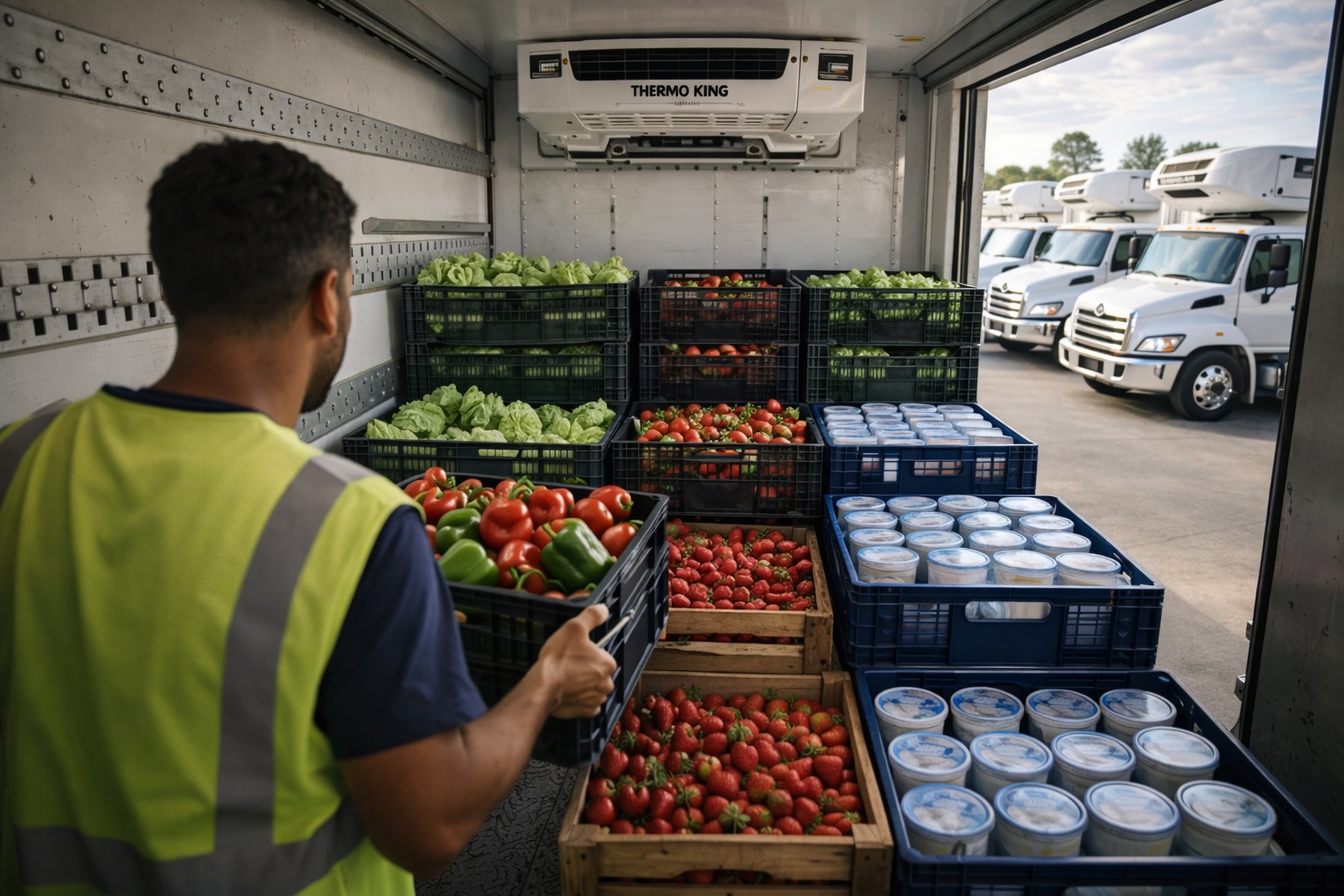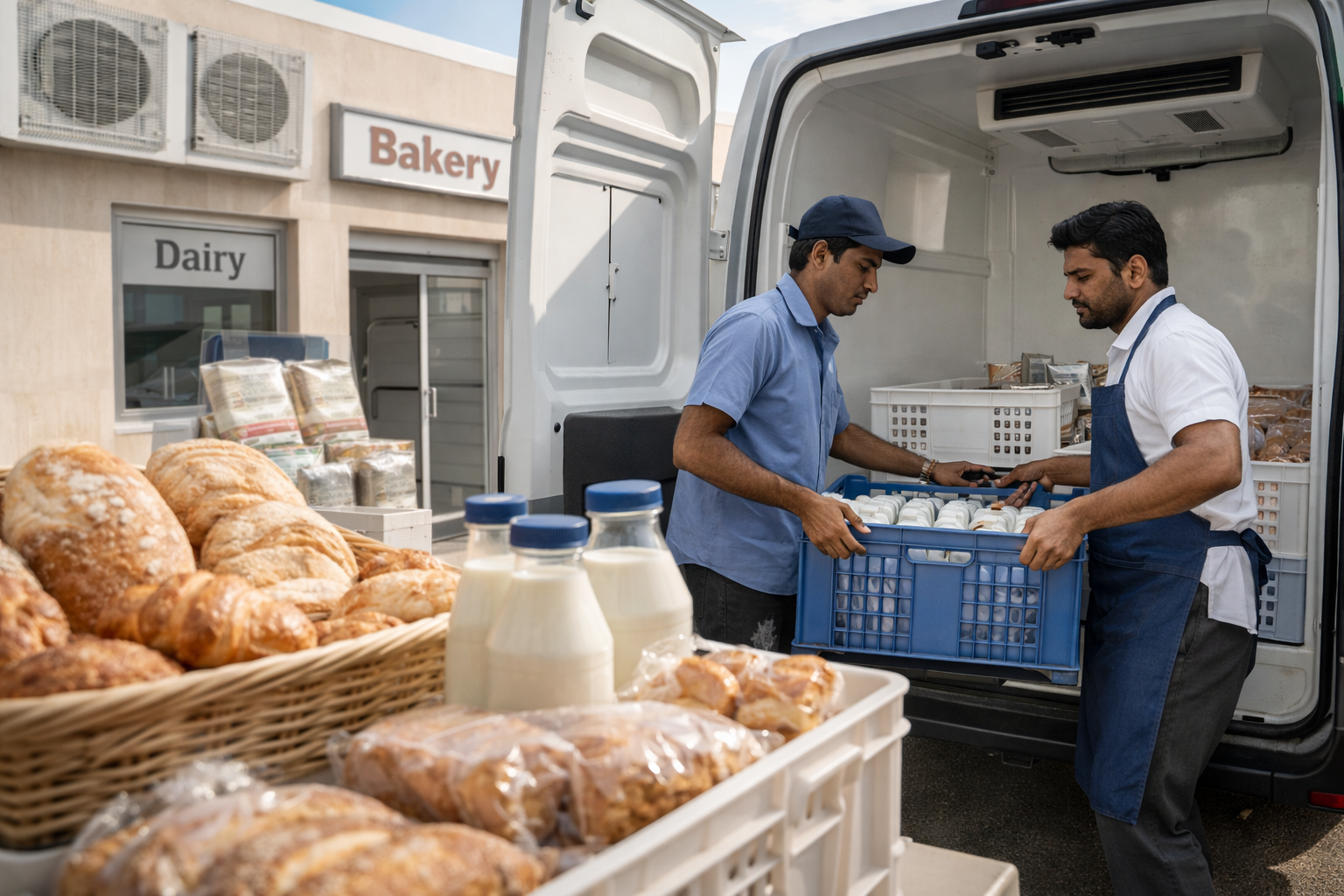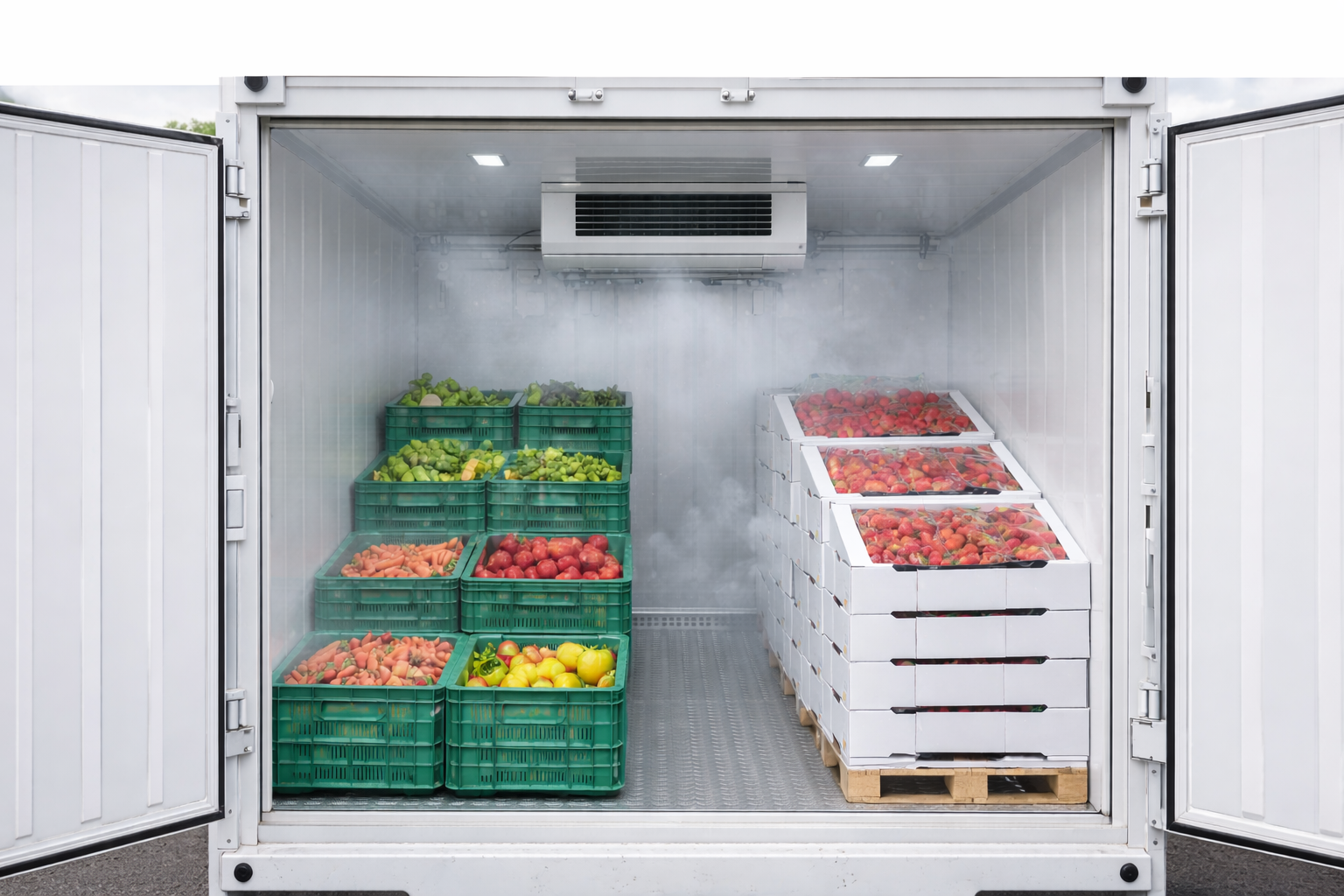
India loses an estimated 15�25% of its fresh produce every year before it reaches consumers. For refrigerated trucks, government subsidy schemes are the key to making modern cold chain infrastructure affordable and scalable.
Whether you are a cold storage business owner, food processor, or logistics operator, the right subsidy mix can reduce your upfront capital and make reefer truck investments far easier to justify. This article shows how PM Kisan Sampada Yojana, NABARD financing, and the Agricultural Infrastructure Fund help lower your cost and strengthen your cold chain.
How Government Schemes Reduce the Cost of Buying a Reefer Truck in India
Table of Contents:
- Introduction
- Why the Government Is Investing in Cold Chain and Reefer Truck Infrastructure
- PM Kisan Sampada Yojana: Cold Storage Subsidy Structure and How Reefer Trucks Qualify
- NABARD Loan Scheme for Cold Chain and Reefer Truck Financing
- AIF Interest Subvention for Cold Storage Business and Reefer Fleets
- State-Level Cold Storage Subsidy Schemes: Maharashtra, Gujarat, Punjab and Andhra Pradesh
- How to Apply For These Schemes & Step-by-Step Documentation Needed
- Conclusion
- Frequently Asked Questions
India loses an estimated ?90,000 crore worth of agricultural produce every year to spoilage. A significant portion of that loss happens not in the field, but on the road. Temperature excursions during transit, inadequate cold chain equipment, and an acute shortage of reefer trucks are the systemic gaps that continue to bleed value out of Indian agriculture.
The numbers are stark. India currently operates fewer than 15,000 reefer trucks for a country that needs upwards of 25,000 refrigerated vehicles to move its perishable produce alone. Only about 15% of India's perishable goods are transported under controlled temperatures. The rest travel in open trucks, losing quality, shelf life, and market value with every kilometre.
The Government of India recognises this. Over the past decade, it has built a layered architecture of subsidies, interest subventions, and credit guarantees specifically to accelerate investment in the cold chain and reefer trucks are explicitly included in every major scheme.
If you are planning to purchase a reefer truck, expand a refrigerated fleet, or understand how to start a cold storage business with integrated transport infrastructure, this guide is for you. We cover every central scheme, how state-level support stacks on top, the precise documents you will need, and the exact reasons applications get rejected, so yours does not.
Why the Government Is Investing in Cold Chain and Reefer Truck Infrastructure
The policy rationale is not difficult to understand. India is the world's second-largest producer of fruits and vegetables, and one of the largest producers of dairy and poultry. Yet its post-harvest infrastructure remains chronically underdeveloped.
The food processing industry in India contributes roughly 8�9% of GDP and employs over 13 million people directly. The government's stated ambition is to double farmer income and reduce agricultural waste. Neither goal is achievable without a functioning cold chain, and reefer transport is the connective tissue of that chain.
This is why multiple central ministries, the Ministry of Food Processing Industries (MoFPI), the Ministry of Agriculture, and the Department of Financial Services have designed schemes that directly subsidise the purchase and financing of cold chain equipment, including refrigerated vehicles.
In practical terms, subsidy support reduces the capital burden on fleet buyers, logistics operators, and cold chain entrepreneurs. It also de-risks financing for banks, making it easier to obtain term loans for assets that have previously been considered high-risk by lenders.
For anyone building or expanding a cold storage business or a refrigerated logistics operation, understanding these schemes is not optional; it is the difference between a financially viable project and one that stalls at the funding stage.
PM Kisan Sampada Yojana: Cold Storage Subsidy Structure and How Reefer Trucks Qualify
The PM Kisan Sampada Yojana (PMKSY) is the Government of India's flagship initiative for the food processing industry in India. It is implemented by the Ministry of Food Processing Industries.
Within PMKSY, the most relevant component for reefer transport operators is the Scheme for Integrated Cold Chain and Value Addition Infrastructure. Its explicit objective is to create unbroken cold chain infrastructure from the farm gate to the consumer and it covers refrigerated transport as a core eligible cost.
The scheme was originally launched with a ?6,000 crore allocation for 2016�2020. It was subsequently extended with an allocation of ?4,600 crore till March 2026. In July 2025, the Union Cabinet approved a further ?1,920 crore, raising the total allocation to ?6,520 crore, a signal of the government's continued commitment to cold chain infrastructure.
As of June 2025, 395 integrated cold storage projects have been approved since the scheme's launch, creating a preservation capacity of 25.52 lakh metric tonnes per year.
Who Is Eligible?
PMKSY's cold chain component is notably inclusive in its eligibility criteria. The following entities can apply:
- Individual entrepreneurs and farmers
- Partnership and proprietorship firms
- Private limited companies and corporations
- Cooperatives and their federations
- Self Help Groups (SHGs)
- Farmer Producer Organizations (FPOs) and Farmer Producer Companies (FPCs)
- Non-Governmental Organizations (NGOs)
- Central and State Public Sector Undertakings (PSUs)
- Limited Liability Partnerships (LLPs)
There is one key structural requirement: the proposed project must be an integrated cold chain project, not a standalone reefer truck purchase. This means the project must include a combination of farm-level infrastructure (pre-cooling, sorting, grading), storage infrastructure, and transport, including reefer vans and mobile chilling units. A project that applies only for transport vehicles without demonstrating farm-level and distribution hub linkages will not qualify.
Entities must have a business interest in cold chain solutions or be directly involved in managing agricultural supply chains. A term loan sanction letter from a Scheduled Commercial Bank, an RBI-recognised financial institution, or an approved NBFC is mandatory. The sanction must be dated no earlier than the Expression of Interest (EOI) issue date under which the application is submitted.
Grant Amount & How to Apply
The cold storage subsidy under PM Kisan Sampada Yojana follows a tiered structure based on project location and applicant category:
- General Areas: Grant-in-aid of 35% of eligible project cost.
- Difficult Areas and Special Categories: Grant-in-aid of 50% of eligible project cost. Difficult Areas include North-Eastern States (including Sikkim), Uttarakhand, Himachal Pradesh, Jammu & Kashmir, Ladakh, and Integrated Tribal Development Programme (ITDP) areas. The 50% rate also applies to projects undertaken by Scheduled Castes (SC), Scheduled Tribes (ST), Farmer Producer Organizations (FPOs), and Self Help Groups (SHGs), regardless of geographic location.
- Maximum Cap: The total grant-in-aid for any single project is capped at ?10 crore.
This means a project with an eligible cost of ?28.57 crore in a general area would receive the maximum ?10 crore grant. For projects in difficult areas or under SC/ST/FPO/SHG applicants, the same ?10 crore cap applies, but is reached at a lower cold storage project cost of ?20 crore.
How to Apply:
Applications under PMKSY are invited through an Expression of Interest (EOI) process published on the SAMPADA portal (sampada-mofpi.gov.in). The Ministry invites EOIs periodically based on fund availability. Applications are submitted online. State government consent for storage of food commodities is not mandatory, but state assistance in establishing infrastructure is required.
The application requires a Detailed Project Report (DPR), land documents with NA (Non-Agricultural) permission if applicable, bank sanction letter with appraisal report, and pollution control certificates for applicable facilities.
NABARD Loan Scheme for Cold Chain and Reefer Truck Financing
The National Bank for Agriculture and Rural Development (NABARD) offers a dedicated financing window for cold chain infrastructure through its Warehouse Infrastructure Fund (WIF). This is a direct lending programme which means NABARD funds projects directly at concessional interest rates.
The NABARD loan scheme is particularly relevant for operators who want debt financing at rates below standard commercial bank lending, which for the cold chain sector can reach 12�14% per annum. NABARD's lending rates are structured on its Prime Lending Rate (PLR) plus a risk premium, generally resulting in more competitive terms for qualifying entities.
Interest Rates, Tenure & Eligible Costs
NABARD provides term loans for a tenure of seven or more years for cold chain infrastructure projects.
- For Private Companies, Entrepreneurs, and Corporates: Loan up to 75% of total eligible project cost; Interest rate: NABARD PLR + Risk Premium
- For tenures beyond 7 years: NABARD PLR + Risk Premium + Tenure Premium
- Risk premium is determined by the borrower's NABARD credit rating; an AAA+ rated borrower can access funds at PLR with zero risk premium
- For Cooperatives, Federations, APMCs, FPOs, and Producer Companies: Loan up to 95% of total eligible project cost; Interest rate structure same as above, adjusted for cooperative risk category
- For Government-Owned or Government-Sponsored Entities: Loan up to 95% of total eligible project cost; Concessional rate available at 1.5% below the prevailing applicable rate
The minimum aggregate capacity for projects is 5,000 metric tonnes (MT) for agricultural and allied produce storage. Government-owned or government-assisted entities are exempt from this minimum capacity requirement.
Borrowers must provide an undertaking to obtain NCCD (National Centre for Cold-chain Development) accreditation or register with the Warehousing Development and Regulatory Authority (WDRA) for eligible storage infrastructure components.
Reefer Trucks Covered? Yes, Here is How
This is a question that often trips up applicants who read NABARD scheme documentation superficially. The answer is yes, reefer vans are explicitly named as eligible activities under the NABARD loan scheme's Warehouse Infrastructure Fund.
The scheme's eligible activities include cold storage, Controlled Atmosphere (CA) stores, pack houses, integrated pack houses, reefer vans, bulk coolers, Individually Quick Frozen (IQF) units, and chilling and freezing infrastructure.
However, the critical nuance is that reefer trucks cannot be financed as a standalone asset. They must form part of a broader cold chain infrastructure project that includes storage and handling components. A logistics operator seeking to fund only a fleet of reefer vehicles, without accompanying storage infrastructure, will not qualify under NABARD's WIF.
In practical terms, this means that fleet operators and cold chain entrepreneurs should structure their projects as integrated systems to access NABARD financing for the vehicle component. For cold chain equipment financing that falls below NABARD's minimum project scale, the Agricultural Infrastructure Fund (AIF) offers a more accessible alternative.
AIF Interest Subvention for Cold Storage Business and Reefer Fleets
The Agricultural Infrastructure Fund is the Government of India's most operationally accessible cold chain financing scheme for smaller operators. Launched under the Atma Nirbhar Bharat Abhiyan in 2020, AIF has a total corpus of ?1 lakh crore and is operational until 2032�33.
As of August 2024, ?47,575 crore has been sanctioned across 74,508 projects under AIF, mobilising total investments of ?78,596 crore in agriculture infrastructure, the majority from private sector entities.
The defining feature of AIF is its interest subvention mechanism. All loans under AIF carry a 3% per annum interest subvention on outstanding loans up to ?2 crore. This benefit is available for a maximum period of 7 years, including any moratorium period. On a ?2 crore loan at a market rate of 9%, this effectively reduces the effective interest cost to 6%, a material saving over a seven-year term.
Additionally, loans up to ?2 crore are covered under the Credit Guarantee Fund Trust for Micro and Small Enterprises (CGTMSE), with the guarantee fee borne by the Government. This collateral-free structure significantly lowers the barrier to credit access for small and medium cold chain operators.
Eligible borrowers under AIF include:
- Individual farmers and agricultural entrepreneurs
- FPOs, Farmer Producer Companies, PACS, and SHGs
- Agri-startups and agri-entrepreneurs
- Self Help Groups and cooperatives
- APMCs and marketing boards
- Public-private partnership projects supported by state or central government
AIF-eligible infrastructure for cold chain includes:
- Cold storage units for fruits, vegetables, grains, and other perishables
- Warehouses and silos
- Primary processing facilities (sorting, grading, cleaning)
- Supply chain logistics infrastructure, including refrigerated transport and reefer vans
The Agricultural Infrastructure Fund explicitly allows convergence with other schemes, including PM Kisan Sampada Yojana, National Horticulture Board (NHB) grants, NABARD programmes, and state government logistics policies. This convergence mechanism is powerful: operators can combine AIF's 3% interest subvention with a capital subsidy from PMKSY, effectively stacking financial benefits on the same project.
State-Level Cold Storage Subsidy Schemes: Maharashtra, Gujarat, Punjab and Andhra Pradesh
Central schemes form the foundation of cold chain support in India. However, many states layer additional incentives on top, particularly for food processing and agricultural logistics. Operators should verify the current status of state schemes directly with their state's agriculture or food processing department, as these evolve with each state budget cycle.
Maharashtra
Maharashtra is India's largest food processing state by output value. The Maharashtra government runs its own agriculture and food processing incentive framework that complements central schemes. Under Maharashtra's industrial policy for the food processing industry, eligible units can access stamp duty exemptions, electricity duty concessions, and interest subsidies on term loans. Cold chain equipment, including reefer vehicles forming part of an integrated food processing project, may qualify under the state's food processing investment incentive policy. Operators should contact the Maharashtra Industrial Development Corporation (MIDC) or the state's Agriculture Department for scheme-specific guidance.
Gujarat
Gujarat has positioned itself as a key node in India's agricultural export infrastructure. The state provides capital subsidies for setting up cold chain infrastructure, including refrigerated transport, through its Agriculture Infrastructure Development Scheme. Gujarat also offers direct interest subsidies to food processing MSMEs. For operators with projects near Gujarat's agricultural processing clusters, convergence with PM Kisan Sampada Yojana and AIF creates significant stacking potential. The state has implemented the scheme alongside MoFPI's central support, with applications routed through state nodal agencies.
Punjab
Punjab is one of India's most agriculturally productive states and a primary source of perishable produce. The state has implemented PMKSY's cold chain component, and both Punjab and Haryana have active state nodal agencies through which central cold storage subsidy applications can be filed. Punjab's Department of Food and Civil Supplies and its Agriculture Department coordinate state-level support for cold chain entrepreneurs. Given Punjab's agricultural surplus, the economic case for refrigerated transport infrastructure is particularly strong.
Andhra Pradesh
Andhra Pradesh offers capital subsidy and term loan support for food processing industries through its own food processing policy. The state prioritises infrastructure that links agricultural production areas (particularly horticulture in districts like Chittoor and Krishna) with processing and export facilities. Cold chain equipment forming part of an integrated AP food processing project may qualify for state incentives in addition to PMKSY and AIF benefits. The AP Food Processing Society (APFPS) is the primary state agency managing applications.
In all four states, the most effective approach is to file a simultaneous application under both the central scheme (PMKSY or AIF) and the relevant state programme, presenting a single integrated project that qualifies for both channels.
How to Apply For These Schemes & Step-by-Step Documentation Needed
Applying for a cold storage subsidy or NABARD loan scheme is a process that rewards preparation. Applications that fail typically do so because of incomplete documentation, project design that does not match scheme requirements, or a DPR that does not hold up to technical scrutiny. Here is the standard workflow for PM Kisan Sampada Yojana, the most comprehensive cold chain scheme.
Step 1: Monitor SAMPADA Portal for EOI
PMKSY applications open through the Expression of Interest (EOI) process. Monitor the SAMPADA portal (sampada-mofpi.gov.in) for EOI publication. EOIs are published periodically based on fund availability and have hard submission deadlines.
Step 2: Prepare a Detailed Project Report (DPR)
The DPR is the core of your application. It must cover:
- Project rationale and location
- Technical specifications of all infrastructure components, including cold chain equipment and reefer vehicles
- Financial projections (minimum 5 years)
- Land ownership or lease documentation
- Integration logic, how farm-level, storage, and transport components connect
- Compliance with FSSAI and relevant food safety standards
For Sub Zero customers, technical specifications for reefer vehicle bodies are available directly from Sub Zero's engineering team at Chakan, Pune, ensuring your DPR reflects accurate, FSSAI-compliant vehicle specifications.
Step 3: Obtain a Term Loan Sanction Letter
Approach your bank for a term loan sanction in parallel with DPR preparation. The sanction letter must be from a Scheduled Commercial Bank or RBI-recognised financial institution and dated no earlier than the current EOI issue date.
Step 4: Compile All Supporting Documents
Required documents typically include:
- Detailed Project Report (DPR)
- Land documents with NA permission (if applicable)
- Bank sanction letter with technical appraisal report
- Pollution Control Board No Objection Certificate (for applicable facilities)
- Entity registration documents (company registration, GST, FSSAI registration)
- Audited financial statements (for existing entities)
- Land possession or ownership proof
Step 5: Submit Online via SAMPADA Portal
All applications are submitted through the SAMPADA portal. Paper applications are not accepted. Ensure all documents are uploaded in the required format and file size.
Step 6: Technical Scrutiny and Field Verification
MoFPI conducts technical scrutiny of applications. Field verification may be required. The project must be ready for this visit, site selection must be finalised and preliminary construction must align with the DPR.
Step 7: Grant Release
Grant-in-aid is released in three instalments aligned to project progress milestones. Promoters must have invested their full equity share before each instalment is triggered.
Conclusion
India's cold chain story is no longer just about infrastructure gaps. It is about acceleration. With schemes like PM Kisan Sampada Yojana, the NABARD loan scheme, and the Agricultural Infrastructure Fund, the government has effectively lowered the entry barrier for businesses looking to invest in reefer truck fleets and other cold chain equipment.
For entrepreneurs and logistics players, this changes the math. What was once a capital-heavy decision with long payback periods is now a far more structured investment. Subsidies reduce upfront costs, while accessible financing improves cash flow and scalability.
When combined with rising demand across the food processing industry in India, the opportunity becomes hard to ignore.
That said, the advantage lies in execution. Accessing these benefits is not just about eligibility. It depends on how well the project is planned, how clearly the business model is defined, and how accurately the application is put together. A strong, integrated approach often makes the difference between approval and rejection.
For brands like Sub Zero Reefers, this shift is already shaping buyer behavior. The conversation is moving beyond cost concerns to performance, reliability, and long-term value. Businesses are thinking in terms of building efficient cold chain networks, not just purchasing vehicles.
In practical terms, the question is no longer whether to invest in a reefer truck, but how to do it in the most financially efficient way. Leveraging the right mix of subsidy and financing is what turns that decision into a sustainable, scalable advantage.
Frequently Asked Questions
1. How much subsidy can I get for a reefer truck in India?
Direct subsidies for a standalone reefer truck are limited. Most schemes, including PM Kisan Sampada Yojana, offer 35% to 50% subsidy when the vehicle is part of an integrated cold chain project. The exact amount depends on location, project size, and scheme guidelines.
2. Can I combine multiple schemes like PM Kisan Sampada Yojana and Agricultural Infrastructure Fund?
Yes, in many cases you can combine benefits. For example, you can avail capital subsidy under PM Kisan Sampada Yojana and interest subvention under the Agricultural Infrastructure Fund, provided the project meets eligibility criteria for both.
3. Does the NABARD loan scheme cover only storage or transport as well?
The NABARD loan scheme covers both. It includes financing for cold chain equipment, cold storage infrastructure, and refrigerated transport like reefer truck fleets, as long as the project demonstrates commercial viability.
4. What is the typical cold storage project cost including refrigerated transport?
A basic project may start around ?50 lakh, while mid to large-scale setups can go up to ?5 crore or more. This includes storage infrastructure, pre-cooling units, and transport like reefer truck vehicles, depending on capacity and technology used.
5. Is it viable to start a small-scale cold storage business today?
Yes, especially with current policy support. With subsidies, lower interest loans, and rising demand in the food processing industry in India, even small and mid-sized players can enter the market with a well-planned, demand-linked model.
6. What are the key requirements for approval under these schemes?
Most schemes require a detailed project report, proof of land or lease, financial documents, and vendor quotations for cold chain equipment. Strong supply chain linkages and realistic financial projections significantly improve approval chances.