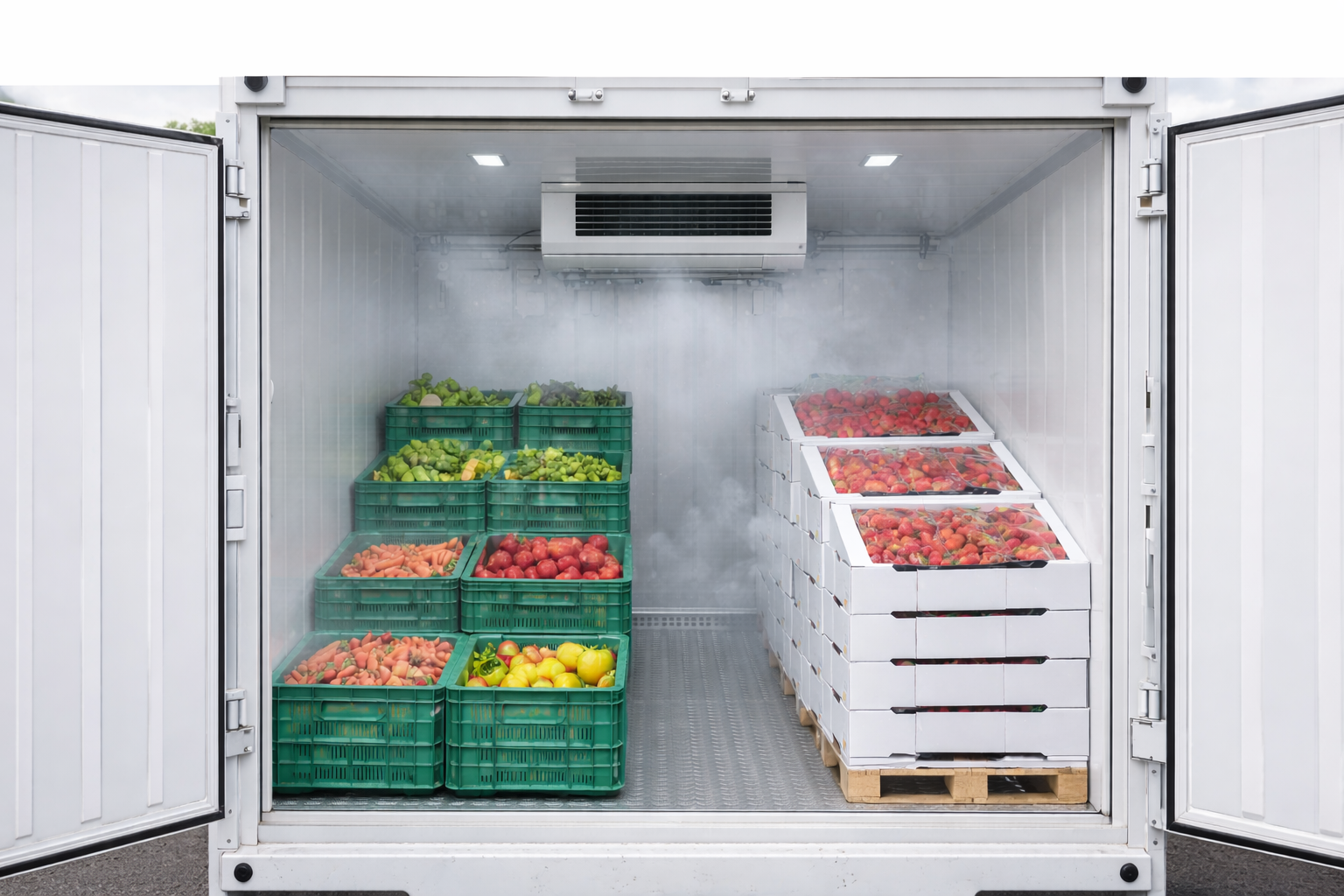
In cold chain logistics, the real cost of failure rarely shows up on an invoice. A small temperature fluctuation can compromise pharmaceuticals, reduce the shelf life of fresh produce, or affect the quality of frozen goods before they reach their destination. In industries where temperature control impacts safety, compliance, and brand reputation, a refrigerated truck is not just a vehicle. It is a critical business asset.
Yet many businesses still evaluate a reefer truck based primarily on upfront cost. While the initial refrigerated truck price matters, the bigger financial impact often comes later through fuel inefficiency, maintenance issues, temperature inconsistencies, and cargo loss.
Two trucks may look identical in size and capacity but perform very differently in real-world conditions. Poor insulation can increase energy consumption. An undersized refrigeration unit for a van or truck may struggle in high ambient temperatures or during frequent door openings. Weak body construction can lead to thermal leakage, structural fatigue, and higher maintenance costs over time.
The true cost of a refrigerated truck comes down to three core components:
- Body fabrication
- Insulation quality
- Refrigeration system performance
Each directly affects operational efficiency, compliance, and long-term ROI. As India’s cold chain logistics sector grows across food, pharma, agriculture, and quick commerce, understanding how a Refrigerated Truck Builder prices and engineers a vehicle has become essential.
This guide breaks down the actual cost of a refrigerated box truck, helping businesses evaluate value beyond the upfront investment. Because in temperature-controlled transport, the cheapest option is often the most expensive to run.
What Determines Refrigerated Truck Price in India?
The final refrigerated truck price is shaped by far more than the size of the vehicle or the cooling unit installed. Every business has different operational requirements, and the cost of a refrigerated truck depends on how the vehicle is engineered to meet those specific needs. For instance, transporting dairy within city limits requires a very different setup compared to moving frozen seafood across states or delivering temperature-sensitive pharmaceuticals under strict compliance standards.
Factors such as route distance, ambient weather conditions, frequency of door openings, and the type of cargo being transported all influence the build specification and, in turn, the cost. A truck designed for long-haul cold chain logistics with multi-temperature zones and telematics will naturally cost more than a basic last-mile delivery vehicle. This is why two vehicles that may look similar externally can have significantly different price points based on what is built beneath the surface.
The final price is typically influenced by the following factors:
- Vehicle type and chassis size: A small refrigerated box truck for urban deliveries will cost less than a large refrigerated container truck built for interstate transport.
- Type of cargo being transported: Fresh produce, dairy, frozen foods, seafood, pharmaceuticals, and chemicals all require different temperature settings and interior configurations.
- Temperature range required: Chilled applications (+2°C to +8°C) are generally less expensive than deep-freeze or ultra-low temperature requirements.
- Distance and route conditions: Long-haul routes, rough roads, and high ambient temperatures demand stronger body construction and higher refrigeration capacity.
- Build material and insulation thickness: Premium materials and thicker insulation improve durability and temperature retention but increase upfront cost.
- Refrigeration system capacity: The size and power of the refrigeration unit directly impact cooling efficiency and price.
- Compliance requirements and certifications: Industries like food and pharma may require specific certifications, temperature logging, or hygienic interiors.
- Customizations and accessories: Features like multi-temperature compartments, GPS tracking, shelving, side doors, and telematics add to the overall cost.
Broadly, the cost of a reefer truck can be divided into three major components:
- Truck body fabrication
- Insulation system
- Refrigeration unit
Understanding these components helps businesses evaluate long-term value rather than focusing only on the upfront refrigerated truck price. Let’s examine each in detail.
Key Drivers Behind Refrigerated Truck Price in India
1. Truck Body Fabrication Cost
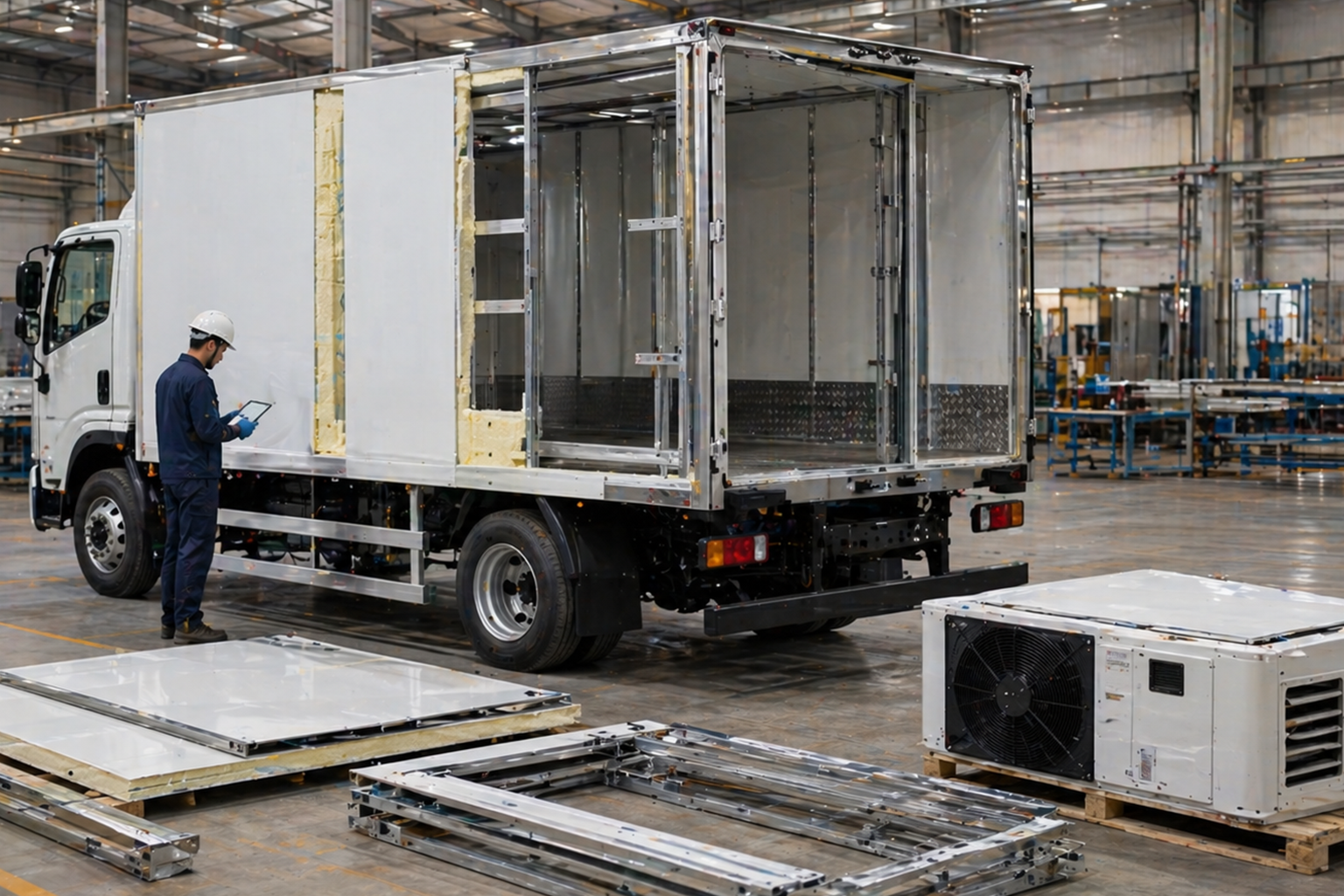
The body structure is the foundation of any refrigerated truck. While it may appear to be just the outer shell, it plays a far more critical role in overall vehicle performance. The body determines how well the truck can withstand daily wear and tear, maintain hygiene standards, retain internal temperature, and maximize payload efficiency. A poorly fabricated body can lead to structural issues, thermal leakage, and higher maintenance costs over time. This is why experienced businesses look beyond appearance and evaluate the engineering quality of the body before considering the final refrigerated truck price.
Material Used in Body Construction
The material used in building the truck body significantly affects durability, weight, thermal efficiency, and cost. Different industries and applications require different material specifications depending on hygiene standards, road conditions, and load requirements.
Stainless Steel
Stainless steel is widely used in food-grade and pharmaceutical transport due to its excellent hygiene standards and corrosion resistance. It is durable and easy to clean, making it ideal for applications where sanitation is critical. However, it is heavier than other materials, which can reduce payload capacity and fuel efficiency. It is also one of the more expensive options in terms of upfront investment.
FRP (Fiber Reinforced Plastic)
FRP has become a preferred material in modern reefer truck manufacturing because it is lightweight, corrosion-resistant, and structurally strong. A lighter body reduces the overall vehicle weight, which can improve fuel economy and increase payload efficiency. FRP is also resistant to moisture and weather-related wear, making it suitable for Indian operating conditions.
Aluminum
Aluminum offers a balance between strength and weight reduction. It is lightweight and naturally resistant to rust, making it a practical choice for businesses looking for durability without significantly increasing vehicle weight. It is often used in applications where operational efficiency and long-term durability are equally important.
Galvanized Steel
Galvanized steel is a more cost-effective option and is often used in budget-sensitive builds. While it provides decent structural strength, it may not offer the same lifespan or corrosion resistance as stainless steel or FRP, particularly in demanding or humid environments.
The choice of material impacts not just the initial refrigerated truck price, but also long-term operating costs through maintenance, fuel efficiency, and durability.
Size and Design of the Body
The dimensions and internal design of the truck body also play a major role in pricing. Larger cargo bodies require more raw material, stronger support structures, and higher-capacity refrigeration systems.
Body design requirements vary based on cargo type and delivery operations. For example, a truck transporting frozen food may require a different layout than one carrying dairy, pharmaceuticals, or fresh produce.
Custom body configurations may include:
- Multi-temperature compartments for transporting products with different cooling requirements in one trip
- Side doors or rear shutters for easier loading and unloading
- Shelving or pallet locking systems for cargo stability
- Drainage systems for easy washdown and hygiene maintenance
- Anti-slip flooring for operational safety
Each customization adds to fabrication complexity and cost.
2. Insulation Cost Breakdown
Insulation is one of the most critical components in a refrigerated truck, yet it is often underestimated during the buying process. Even the most advanced refrigeration system will struggle to maintain internal temperatures if insulation quality is poor. Effective insulation reduces heat transfer from the outside environment, lowers the cooling load on the refrigeration unit, and improves energy efficiency.
In hot climates like India, insulation quality can directly affect fuel consumption, product integrity, and operating costs.
Common Insulation Materials
Different insulation materials offer varying levels of thermal performance, durability, and cost.
PUF Panels (Polyurethane Foam)
PUF is the most commonly used insulation material in modern refrigerated box truck builds because of its high thermal resistance and lightweight nature. It helps maintain stable temperatures while reducing the load on the refrigeration system.
Benefits of PUF include:
- Excellent temperature retention
- Lower refrigeration load
- Reduced energy consumption
- Lightweight construction
Higher-density PUF panels are more expensive but provide better long-term performance and durability.
XPS (Extruded Polystyrene)
XPS provides decent insulation and strong moisture resistance. It is suitable for moderate cooling applications but is generally less effective than PUF for frozen or deep-freeze transport.
EPS (Expanded Polystyrene)
EPS is a lower-cost insulation material. While it may reduce upfront costs, it is less durable and offers lower thermal efficiency, which can increase operating expenses over time.
Thickness of Insulation
Insulation thickness directly affects the truck’s ability to maintain temperature. Thicker insulation provides better thermal retention but increases build cost and may slightly reduce internal cargo volume.
Typical insulation thickness includes:
- 40–60 mm for chilled goods such as dairy and beverages
- 80–100 mm for frozen foods and seafood
- 100 mm+ for deep-freeze or ultra-low-temperature applications
A professional Refrigerated Truck Builder will recommend the right insulation thickness based on route conditions, ambient temperatures, and product requirements.
Panel Construction Quality
Insulation performance is not only about material and thickness. The way the panels are manufactured and assembled also matters.
High-quality insulated panels often feature:
- Seamless construction
- Vacuum bonding
- Leak-proof sealing
- Minimal thermal bridging
Poor panel construction can result in:
- Temperature fluctuations
- Increased refrigeration load
- Moisture ingress
- Mold or bacterial growth
- Reduced panel lifespan
For businesses focused on reliable cold chain logistics, insulation should be seen as a long-term investment rather than a cost-saving area.
3. Refrigeration Unit Cost
The refrigeration system is the active cooling component and the operational heart of a reefer truck. It ensures products remain within the required temperature range throughout transit. The cost of a refrigeration unit for a van or larger truck depends on factors such as cooling capacity, temperature range, power source, and advanced features.
Types of Refrigeration Units
Different transport operations require different refrigeration technologies.
Direct Drive Units
These systems are powered by the vehicle’s engine and are commonly used in smaller refrigerated box truck or van applications.
Pros:
- Lower upfront cost
- Compact design
- Suitable for short-distance deliveries
Cons:
- Cooling depends on engine operation
- Less suitable for long idle periods
Diesel-Powered Standalone Units
These units operate independently of the truck engine and are common in larger refrigerated container truck applications.
Pros:
- Continuous cooling even when the engine is off
- Better suited for long-haul operations
Cons:
- Higher upfront cost
- Increased maintenance requirements
Electric Standby Units
These systems can connect to an external power source when stationary, making them useful during loading, unloading, or overnight parking. They help reduce fuel consumption and maintain temperature without running the engine.
Temperature Range Requirements
The lower the required temperature, the more expensive the refrigeration system.
For example:
- +2°C to +8°C for pharmaceuticals, dairy, and fresh produce
- 0°C to -5°C for chilled meat and seafood
- -18°C or below for frozen foods and ice cream
Ultra-low-temperature applications require more powerful systems, thicker insulation, and higher energy consumption.
Brand and Technology
Premium refrigeration systems often include advanced technology that improves monitoring and compliance in cold chain logistics.
These may include:
- Telematics and remote monitoring
- Real-time temperature logging
- GPS integration
- Multi-zone cooling
- Alerts and diagnostics
While these features increase initial investment, they reduce risk, improve visibility, and support compliance requirements.
4. Additional Costs to Consider
Beyond body fabrication, insulation, and refrigeration systems, several other costs influence the total refrigerated truck price.
These include:
- Chassis cost – The truck platform itself often accounts for a significant portion of the investment.
- Registration and compliance costs – Certifications for food-grade, pharma-grade, or regulatory compliance may be required.
- Maintenance and AMC – Regular servicing of the refrigeration unit, panel seals, and electrical systems is essential.
- Fuel and energy consumption – Poor insulation or oversized refrigeration systems increase operating costs.
- Fleet monitoring systems – IoT and telematics solutions improve control and visibility but add to cost.
Understanding these cost layers helps businesses make more informed investment decisions and evaluate the long-term value of working with an experienced Refrigerated Truck Builder.
Also Read: Refrigerated Truck Rental vs Investment in 2026 Guide
Refrigerated Truck Price in India: What Businesses Should Realistically Expect
The refrigerated truck price in India is not a fixed number. It varies widely because every vehicle is built for a specific operational need, not a standard template. A last-mile delivery van serving city routes has completely different engineering requirements compared to a long-haul refrigerated container truck moving frozen cargo across states. Factors such as insulation grade, refrigeration capacity, cargo type, and compliance requirements all influence the final cost. This is why two vehicles that appear similar in size can still differ significantly in price and performance.
Instead of looking at it as a one-time purchase, it is more accurate to view it as a layered investment, where each specification directly impacts efficiency, operating cost, and product safety over time. A well-built reefer truck may require higher upfront investment, but it typically delivers lower spoilage rates, better fuel efficiency, and reduced maintenance costs across its lifecycle.
Refrigerated Truck Price in India by Segment
The cost of a refrigerated truck depends on three main components: the chassis, the insulated box body, and the refrigeration unit. Together, these determine the final on-road cost, along with GST and any custom modifications.
1. Small-Sized Refrigerated Vehicles: ₹14 lakh – ₹15 lakh + GST
Example: Mahindra Bolero 10 ft Reefer Truck, Approximate build cost: ₹14.35 lakh (₹8.65 lakh chassis + ₹2.95 lakh insulated box + ₹2.75 lakh reefer unit)
These compact refrigerated vehicles are typically used for last-mile delivery and short intra-city routes. They work well for transporting groceries, dairy, bakery items, and pharmaceuticals, especially where frequent stops and quick turnaround times are required.
2. Mid-Sized Refrigerated Trucks: Around ₹26 lakh + GST
Example: Eicher 2059, 14 ft Reefer Truck, Approximate build cost: ₹26.2 lakh (₹14.3 lakh chassis + ₹4.5 lakh insulated box + ₹7.4 lakh reefer unit)
This segment is widely used for regional distribution and retail logistics. Mid-sized trucks offer better payload capacity, improved temperature stability, and longer operating range, making them suitable for medium-distance transport and mixed cargo requirements.
3. Heavy-Duty Refrigerated Trucks: ₹48 lakh – ₹50 lakh + GST
Example: Ashok Leyland 3520, 32 ft Reefer Truck, Approximate build cost: ₹48.9 lakh (₹29.5 lakh chassis + ₹10 lakh insulated box + ₹9.4 lakh reefer unit)
Heavy-duty refrigerated vehicles are built for long-haul transport and industrial-scale cold chain logistics. These trucks are designed to carry large volumes over long distances while maintaining precise temperature control for products like frozen foods, pharmaceuticals, and export-grade perishables.
4. Custom Multi-Temperature or Specialized Reefer Solutions
Custom Pricing. For businesses needing multiple temperature zones, ultra-low temperature storage, or pharma-compliant interiors, pricing varies based on the complexity of the build, refrigeration technology, and payload design. These solutions are typically tailored for specialized cold chain operations.
Conclusion
A refrigerated truck is not just a transport asset. It is a controlled environment on wheels, and its performance directly impacts product quality, regulatory compliance, and business reputation. When you break down the cost into its core components—body fabrication, insulation, and refrigeration system—it becomes clear that pricing is driven by engineering decisions, not just size or appearance.
This is where most purchasing mistakes begin. A lower refrigerated truck price may seem attractive upfront, but compromises in insulation quality, underpowered refrigeration systems, or weak body construction often show up later as higher fuel consumption, frequent breakdowns, temperature instability, and product loss. Over time, these hidden costs outweigh any initial savings.
In contrast, a well-engineered reefer truck, designed with the right materials and system integration, performs consistently under demanding cold chain logistics conditions. It maintains temperature stability, reduces operational strain, and ensures cargo integrity across varying climates and long-haul routes. This is exactly why the role of a Refrigerated Truck Builder becomes central to long-term value, as a reliable builder does not simply assemble components but engineers a complete system that aligns insulation, body design, and refrigeration capacity with real-world usage requirements.
For businesses that depend on consistent temperature control and efficient operations, Sub Zero Reefers offers engineered cold chain logistics solutions built for durability, precision, and real-world reliability.
FAQs on Refrigerated Truck Price in India
1. What factors affect the cost of a refrigerated truck in India?
The refrigerated truck price depends on multiple factors such as body material, insulation thickness, refrigeration unit capacity, cargo type, and customization needs. Operational factors like route distance, temperature requirements, and compliance standards also play a key role in determining the final cost.
2. What is the difference between a reefer truck and a refrigerated box truck?
A reefer truck is a general term for any temperature-controlled transport vehicle. A refrigerated box truck specifically refers to a rigid-body truck with an insulated cargo box used for urban or regional deliveries. Box trucks are typically used for shorter routes, while larger reefer setups handle long-haul logistics.
3. Why is insulation so important in a refrigerated truck?
Insulation is what keeps external heat from entering the cargo space. High-quality insulation reduces the workload on the refrigeration system, improves temperature stability, and lowers fuel or energy consumption. Poor insulation can lead to temperature fluctuations and higher operating costs in cold chain logistics.
4. How do I choose the right refrigeration unit for my vehicle?
The choice of a refrigeration unit for van or truck depends on cargo type, required temperature range, and travel distance. Smaller vans typically use direct-drive units, while long-haul or heavy-duty applications require diesel-powered standalone systems for continuous cooling and better performance.
5. Is a higher initial investment in a refrigerated truck worth it?
Yes, in most cases. A well-built refrigerated truck may have a higher upfront cost, but it offers better temperature control, lower maintenance, improved fuel efficiency, and reduced product loss. Over time, this leads to significantly better operational ROI compared to low-cost builds.