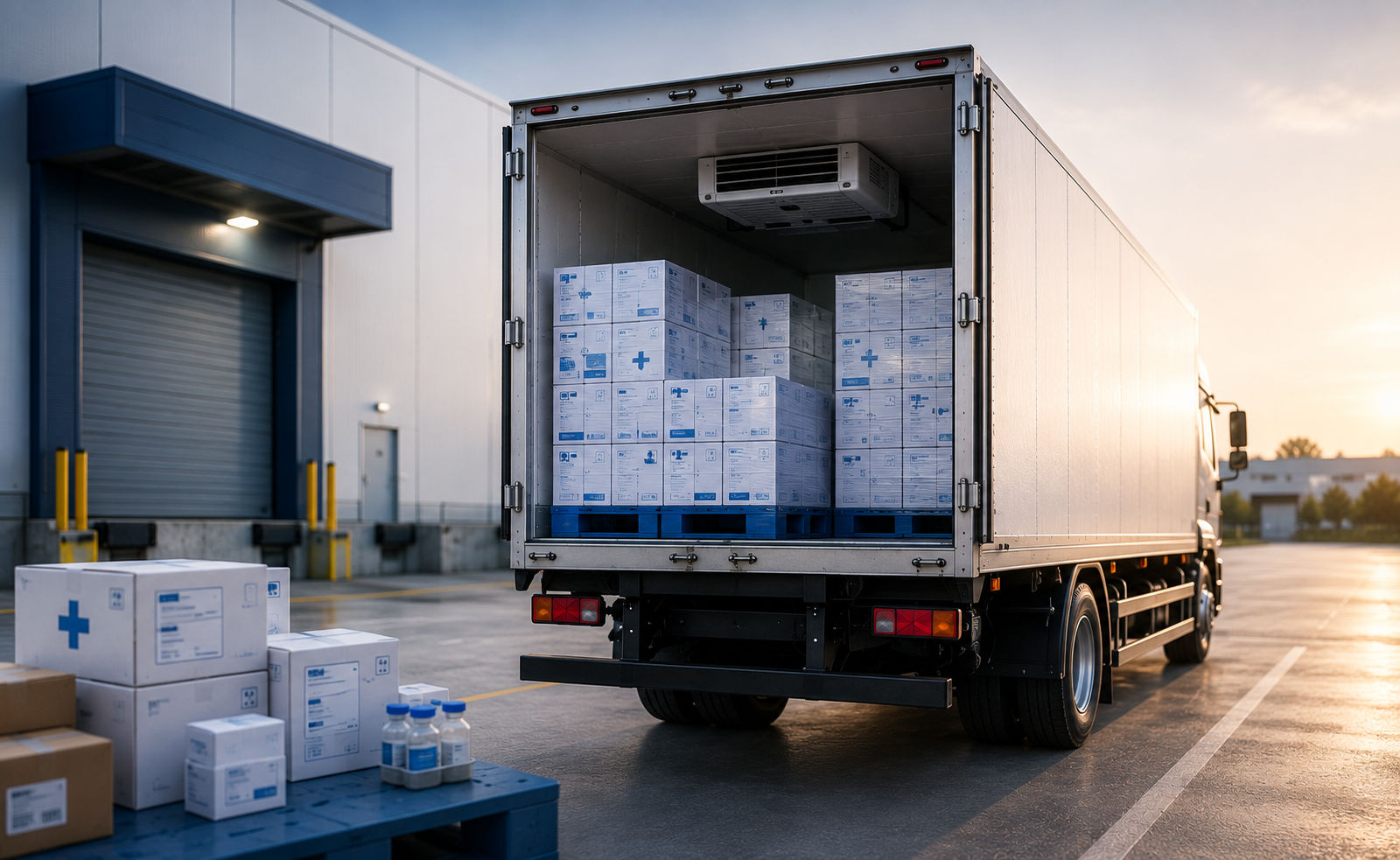
India's pharmaceutical supply chain is entering a phase where temperature control is no longer just an operational requirement. It has become a measure of quality, reliability, and patient safety.
As one of the world's largest pharmaceutical manufacturers, India supplies medicines, vaccines, and biologics across global markets. With the growing demand for temperature-sensitive products such as vaccines, insulin, and advanced therapies, maintaining an uninterrupted vaccine cold chain has become increasingly critical.
A medicine may be manufactured and tested under strict quality standards, but a single temperature excursion during transportation can affect its stability, effectiveness, and shelf life. This makes reliable cold chain management essential. The challenge is that pharmaceutical transportation in India operates across diverse climates, long routes, traffic conditions, and unpredictable weather. A reefer vehicle must do more than maintain a set temperature. It must protect product integrity throughout the journey.
This has transformed the role of a refrigerated truck from a basic transport solution into an extension of pharmaceutical quality control. A GDP-compliant reefer solution combines validated temperature control, high-performance insulation, real-time monitoring, preventive maintenance, trained operators, and complete documentation.
In 2026, companies must look beyond whether a vehicle can maintain temperature. The focus must be on whether it can consistently preserve product quality from manufacturing facilities to hospitals, distribution centres, and vaccination sites.
A reliable reefer van is not just a vehicle with a cooling unit. It is a controlled environment that supports a compliant and resilient cold chain system for critical healthcare products. This guide explores the key reefer truck requirements businesses must consider to achieve Pharma GDP compliance in India.
Also Read: Vaccine Distribution and Cold Chain Logistics
Understanding Pharma GDP Compliance and the Vaccine Cold Chain Role of Reefer Trucks
Good Distribution Practices (GDP) are internationally recognised quality standards that ensure pharmaceutical products maintain their safety, efficacy, and quality throughout the distribution process. While manufacturing is tightly regulated, transportation is equally important. Even a brief temperature excursion during transit can compromise vaccines, biologics, insulin, and other temperature-sensitive medicines, leading to product loss and regulatory non-compliance.
This makes effective cold chain management essential. A reliable cold chain system ensures products remain within their specified temperature range from manufacturing to final delivery. Achieving this requires validated transportation, continuous temperature monitoring, trained personnel, and proper documentation.
Most pharmaceutical products are transported under the following temperature conditions:
- +2°C to +8°C for many vaccines and biologics
- +15°C to +25°C for controlled room temperature medicines
- Below freezing for select specialty therapies
Standard commercial vehicles cannot consistently maintain these conditions, especially across India's varied climates and long transport routes. A GDP-compliant refrigerated truck or reefer van is purpose-built with advanced insulation, precision refrigeration, and real-time monitoring to protect product integrity throughout transit.
GDP compliance helps minimise risks such as:
- Temperature fluctuations
- Improper handling and loading
- Refrigeration failure
- Transportation delays
- Inadequate monitoring
- Poor documentation and traceability
By strengthening cold chain logistics, GDP-compliant reefer vehicles help pharmaceutical companies protect product quality, meet regulatory requirements, and ensure medicines reach patients safely.
Pharma GDP-Compliant Reefer Truck Checklist for Vaccine Cold Chain in 2026
Achieving Pharma GDP compliance goes beyond choosing a vehicle with a refrigeration unit. Every aspect of a reefer truck, from its construction and refrigeration technology to its monitoring systems and maintenance practices, contributes to maintaining the integrity of temperature-sensitive pharmaceutical products. As regulatory expectations become more stringent and advanced therapies become increasingly common, businesses must ensure their transportation systems can consistently meet these evolving standards.
A GDP-compliant refrigerated truck should be capable of maintaining consistent temperatures, preventing excursions, providing complete visibility into transport conditions, and supporting regulatory traceability throughout the journey. The following checklist highlights the essential features and operational requirements that pharmaceutical companies and logistics providers should evaluate when selecting or operating a reefer vehicle in 2026.
1. Validated Temperature Control System for Vaccine Cold Chain Transport
A reliable temperature control system is the foundation of a GDP-compliant refrigerated truck. It is not enough for a vehicle to simply generate cooling. The refrigeration system must be validated to consistently maintain the required temperature range under varying operating conditions, including high ambient temperatures, traffic delays, and repeated door openings. A validated system helps preserve product quality while strengthening the overall cold chain system for pharmaceutical transportation.
Also Read: Reefer Trucks for Pharma and Food Industries
2. High-Performance Insulated Cargo Body for Pharma Cold Chain Management
The effectiveness of a refrigeration unit depends heavily on the quality of the insulated cargo body. Poor insulation allows external heat to penetrate the vehicle, increasing the refrigeration load and the risk of temperature fluctuations. High-performance insulation ensures stable temperatures, improves energy efficiency, and supports uninterrupted cold chain logistics, particularly during long-distance transportation across India's diverse climatic regions.
3. Real-Time Temperature Monitoring and Data Logging
Modern pharmaceutical transportation requires complete visibility throughout the shipment journey. Real-time temperature monitoring, GPS tracking, and automated data logging enable logistics teams to identify deviations immediately and respond before product quality is affected. These systems also generate the traceable records required for GDP audits, making them an essential component of effective cold chain management.
4. Temperature Mapping and Vehicle Qualification in Vaccine Cold Chain Operations
Uniform cooling cannot be assumed simply because a refrigeration unit is installed. Temperature mapping identifies hot and cold spots within the cargo compartment and verifies that products remain within the specified temperature range regardless of their placement. When combined with installation, operational, and performance qualification, it confirms that the vehicle is capable of supporting the transportation of temperature-sensitive medicines and cold chain vaccine shipments under real-world operating conditions.
5. Backup Power and Refrigeration Reliability for Uninterrupted Vaccine Cold Chain
Pharmaceutical transportation leaves little room for equipment failure. A refrigeration breakdown or power interruption can compromise an entire shipment within minutes. Reliable refrigeration units, preventive maintenance schedules, and contingency planning are essential to ensure uninterrupted temperature control and maintain the integrity of vaccine cold chain operations during transit.
6. Hygienic Cargo Compartment Design for GDP-Compliant Cold Chain Management
Maintaining the right temperature is only one aspect of GDP compliance. The cargo compartment must also meet strict hygiene standards to prevent contamination. Easy-to-clean interiors, corrosion-resistant surfaces, sealed joints, and durable construction create a controlled environment that supports the safe transport of pharmaceuticals while complementing other critical cold chain equipment used across the supply chain.
7. Loading and Unloading Practices That Protect Vaccine Cold Chain Integrity
Even the most advanced reefer van or refrigerated vehicle can experience temperature excursions if products are handled incorrectly. Pre-cooling the cargo compartment, minimising door opening times, maintaining adequate airflow, and following validated loading procedures all help preserve temperature stability. These operational practices are just as important as the vehicle itself in maintaining GDP compliance.
8. Documentation and Compliance Records for Vaccine Cold Chain Traceability
Documentation is central to Pharma GDP compliance. Every shipment should be supported by accurate temperature logs, calibration certificates, maintenance records, cleaning schedules, and validation reports. Comprehensive documentation improves traceability, simplifies audits, and provides evidence that the cold chain system remained compliant throughout transportation.
9. Driver and Operator Training for Reliable Cold Chain Management
Technology alone cannot maintain product integrity. Drivers and logistics personnel play a critical role in protecting temperature-sensitive medicines by following standard operating procedures, responding to alarms, maintaining documentation, and handling pharmaceutical cargo correctly. Well-trained teams are a fundamental part of successful cold chain management and help minimise operational risks during transit.
10. Compliance with Indian Pharmaceutical Standards
A GDP-compliant refrigerated truck should align with WHO Good Distribution Practices (GDP), applicable CDSCO guidelines, and customer-specific quality requirements. Regular audits, equipment qualification, and periodic reviews ensure continued compliance as regulations evolve. Businesses that invest in compliant transportation systems today will be better prepared to meet the growing demands of India's pharmaceutical and cold chain logistics sector.
The Future of Vaccine Cold Chain and Pharma Cold Chain Logistics in India
India's pharmaceutical industry is evolving rapidly, driven by the growing demand for vaccines, biologics, specialty drugs, and advanced therapies that require precise temperature control. As supply chains become more complex and regulatory expectations continue to rise, businesses can no longer rely on conventional transportation methods. The future of cold chain logistics will depend on how effectively companies combine technology, compliance, and operational efficiency to protect product integrity from origin to destination.
Emerging technologies are set to transform pharmaceutical transportation by enabling greater visibility and control across the supply chain. IoT-enabled sensors will provide real-time updates on temperature, humidity, vehicle location, and door activity, allowing logistics teams to respond immediately to potential risks. AI-powered analytics will move beyond monitoring to predict equipment failures, identify patterns that could lead to temperature excursions, and recommend preventive actions before disruptions occur. At the same time, predictive maintenance will help maximise the reliability of refrigeration units, reducing unplanned downtime and ensuring uninterrupted operations.
Sustainability will also become a defining priority. As pharmaceutical companies work toward reducing their environmental footprint, there will be greater adoption of energy-efficient refrigeration systems, lightweight insulated bodies, and alternative cooling technologies that improve performance while lowering energy consumption. Combined with intelligent route planning and real-time traffic visibility, these innovations will help optimize delivery timelines without compromising temperature control.
For pharmaceutical manufacturers, distributors, and logistics providers, investing in modern cold chain management is no longer just about meeting regulatory requirements. It is about building resilient, data-driven supply chains that can consistently deliver safe and effective medicines, even in challenging operating conditions.
Ultimately, a GDP-compliant refrigerated truck is more than a transport vehicle. It is an extension of pharmaceutical quality assurance, playing a vital role in maintaining an uninterrupted cold chain system and ensuring that every temperature-sensitive product reaches patients with its safety, efficacy, and quality intact.
Conclusion
As India's pharmaceutical industry continues to expand, maintaining the integrity of temperature-sensitive products has become a business-critical priority rather than just a regulatory requirement. GDP compliance demands a comprehensive approach that combines the right infrastructure, validated processes, continuous monitoring, and reliable transportation to ensure medicines remain safe and effective throughout their journey.
A well-designed refrigerated truck is at the heart of this process. From maintaining consistent temperatures and supporting cold chain management to enabling real-time visibility and regulatory traceability, every component contributes to a stronger and more resilient pharmaceutical supply chain.
For pharmaceutical manufacturers and logistics providers, investing in GDP-compliant reefer solutions is an investment in product quality, operational reliability, and patient safety. As regulations evolve and the demand for advanced therapies grows, organisations that prioritise robust cold chain logistics today will be better equipped to meet tomorrow's challenges.
At Sub Zero Reefers, we understand that pharmaceutical transportation requires more than refrigeration. It requires precision, reliability, and engineering that performs consistently under India's demanding operating conditions. Our temperature-controlled transport solutions are designed to help businesses build a compliant, efficient, and future-ready cold chain system for the pharmaceutical industry.
Frequently Asked Questions
1. What is WHO GDP compliance for reefer trucks?
WHO Good Distribution Practices (GDP) compliance ensures that a refrigerated truck can safely transport temperature-sensitive pharmaceutical products without compromising their quality, safety, or efficacy. A GDP-compliant reefer truck typically includes validated temperature control, calibrated monitoring devices, proper insulation, documented maintenance, and complete temperature records to maintain an uninterrupted cold chain system throughout transit.
2. What data logger is required for pharma cold chain vehicles?
Pharma cold chain vehicles should use calibrated digital data loggers that continuously record temperature throughout the journey. Ideally, these devices should provide real-time monitoring, secure data storage, alarm notifications for temperature excursions, and downloadable reports for audit purposes. The data logger should also comply with applicable pharmaceutical and regulatory standards.
3. What is IQ, OQ, and PQ qualification for a reefer truck?
IQ (Installation Qualification), OQ (Operational Qualification), and PQ (Performance Qualification) are validation processes used to confirm that a reefer truck is suitable for pharmaceutical transportation.
- IQ verifies that the refrigeration system and monitoring equipment are installed correctly.
- OQ confirms that the vehicle performs as intended under specified operating conditions.
- PQ demonstrates that the reefer truck consistently maintains the required temperature during actual transportation scenarios.
Together, these qualifications help ensure compliance with Pharma GDP requirements.
4. How much does it cost to qualify a reefer for Pharma GDP?
The cost of GDP qualification varies depending on factors such as the vehicle size, validation scope, temperature mapping requirements, and the service provider conducting the qualification. Since requirements differ across pharmaceutical companies and regulatory expectations, businesses should obtain quotations from accredited validation specialists based on their operational needs.
5. What does the revised Schedule M mean for cold chain vehicles?
The revised Schedule M strengthens India's pharmaceutical manufacturing and quality requirements by aligning them more closely with global Good Manufacturing Practices (GMP). While it primarily focuses on manufacturing, it also reinforces the importance of maintaining product quality during storage and transportation. As a result, pharmaceutical companies are placing greater emphasis on GDP-compliant cold chain logistics, including validated reefer vehicles, temperature monitoring, and complete documentation.
6. Can any reefer truck be made GDP-compliant?
Not every reefer truck is automatically suitable for pharmaceutical transportation. A vehicle can be upgraded toward GDP compliance if it has appropriate insulation, a validated refrigeration system, calibrated temperature monitoring devices, and undergoes temperature mapping and qualification. However, compliance depends on both the vehicle's design and the operational processes followed during transportation, maintenance, and documentation.